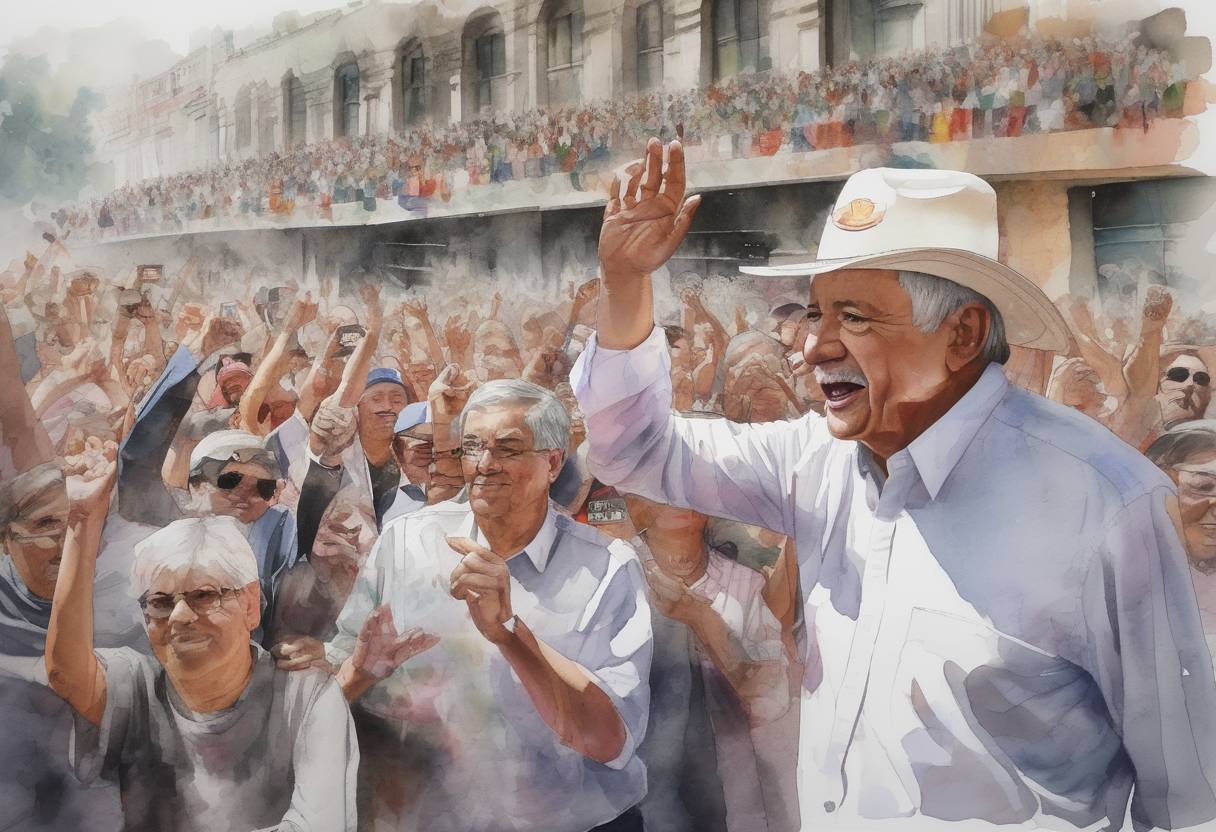
Mexico’s 2018 General Elections: A Landmark Victory for Andrés Manuel López Obrador
On July 1, 2018, Mexico held its general elections, marking a significant turning point in the nation’s political landscape. The elections resulted in a landslide victory for Andrés Manuel López Obrador (often abbreviated as AMLO), who became Mexico’s first leftist president in several decades. This event was pivotal in the country’s history, reflecting widespread public demand for change and reform.
Context Leading Up to the Elections
Before the 2018 elections, Mexico had been governed predominantly by two major parties: the Institutional Revolutionary Party (PRI) and the National Action Party (PAN). The PRI, in particular, had been a dominant force in Mexican politics for much of the 20th century. However, by the time of the 2018 elections, there was growing dissatisfaction with the status quo, driven by issues such as corruption, violence, and economic inequality.
Andrés Manuel López Obrador, a seasoned politician and former mayor of Mexico City, had previously run for the presidency in 2006 and 2012, narrowly losing both times. In 2014, he founded the National Regeneration Movement (MORENA), a left-wing political party, which quickly gained traction among voters disillusioned with traditional parties.
The 2018 Election Campaign
AMLO’s campaign focused on themes of anti-corruption, economic reform, and social justice. He promised to tackle the pervasive corruption that plagued Mexican politics, reduce violence, and implement policies to support the poor and marginalized. His message resonated with a broad spectrum of the electorate, including young voters, the working class, and those frustrated with the existing political order.
Election Day and Results
On July 1, 2018, Mexican voters turned out in large numbers, with a voter turnout of over 63%. López Obrador won the presidency with approximately 53% of the vote, a decisive victory that underscored the public’s desire for change. His victory was not only significant in terms of the presidency but also reflected in the congressional elections, where MORENA and its coalition partners secured a majority in both houses of Congress.
Aftermath and Historical Significance
AMLO’s victory marked the first time in decades that a leftist candidate had won the presidency in Mexico. His administration promised to bring about significant changes in the country’s political and economic systems. López Obrador’s presidency has been characterized by efforts to implement his campaign promises, though it has also faced challenges, including economic pressures and ongoing issues with crime and violence.
The 2018 elections were a watershed moment in Mexican politics, highlighting a shift in the political landscape and the electorate’s appetite for reform. AMLO’s presidency continues to shape Mexico’s future, as he navigates the complexities of governance while striving to fulfill the aspirations of his supporters.
In summary, the 2018 general elections in Mexico were a historic event that not only brought Andrés Manuel López Obrador to power but also signaled a broader transformation in the country’s political dynamics.