Capture of Benito Mussolini - April 27, 1945
1945 · Dongo, Italy
Benito Mussolini was captured by Italian partisans while attempting to flee Italy during the final days of World War II.
April 28, 1945
Benito Mussolini, the Italian dictator, was executed by Italian partisans near Lake Como, marking the end of his fascist regime.
Giulino di Mezzegra, Italy | Italian partisans
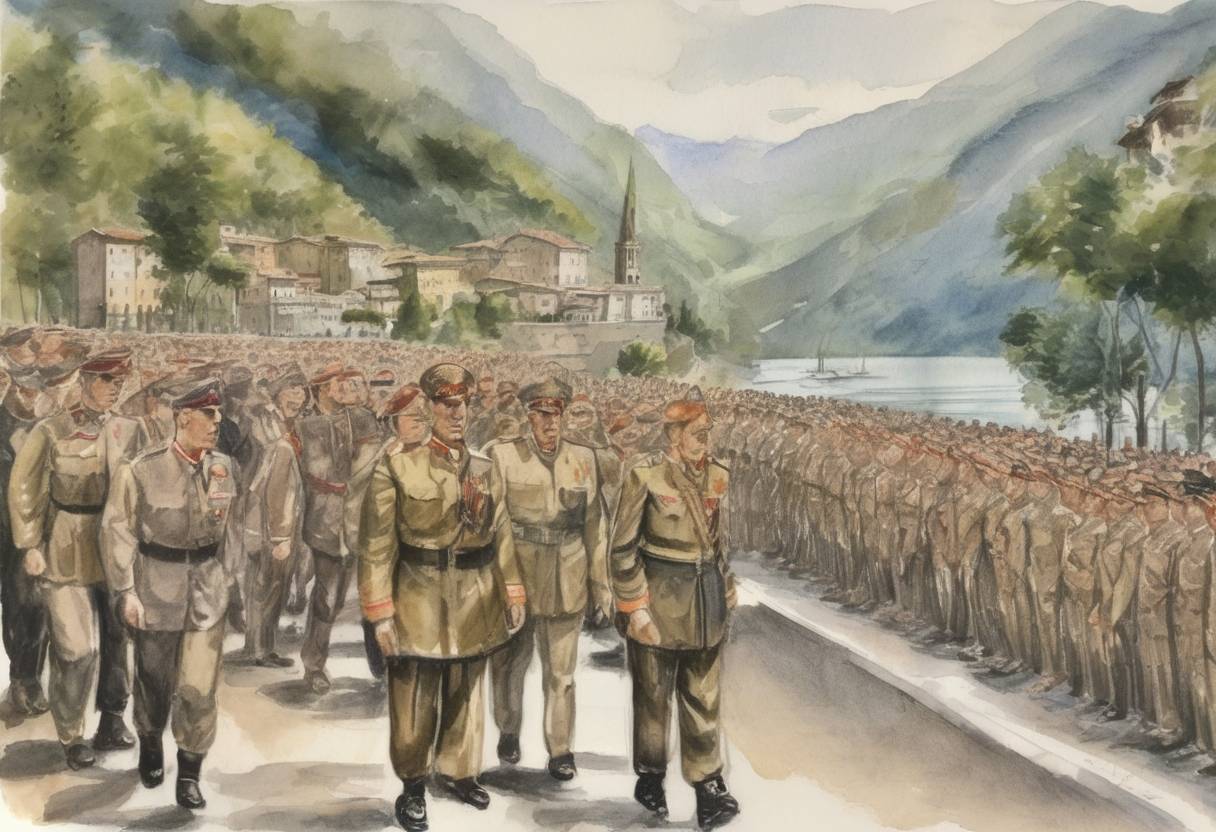
On April 28, 1945, Benito Mussolini, the Italian dictator and leader of the National Fascist Party, was executed by Italian partisans near Lake Como. This event marked a significant turning point in Italian history, effectively ending over two decades of fascist rule in Italy.
Benito Mussolini rose to power in Italy in 1922, establishing a totalitarian regime that aligned closely with Nazi Germany during World War II. As the war progressed, Italy faced numerous military defeats, and Mussolini’s grip on power weakened. By 1943, Mussolini was deposed and arrested, but he was later rescued by German forces and installed as the head of a puppet state in Northern Italy, known as the Italian Social Republic.
As Allied forces advanced through Italy in 1945, Mussolini attempted to flee to Switzerland with his mistress, Clara Petacci, and a group of loyal followers. Disguised as a German soldier, Mussolini was captured by Italian partisans in the small village of Dongo, near Lake Como, on April 27, 1945.
On April 28, 1945, Mussolini and Petacci were executed by firing squad in the village of Giulino di Mezzegra. The execution was carried out by members of the Italian resistance, who sought to bring an end to Mussolini’s fascist regime and hold him accountable for the suffering and destruction caused during his rule.
Following their execution, the bodies of Mussolini, Petacci, and other fascist leaders were transported to Milan. In a symbolic act of retribution, their bodies were displayed in Piazzale Loreto, where they were subjected to public humiliation and abuse by the local populace. This display served as a stark reminder of the widespread resentment and anger towards Mussolini’s regime.
The execution of Benito Mussolini marked the definitive collapse of fascism in Italy and paved the way for the establishment of a democratic republic. It also signaled the broader decline of Axis powers in Europe, as World War II drew to a close with the imminent defeat of Nazi Germany.
Mussolini’s death remains a pivotal moment in Italian history, symbolizing the end of an era characterized by authoritarianism and war, and the beginning of a new chapter focused on reconstruction and democratic governance.
Source: en.wikipedia.org