Normalization of U.S.-Cuba Relations: December 18, 2014
2014 · Havana, Cuba
The United States and Cuba announced the beginning of the process to normalize diplomatic relations after more than 50 years of hostility.
October 20, 1890
The United States formalized diplomatic relations with the Ottoman Empire by appointing Oscar S. Straus as the first Jewish U.S. Ambassador to the Ottoman Empire.
Washington D.C., United States | United States Department of State
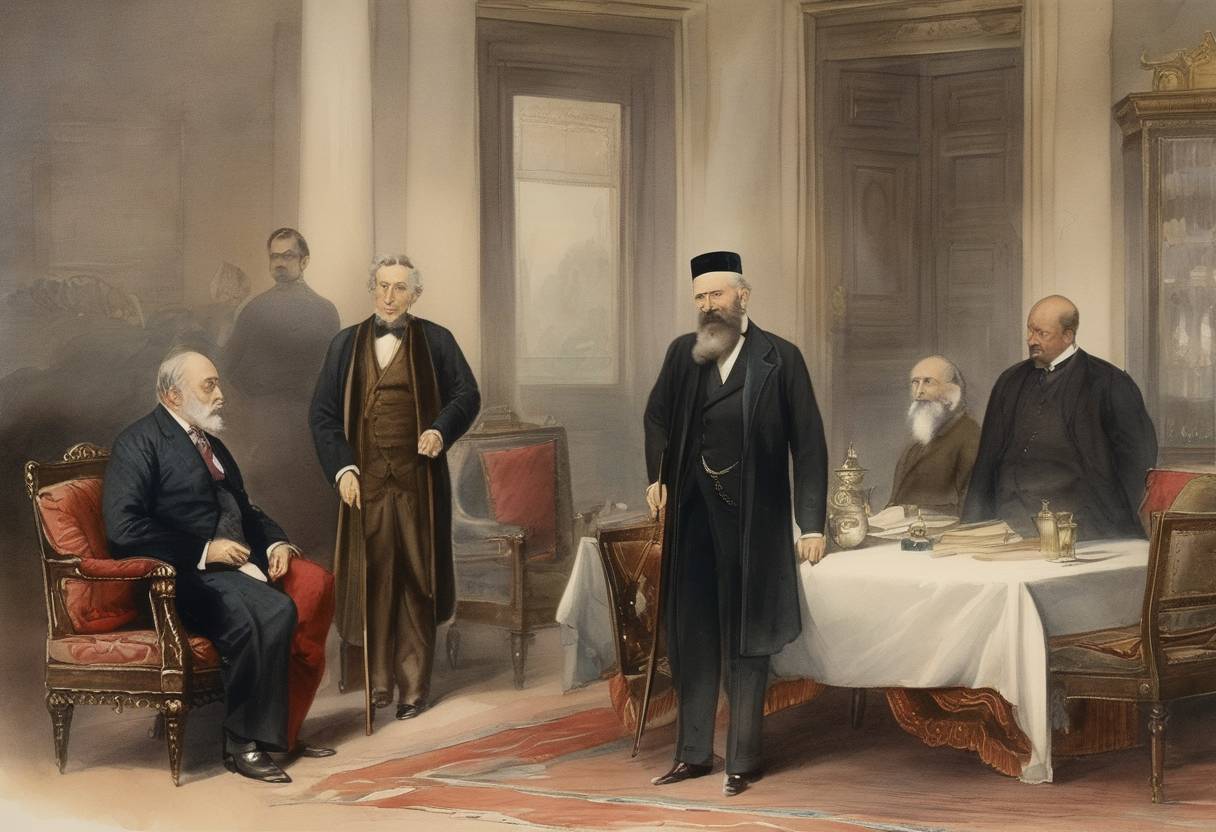
On October 20, 1890, the United States formalized diplomatic relations with the Ottoman Empire by appointing Oscar S. Straus as the U.S. Minister to the Sublime Porte, commonly referred to as the Ottoman Empire. Straus’s appointment was particularly notable as he became the first Jewish individual to hold an ambassadorial position in U.S. history, setting a significant precedent in American diplomatic and social history.
In the late 19th century, the United States was expanding its diplomatic reach and viewing engagement with the Ottoman Empire as increasingly important due to strategic and commercial interests in the Middle East. The Ottoman Empire was a significant geopolitical entity, with vast influence stretching across Southeastern Europe, Western Asia, and North Africa.
Oscar S. Straus, a prominent lawyer and businessman, had previously served on the Board of Indian Commissioners, and his successful career and standing as an advocate for minority rights made him an ideal choice. His appointment underlined the broader American commitment to diversity and inclusion within its governmental ranks during a period when anti-Semitic sentiments were prevalent globally.
Straus’s appointment carried symbolic weight, highlighting the United States’ willingness to engage with the world through representatives of diverse backgrounds. It occurred during a time when Jewish communities often faced discrimination, and thus, the appointment was seen as a progressive step towards inclusivity.
Straus’s tenure as ambassador helped to foster better relations between the United States and the Ottoman Empire. His diplomatic efforts focused on nurturing trade relations and protecting the rights of American missionaries and businesses operating within the empire.
Straus’s appointment encouraged future generations of minority groups in America by exemplifying a breaking down of religious and racial barriers in federal positions. It also reinforced the image of the United States as a bastion of freedom and opportunity.
Straus would later serve additional terms as ambassador and continue to play a pivotal role in U.S. politics and international diplomacy. His work laid the foundation for strengthened U.S.-Ottoman relations until the empire’s eventual dissolution after World War I.
Overall, the appointment of Oscar S. Straus was a key moment in history, reflecting the complex interplay of domestic and international politics and highlighting the evolving role of the United States on the global stage.
Source: www.jewishvirtuallibrary.org