Women’s Armed Services Integration Act - June 12, 1948
1948 · Washington D.C., United States
The Women’s Armed Services Integration Act became law, allowing women to serve as permanent, regular members of the United States armed forces.
July 5, 1935
On this day, the Wagner Act, officially known as the National Labor Relations Act, was signed into law by President Franklin D. Roosevelt, becoming a foundational statute of US labor law that guarantees basic rights to private sector employees to organize into trade unions.
Washington D.C., United States | United States Congress
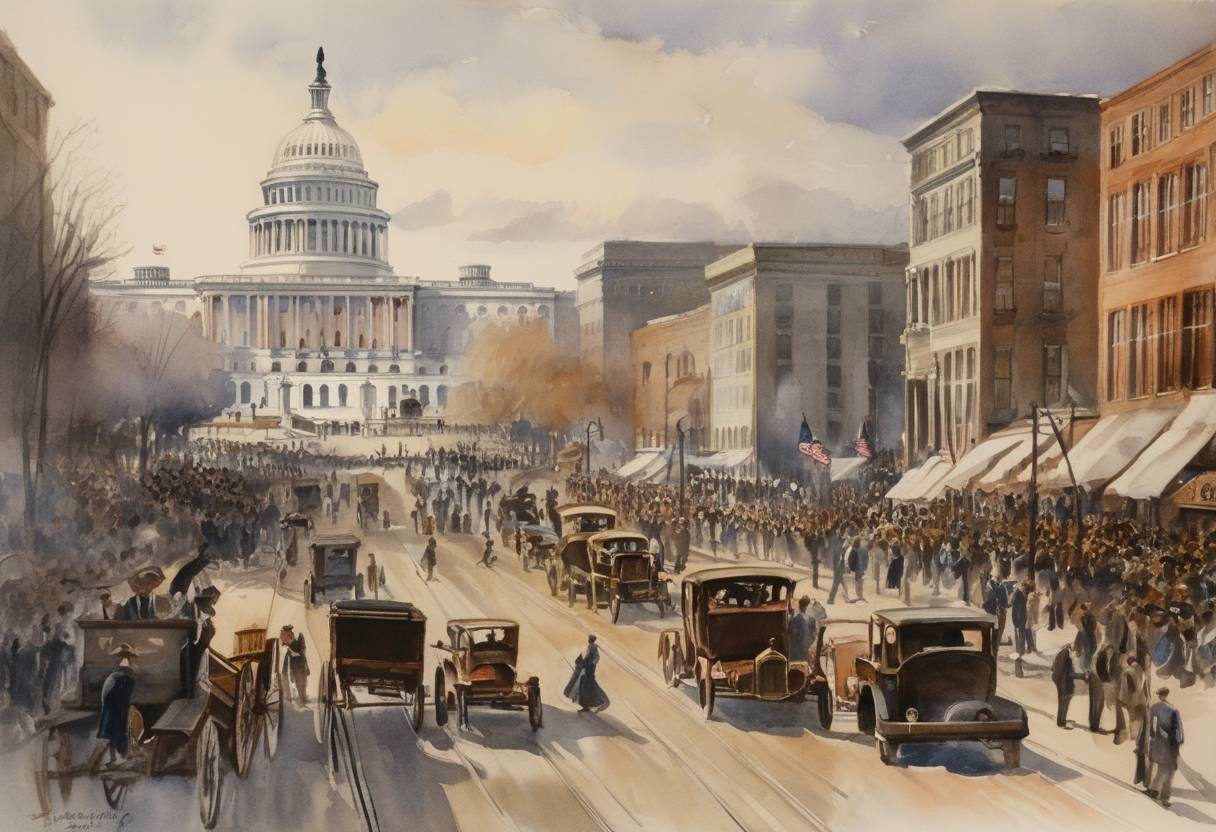
On July 5, 1935, President Franklin D. Roosevelt signed the National Labor Relations Act (NLRA) into law, a pivotal piece of legislation in United States labor history. Commonly known as the Wagner Act, after its sponsor, Senator Robert F. Wagner of New York, this statute significantly shaped labor relations in the country.
During the early 1930s, the Great Depression intensely strained labor relations in the United States. With skyrocketing unemployment and widespread labor unrest, the need for comprehensive labor reform became apparent. The Norris-LaGuardia Act of 1932 had already begun curbing court rulings against labor strikes and picketing, but stronger legislation was necessary to effectively empower workers.
The Wagner Act established several fundamental rights for workers:
One of the Act’s cornerstone achievements was the creation of the National Labor Relations Board. The NLRB was tasked with enforcing the rights guaranteed by the Act, investigating and adjudicating labor disputes and conducting elections for labor union representation.
The Wagner Act laid the groundwork for substantial increases in union membership and empowered workers to negotiate better wages and working conditions. It marked a major commitment by the federal government to support labor rights, which contributed to a more organized labor movement and improved labor-management relations. Its long-term impact included greater political influence for labor unions and the stabilization of industrial relations.
The Wagner Act faced challenges, notably from the Supreme Court, but was upheld in 1937 in the landmark case NLRB v. Jones & Laughlin Steel Corporation, solidifying its constitutional legitimacy. The legislation inspired future labor laws and remains a bedrock of labor relations in the United States, though modified by subsequent legislation such as the Taft-Hartley Act of 1947.
In summary, the signing of the Wagner Act on July 5, 1935, marked a turning point in American labor history, enshrining workers’ rights and transforming the landscape of labor relations in the country.
Source: en.wikipedia.org