Deposition of Idi Amin on April 11, 1979
1979 · Kampala, Uganda
Ugandan dictator Idi Amin was deposed as Ugandan president by Tanzanian troops and Ugandan exiles, ending his eight-year regime.
August 4, 1972
Ugandan dictator Idi Amin orders the expulsion of 50,000 Asians with British passports from Uganda, leading to a mass migration crisis.
Kampala, Uganda | Government of Uganda
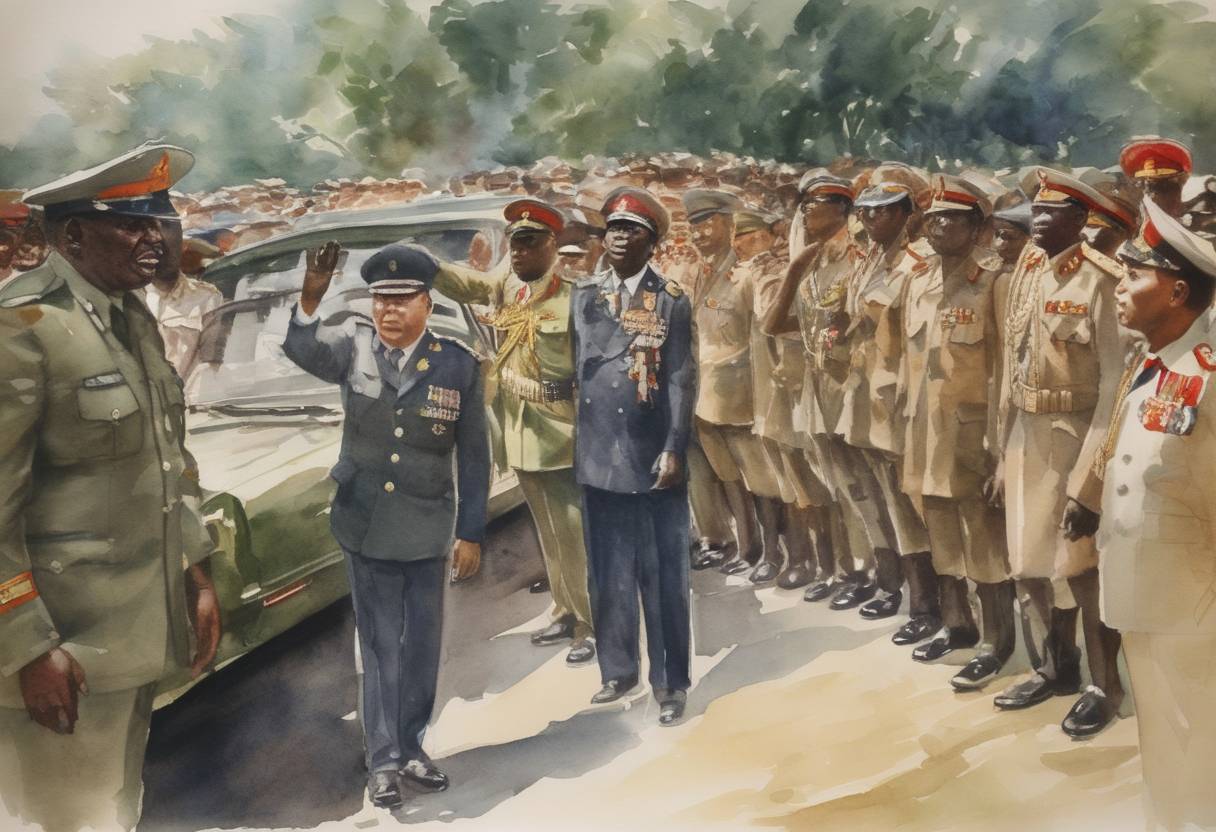
On August 4, 1972, General Idi Amin, the military dictator of Uganda, ordered the expulsion of approximately 50,000 Asians holding British passports from the country. This decree marked a dramatic turning point in Uganda’s post-colonial history, prompting significant international reaction and a mass exodus of the South Asian community, primarily comprised of Indians and Pakistanis, who had settled in Uganda during British colonial rule.
Colonial Legacy: The Asian community in Uganda was largely an economic middle class, playing a crucial role in business and trade, with roots tracing back to the late 19th and early 20th centuries when they arrived as workers on the Uganda Railway and later settled as traders and entrepreneurs.
Economic Tensions: By the early 1970s, resentment towards the Asian minority had grown among indigenous Ugandans, fueled by perceptions of economic domination and social disparity.
Amin’s Regime: Idi Amin seized power in January 1971 following a coup that ousted President Milton Obote. His tenure was marked by human rights abuses, economic instability, and erratic policymaking.
Immediate Orders: Amin announced the expulsion on August 4, 1972, initially giving Asians holding British passports only 90 days to leave the country. His rationale was ostensibly to “give Uganda back to the indigenous citizens,” though the decision was marred by accusations of xenophobia and economic opportunism.
Implementation: The expulsion was carried out with strict timelines and often brutal enforcement, causing chaos and displacement. Asians were allowed to take only minimal belongings, and their properties and businesses were expropriated by the state.
Migration Crisis: The abrupt expulsion led to a humanitarian crisis as thousands of Asians found themselves stateless and in urgent need of asylum. The United Kingdom, to which most held passports, played a significant role in resettlement efforts, accepting around 27,000 refugees.
International Repercussions: The expulsion drew widespread condemnation from the international community, further isolating Amin’s regime. It intensified diplomatic tension between Uganda and several countries, including the UK and India.
Economic Impact: The expulsion resulted in the collapse of Uganda’s economy in sectors heavily reliant on the Asian community, leading to shortages and a sharp decline in economic productivity.
The mass expulsion remains a significant event in discussions on ethnic nationalism, post-colonial state-building, and the rights of diaspora communities. It underscores the complexities and human costs of decolonization processes and the lasting impact of colonial racial hierarchies.
Amin’s decision would be one of several controversial and brutal policies during his regime, which lasted until 1979. The legacy of this expulsion continues to influence Ugandan society and politics, as well as the global discourse on citizenship, migration, and human rights.
Source: www.bbc.com