The Monroe Doctrine: December 2, 1823
1823 · Washington, D.C., United States
U.S. President James Monroe delivered the Monroe Doctrine, a key policy statement warning European nations against colonizing or interfering in the Americas.
March 5, 1821
James Monroe was inaugurated for his second term as President of the United States.
Washington, D.C., United States | U.S. Government
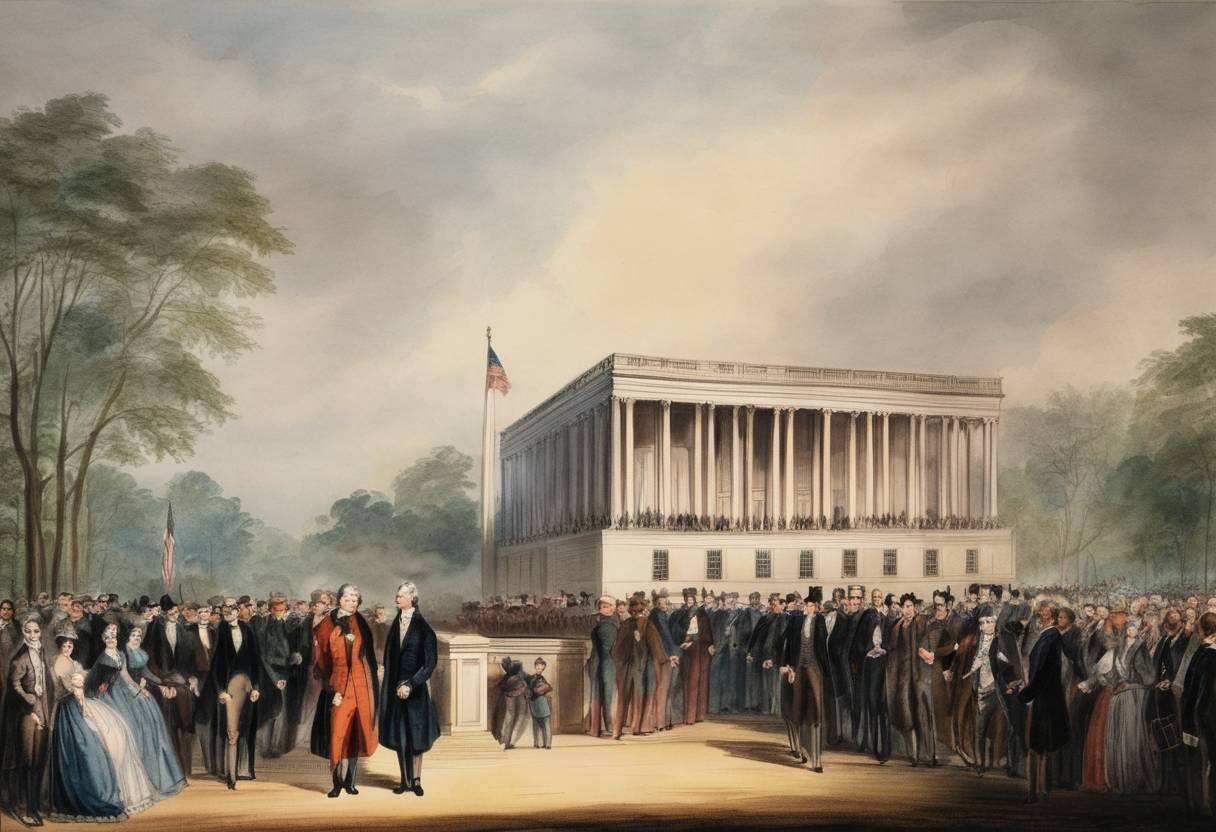
On March 5, 1821, James Monroe was inaugurated for his second term as the fifth President of the United States. Monroe’s second inauguration is noteworthy for several reasons, and it marked the continuation of the “Era of Good Feelings,” a period characterized by the decline of partisan divisions and national conflict.
Era of Good Feelings: This period was defined by a sense of national unity and political cooperation following the War of 1812. Monroe’s administration sought to diminish the intense political rivalry between the Federalist and Democratic-Republican parties.
Monroe Doctrine: In 1820, Monroe articulated a principle that opposed European colonialism in the Americas, though the formal Monroe Doctrine would be declared in 1823. This doctrine has had long-lasting effects on American foreign policy.
Panic of 1819: The economic crisis had a significant impact during Monroe’s first term and was the first major peacetime financial crisis in the United States, leading to widespread foreclosures, bank failures, and unemployment.
Location: Monroe’s second inauguration took place at the temporary United States Capitol in Washington, D.C., as the new Capitol Building was under construction after being damaged during the War of 1812.
Oath of Office: The oath was administered by Chief Justice John Marshall, a pivotal figure in the establishment of the U.S. legal system.
Weather Considerations: Notably, March 5 was chosen for the inauguration due to March 4 falling on a Sunday, adhering to the tradition and respect for the Sabbath observed at that time.
Last Founding Father Presidency: Monroe’s presidency is often viewed as the culmination of the leadership era of the Founding Fathers. He was the last president among them who participated in the American Revolutionary War.
Educational and Infrastructure Advances: Monroe’s second term continued efforts to promote internal improvements, such as road and canal construction, which were crucial in developing the nation’s infrastructure.
Missouri Compromise: In 1820, the Missouri Compromise was signed into law, balancing the interests of slave and free states. During his second term, the issues of slavery and sectionalism would continue to grow, with consequences that would later impact the Union.
James Monroe’s second inauguration marked a period of relative peace and economic growth, yet it was also a prelude to ongoing challenges that the young nation would face. His leadership during this pivotal era helped to shape the trajectory of the United States in the decades to follow.
Source: www.whitehouse.gov