Victory Day in the Soviet Union - May 9, 1945
1945 · Moscow, Soviet Union
Victory Day was celebrated in the Soviet Union, marking the defeat of Nazi Germany in World War II.
January 27, 1944
The 872-day Siege of Leningrad is broken, and the German Army is driven out. This ending of the siege marked a turning point in the Eastern Front of World War II, lifting a severe and tragic period of deprivation and hardship for the city's inhabitants.
Leningrad, Soviet Union | Soviet Army
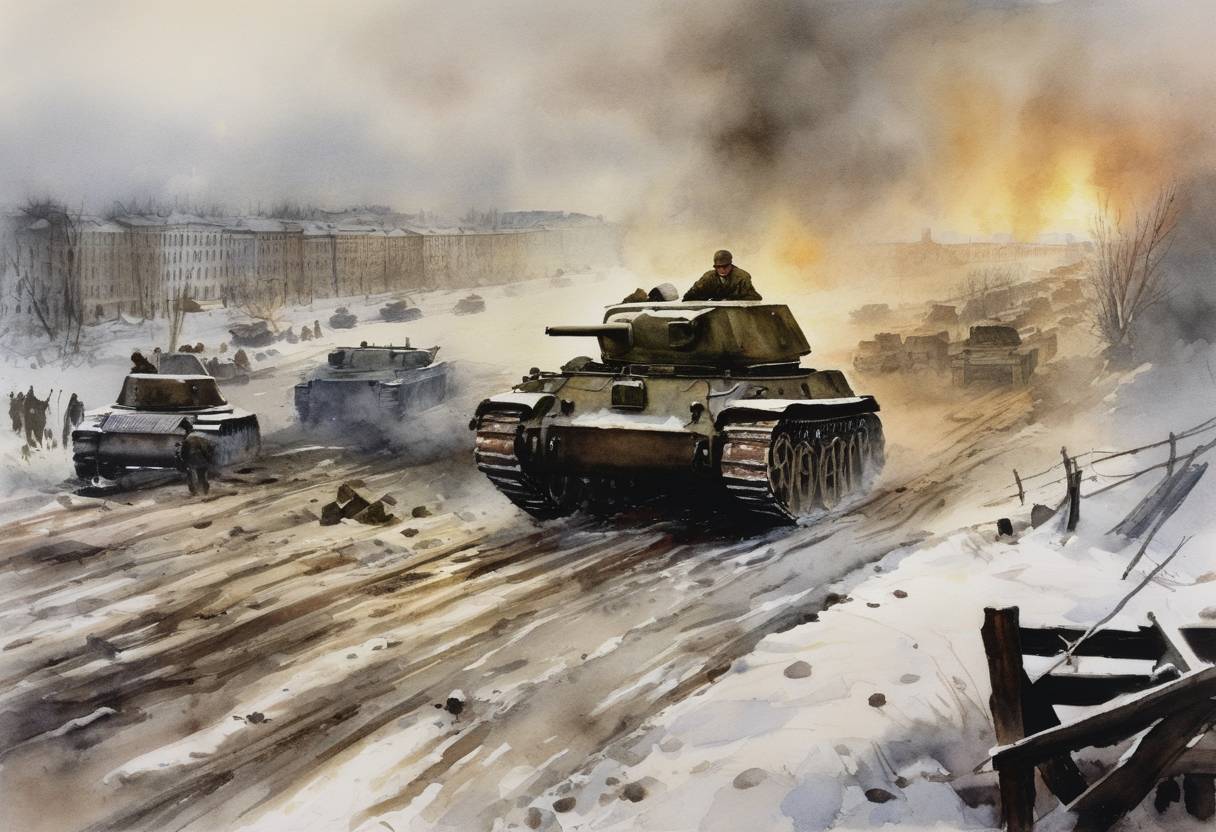
On January 27, 1944, the Siege of Leningrad, one of the longest and most destructive sieges in history, came to an end after 872 grueling days. The German Army, which had encircled the Soviet city of Leningrad (now St. Petersburg) since September 8, 1941, was finally driven out, marking a pivotal moment on the Eastern Front of World War II.
The city of Leningrad held immense strategic and symbolic importance. As the cradle of the Russian Revolution and a major industrial hub, the Nazi forces aimed to capture it to cripple Soviet morale and industry. The encirclement cut off the city from essential supplies, resulting in extreme hardship for its inhabitants. This period witnessed over a million civilian deaths from starvation, extreme cold, and sustained bombing campaigns by German forces.
The siege was broken as a result of a carefully coordinated operation known as the Leningrad-Novgorod Offensive, part of a broader winter campaign conducted by the Soviet Union to reclaim territories occupied by the Axis powers. Soviet forces, including the Leningrad and Volkhov Fronts, with substantial aid from the Baltic Fleet, launched a massive assault on the German 18th Army encircling the city.
By January 27, 1944, Soviet troops had successfully expelled German forces from the southern access point to the city. This military victory was symbolized by celebratory fireworks launched in Leningrad, signaling the end of nearly two and a half years of crippling siege.
The lifting of the siege brought immense relief to the surviving population of Leningrad, but the human toll was staggering. It is estimated that more than a million civilians died during the siege, largely due to starvation. The city’s infrastructure lay in ruin, homes had been destroyed, and survivors were left to rebuild amid profound loss and trauma.
The end of the Siege of Leningrad marked a significant turning point on the Eastern Front. It not only boosted Soviet morale and demonstrated the resilience of its people and army but also allowed the Soviets to divert resources and focus on other offensives against the retreating German forces. The victory at Leningrad contributed to the mounting pressure that would eventually lead to the defeat of Nazi Germany.
Throughout the siege, the resolve of Leningrad’s residents became emblematic of Soviet resistance. The survival of the city against overwhelming odds was celebrated throughout the Soviet Union and continues to be commemorated as a testament to human endurance and strength against adversity.
The liberation of Leningrad remains a powerful symbol of the cost of war and the enduring spirit of its people.
Source: en.wikipedia.org