The Eruption of Mount Tambora: April 10, 1815
1815 · Sumbawa, Indonesia
The Mount Tambora volcano in Indonesia began its most powerful eruption, leading to the 'Year Without a Summer' in 1816 due to the volcanic winter it caused.
August 3, 1783
Mount Asama in Japan erupted in one of Japan's largest volcanic eruptions in recorded history.
Mount Asama, Japan | none
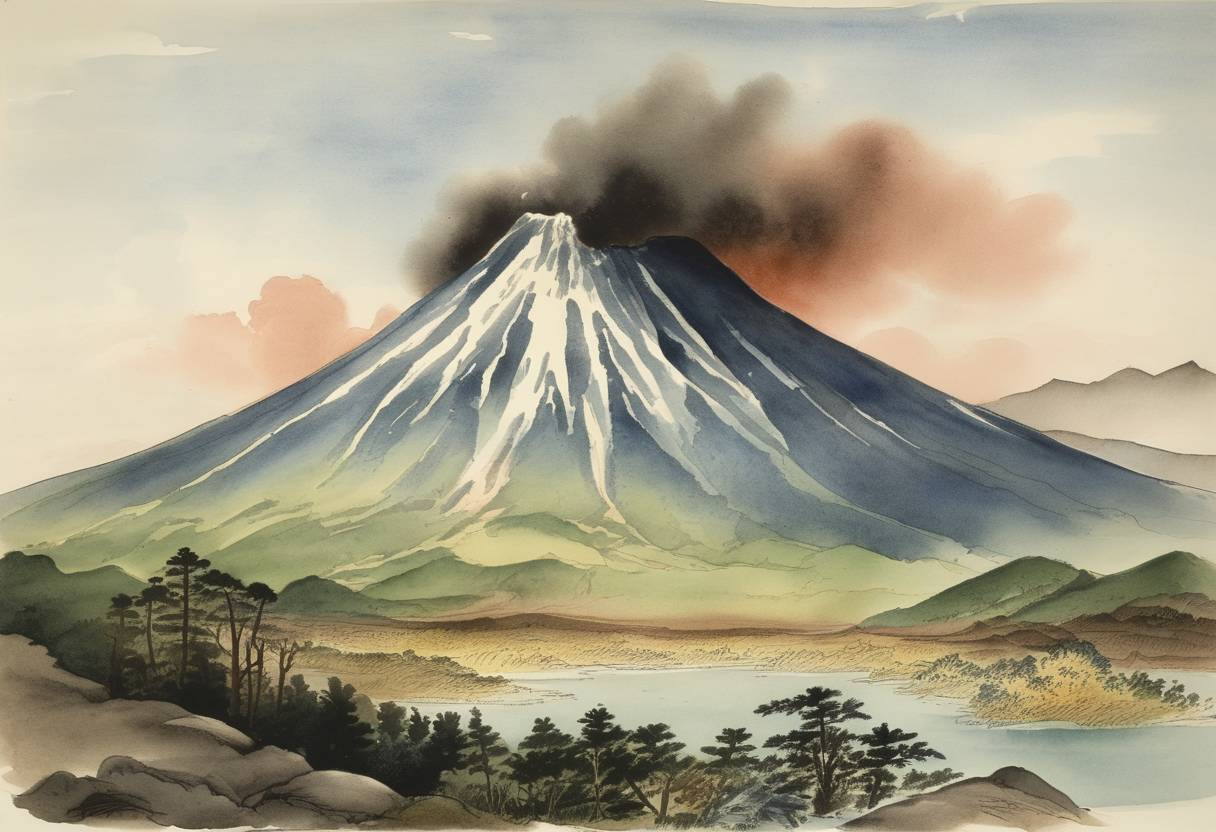
Mount Asama, an active volcano located on the island of Honshu in Japan, experienced one of its most significant eruptions on August 3, 1783. This catastrophic event stands out as one of the largest volcanic eruptions in Japan’s recorded history, both in terms of the magnitude and the impact on surrounding communities and the environment.
Mount Asama had shown signs of volcanic activity in the years and months leading up to the 1783 eruption. Initial smaller eruptions and increased seismic activity indicated rising volcanic pressure. Local inhabitants, residing near the volcano, were largely dependent on agriculture and were thus particularly vulnerable to such geological events. Despite early warnings, the scale of the upcoming eruption was unexpected.
The climactic eruption of August 3rd unleashed an immense column of volcanic ash, gases, and molten rock into the atmosphere. The eruption produced pyroclastic flows and widespread tephra fall, depositing volcanic materials over vast areas. The dramatic extent of the eruption was visually evident, with ash clouds reportedly reaching far-off places and creating a stark alteration in the climate for weeks thereafter.
One of the most immediate and devastating consequences was the impact on local agriculture. The thick layer of ash fall suffocated crops, contaminated water sources, and caused extensive famine in the region. Villages in the vicinity of Mount Asama were particularly hard-hit, with reports of thousands of fatalities attributable to a combination of direct volcanic effects and subsequent starvation and disease.
The fallout from the 1783 eruption extended beyond immediate physical destruction. This event contributed significantly to a period of social and economic hardship known in Japan as the Tenmei Famine, compounded by adverse climatic changes triggered in part by the volcanic ash and aerosols injected into the atmosphere.
Furthermore, the eruption of Mount Asama served as a critical learning point in the study and understanding of volcanic activity. It highlighted the importance of monitoring and predicting volcanic eruptions to mitigate future disasters. The event is now a pivotal part of Japan’s extensive history of natural disasters and has informed both scientific study and disaster preparedness in subsequent generations.
The 1783 eruption of Mount Asama remains a notable episode in the annals of volcanic eruptions due to its profound impact on the affected regions and its contribution to scientific inquiries into volcanic phenomena. It underscored the vulnerability of human societies to natural disasters and the necessity for improved resilience strategies. Mount Asama continues to be closely monitored today, serving as a reminder of the dynamic nature of Earth’s geological processes.
Source: en.wikipedia.org