Soviet Red Army Occupies Tallinn: September 28, 1944
1944 · Tallinn, Estonia
Soviet Red Army occupies Tallinn, the capital of Estonia, during World War II.
October 22, 1943
World War II: The Soviet Red Army occupies Melitopol in Ukrainian Soviet Socialist Republic after driving back German forces.
Melitopol, Ukrainian SSR (now Ukraine) | Soviet Red Army
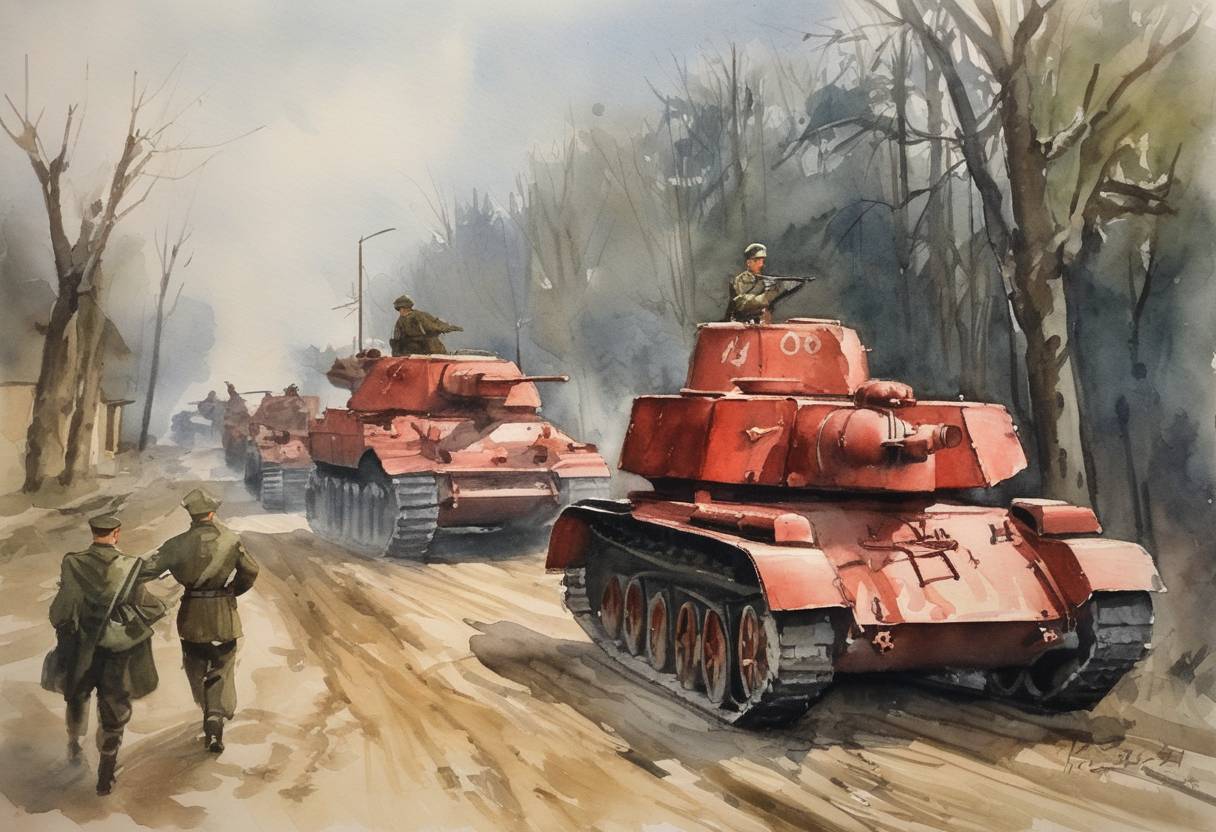
On October 22, 1943, the Soviet Red Army achieved a significant victory during World War II by successfully occupying the city of Melitopol, located in the Ukrainian Soviet Socialist Republic. This military achievement was part of a broader offensive known as the Battle of the Dnieper, a major Soviet campaign aimed at liberating Ukraine from Nazi German occupation.
Eastern Front Developments: By mid-1943, following the pivotal Battle of Kursk, the Soviet forces gained momentum against the retreating German Wehrmacht. The Soviet strategic offensive operations aimed to reclaim territories in Eastern Europe that had been under Axis control.
Operation Beginnings: The fight for Melitopol was a component of a larger strategy to reclaim the central and southern parts of Ukraine. Liberating Melitopol was crucial for further advancement and to establish a foothold for crossing the Dnieper River, a natural defensive barrier for the German Army.
Battle Strategy: The Soviet military undertook a concerted effort involving multiple Army Fronts, utilizing coordinated assaults from infantry, artillery, and armor divisions. The aim was to break through heavily fortified German defenses.
Weeks of Combat: The offensive against Melitopol was marked by intense and prolonged combat. German forces, strategically positioned, mounted a fierce resistance. However, sustained Soviet efforts led to the gradual encirclement and depletion of the German defenses.
Capture of Melitopol: On October 22, the Soviet troops succeeded in capturing Melitopol after approximately a month of fighting. This victory was pivotal, not only for its immediate strategic value but also as a morale booster for the Soviet forces and the local population.
Strategic Implications: The fall of Melitopol allowed Soviet forces to press forward towards the lower Dnieper and edge closer to Crimea. This movement disrupted German defensive plans and facilitated further Soviet advances in subsequent months.
Impact on German Forces: The loss forced German troops to continue retreating westward, conceding more territory and losing critical supply lines. The defeat also marked a decline in German control over the Eastern Front.
Broader Historical Significance: Melitopol’s liberation was a part of the gradual dismantling of the Nazi occupation across Eastern Europe. It reflected the shift in momentum that characterized the latter half of World War II, leading ultimately to the German withdrawal and the Soviet advancement towards Central Europe.
The occupation of Melitopol is remembered as an essential step in the Soviet Union’s efforts to repel Axis forces and liberate occupied territories, contributing to the eventual Allied victory in Europe.
Source: www.britannica.com