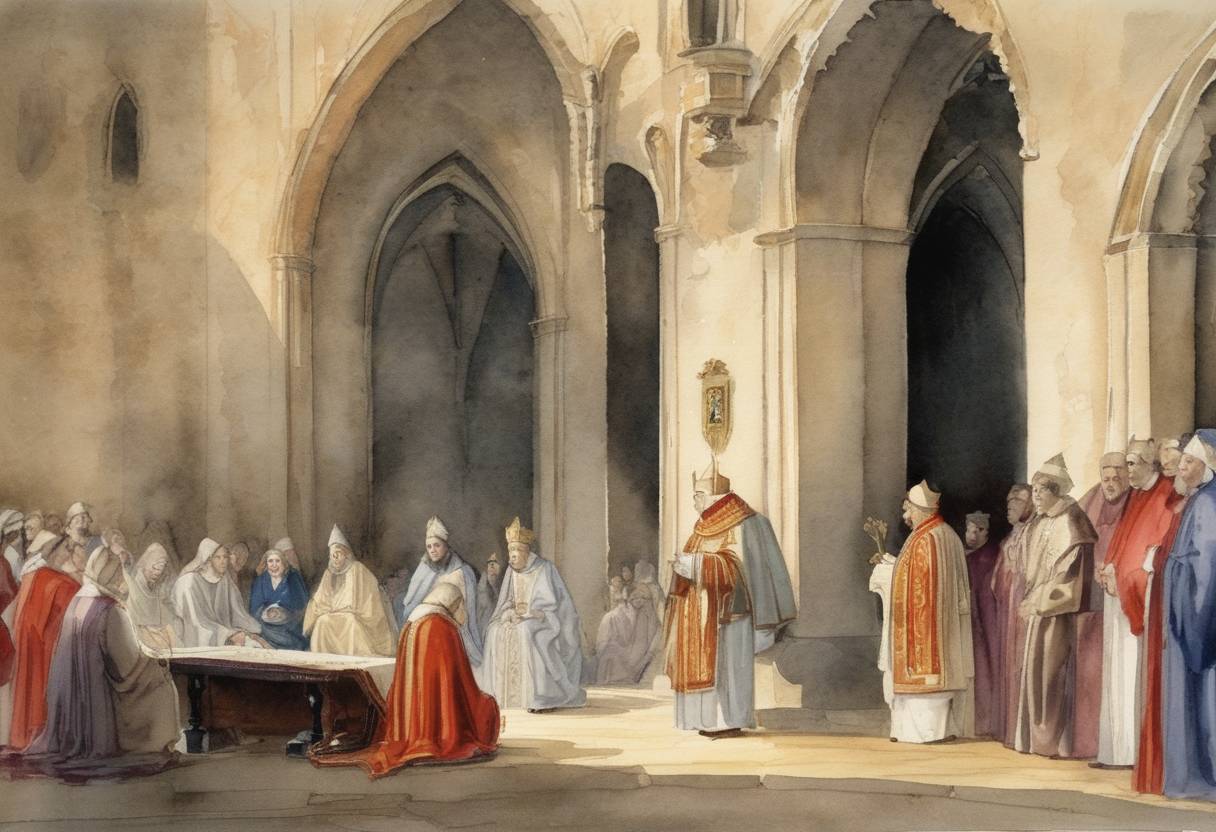
Death of Pope Innocent VI - January 5, 1362
Pope Innocent VI died on January 5, 1362, in Avignon, France. His tenure as pope began when he was elected on December 18, 1352. Born as Étienne Aubert, his papacy was noted for significant administrative reforms aimed at bolstering the efficacy and moral integrity of the Church amidst the turbulent period of the Avignon Papacy.
Pope Innocent VI’s papal leadership occurred during the era known as the Avignon Papacy (1309-1377), where the seat of the papacy was temporarily relocated from Rome to Avignon. This period was marked by significant political and ecclesiastical challenges, including the need for moral and administrative reform.
Main Reforms and Actions
Clerical Reform: Pope Innocent VI took decisive steps to improve the morality and discipline of the clergy, addressing corruption and laxity within the Church’s ranks. He sought to enforce stricter regulations on clerical behavior and had a vested interest in ensuring that ecclesiastical duties were fulfilled faithfully.
Administrative Efficiency: Understanding the importance of efficient governance, Innocent VI overhauled the papal administration. He introduced measures to curtail unnecessary expenditures and streamlined the processes within the Curia, the administrative apparatus of the Papal court.
Political Mediation: His papacy was also involved in European political dynamics. Notably, he worked towards a peace settlement in the ongoing Hundred Years’ War between England and France, although success was limited in this endeavor.
Support for Cardinal Albornoz: Innocent VI empowered Cardinal Gil Álvarez de Albornoz to restore papal authority in the Papal States of Italy, which had fallen into disarray. This move was successful, as Albornoz managed to bring several important territories back under papal control.
Aftermath and Historical Significance
Innocent VI’s efforts to reform the Church’s administrative and moral standing were significant in setting precedents for later reforms. His insistence on maintaining the integrity of the Church laid foundational work that would resonate in subsequent papal reigns. His death marked the end of an era characterized by attempts to restore ecclesiastical credibility amidst widespread crises.
Under Pope Innocent VI, the path toward addressing the issues plaguing the Church and its influence in a turbulent medieval Europe was strengthened. His contributions are viewed as essential measures in reasserting the Church’s spiritual and administrative responsibilities during one of its most challenging periods.