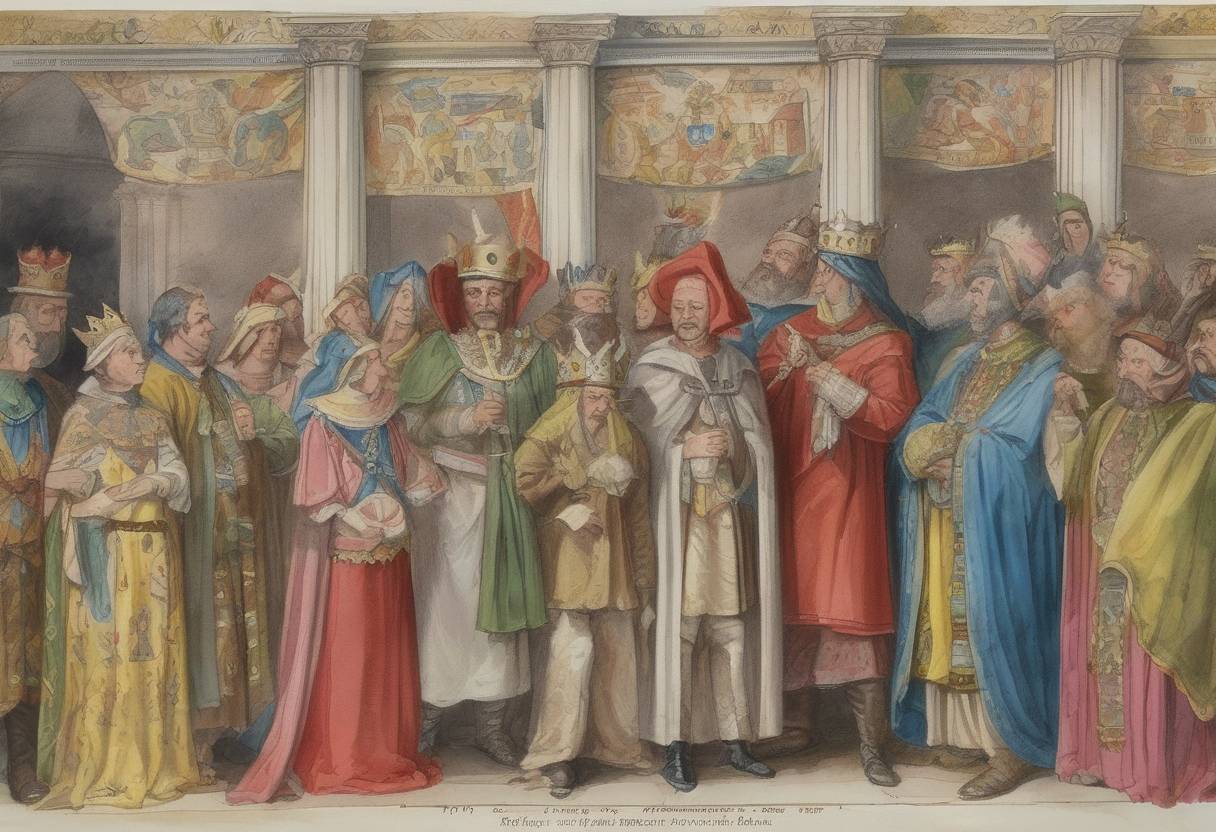
Election of Henry the Fowler as King of East Francia
On May 24, 919, Henry the Fowler was elected as King of East Francia, marking the beginning of the Ottonian dynasty. This event was a pivotal moment in medieval European history, setting the stage for the consolidation of power in what would eventually become the Holy Roman Empire.
Historical Context
Background
- East Francia: Following the Treaty of Verdun in 843, the Carolingian Empire was divided into three kingdoms. East Francia, which roughly corresponds to modern-day Germany, was one of these kingdoms.
- Carolingian Decline: By the early 10th century, the Carolingian dynasty was in decline, weakened by internal strife and external threats such as Viking raids and Magyar invasions.
Predecessors
- Conrad I: Before Henry, Conrad I of the Conradine dynasty was king. His reign (911-918) was marked by struggles to maintain control over the fractious duchies of East Francia.
Henry the Fowler’s Election
- Duke of Saxony: Henry was the Duke of Saxony, a powerful and influential region in East Francia. His leadership and military prowess made him a respected figure among the Germanic tribes.
- Election: After Conrad I’s death, the German dukes elected Henry as king. This election was significant because it represented a shift from the Carolingian tradition of hereditary succession to a more elective monarchy, reflecting the growing power of regional dukes.
Significance of the Ottonian Dynasty
- Foundation: Henry’s election marked the beginning of the Ottonian dynasty, named after his son, Otto I, who would later become the first Holy Roman Emperor.
- Stabilization and Expansion: Henry focused on consolidating his power, defending against external threats, and strengthening the kingdom’s internal structure. His reign laid the groundwork for the future expansion and stabilization of the German territories.
Aftermath and Legacy
- Otto I: Henry’s son, Otto I, succeeded him and was crowned Holy Roman Emperor in 962, further solidifying the dynasty’s influence.
- Cultural and Political Impact: The Ottonian dynasty played a crucial role in shaping the political landscape of medieval Europe, fostering a cultural renaissance and strengthening the church’s influence.
Henry the Fowler’s election as king was a turning point that not only established a new ruling dynasty but also set the stage for the development of a more unified and powerful German state. His leadership and the subsequent achievements of his descendants had lasting impacts on European history.