Canberra Officially Named as the Capital of Australia
1913 · Canberra, Australia
Canberra is officially named as the capital of Australia.
January 1, 1901
The Commonwealth of Australia is established as six colonies federate, marking the birth of modern Australia.
Sydney, Australia | Australian Government
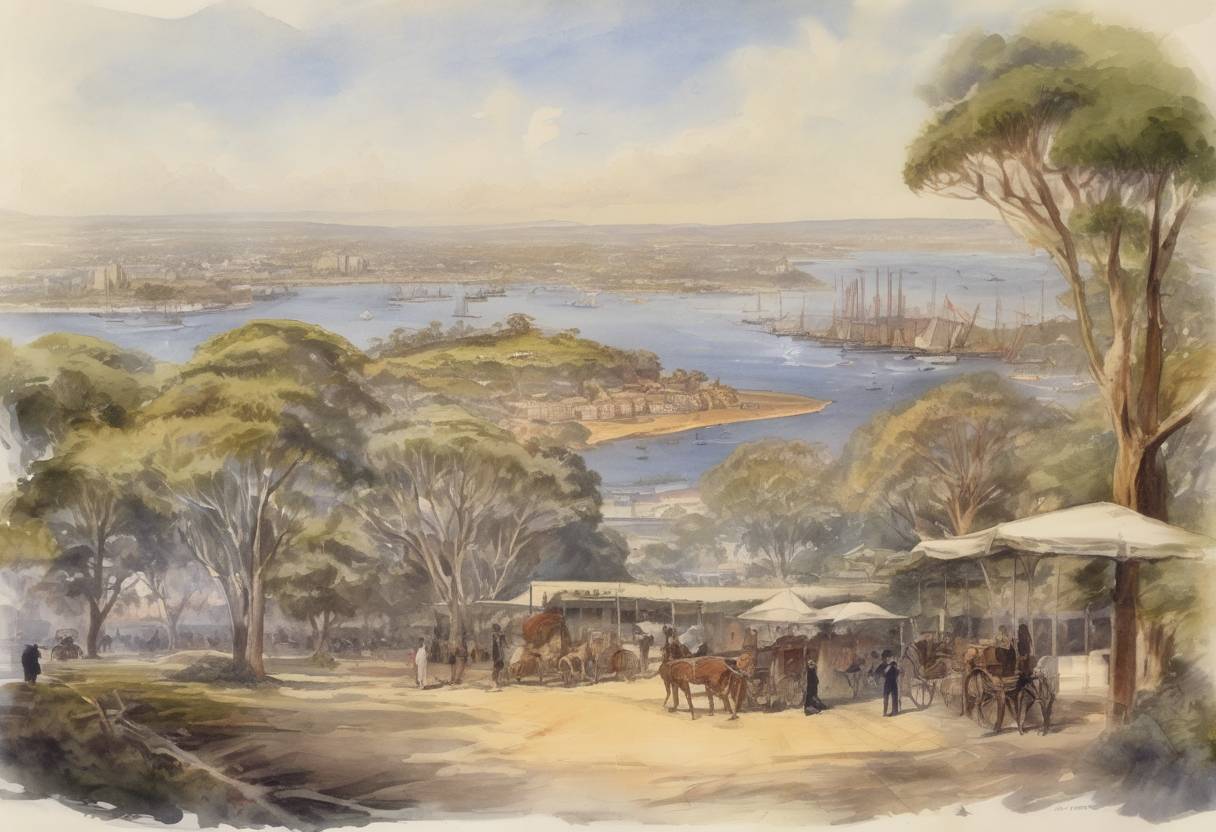
On January 1, 1901, the Commonwealth of Australia was officially established, marking a pivotal moment in the nation’s history as six separate British colonies—New South Wales, Victoria, Queensland, South Australia, Western Australia, and Tasmania—united to form a single federation. This event signified the birth of modern Australia and laid the foundation for its current system of government.
Colonial Beginnings: Prior to federation, Australia was divided into six distinct colonies, each governed independently under British rule. These colonies had their own laws, tariffs, and policies, which often led to intercolonial rivalry and economic inefficiencies.
Push for Federation: The movement towards federation gained momentum in the late 19th century, driven by the desire for a unified defense system, a common immigration policy, and the elimination of trade barriers between colonies. Influential figures such as Sir Henry Parkes, known as the “Father of Federation,” played a crucial role in advocating for a united Australia.
Constitutional Conventions: A series of constitutional conventions were held in the 1890s, where representatives from each colony debated and drafted a constitution for the new nation. The draft constitution was eventually approved by the British Parliament in 1900.
Proclamation of the Commonwealth: The Commonwealth of Australia was proclaimed at a grand ceremony held in Centennial Park, Sydney. The event was attended by thousands of people, including prominent political leaders and dignitaries.
First Governor-General: Lord Hopetoun was sworn in as the first Governor-General of Australia, representing the British monarch.
First Prime Minister: Edmund Barton was appointed as Australia’s first Prime Minister. He played a significant role in the federation movement and was instrumental in drafting the Australian Constitution.
Unified Nation: The federation marked the beginning of a unified national government, allowing for more cohesive policies and governance across the continent.
Constitutional Framework: The Australian Constitution, which came into effect on this day, established a federal system of government with a division of powers between the Commonwealth and the states. It also laid the groundwork for Australia’s parliamentary democracy.
Cultural Identity: Federation fostered a sense of national identity and unity among Australians, although it also highlighted ongoing issues, such as the exclusion of Indigenous Australians from the political process, which would take many more decades to address.
Economic and Social Development: The establishment of the Commonwealth facilitated economic growth and social development, as it allowed for the creation of national policies on trade, immigration, and infrastructure.
The federation of Australia on January 1, 1901, was a landmark event that not only shaped the nation’s political landscape but also set the stage for its future development as a stable and prosperous democracy.
Source: en.wikipedia.org