Louis XIV Becomes King of France
1643 · Paris, France
Louis XIV became King of France at the age of four after the death of his father, Louis XIII.
August 13, 1624
Cardinal Richelieu is appointed as the chief minister to King Louis XIII of France, beginning his influential role in French politics.
Paris, France | French monarchy
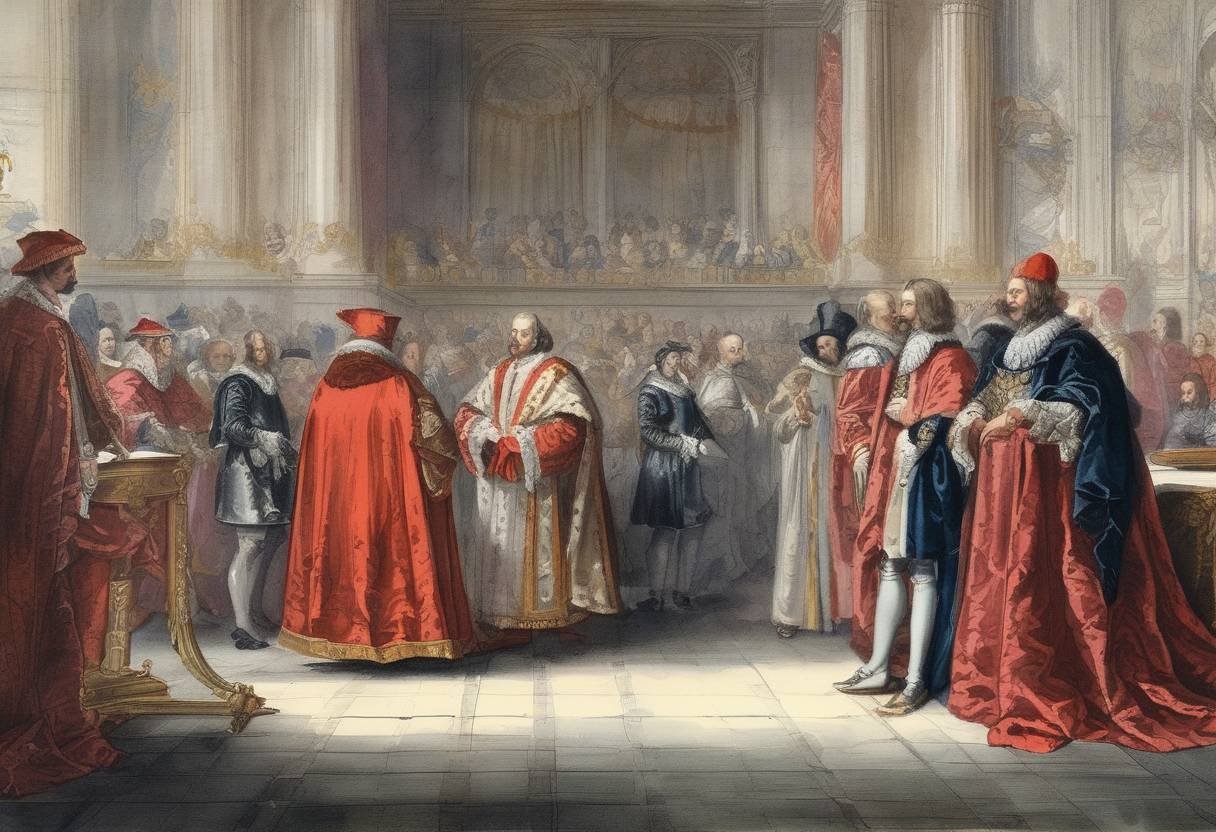
On August 13, 1624, Cardinal Armand Jean du Plessis, better known as Cardinal Richelieu, was appointed as the chief minister to King Louis XIII of France. This appointment marked the beginning of a significant period in French history, as Richelieu’s influence would shape the political landscape of France for years to come.
Before his appointment, Richelieu had already established himself as a skilled diplomat and politician. Born in 1585, he was educated in theology and quickly rose through the ranks of the Catholic Church, becoming a bishop by the age of 21. His political acumen caught the attention of Marie de’ Medici, the queen mother, who brought him into the royal court.
Marie de’ Medici’s Influence: After the assassination of King Henry IV in 1610, Marie de’ Medici served as regent for her young son, Louis XIII. During this time, Richelieu became a trusted advisor to the queen mother.
Political Turmoil: France was experiencing internal strife and external threats. The French nobility was often in conflict with the crown, and the Protestant Huguenots posed a significant challenge to the Catholic monarchy.
Richelieu’s Rise: Richelieu’s ability to navigate the complex political environment and his loyalty to the crown made him an ideal candidate for a more prominent role in government.
As chief minister, Richelieu implemented several key policies that strengthened the power of the monarchy and centralized the French state:
Strengthening Royal Authority: Richelieu worked to diminish the power of the nobility and regional parliaments, ensuring that the king’s authority was absolute.
Suppressing the Huguenots: He aimed to reduce the political and military power of the Huguenots, culminating in the Siege of La Rochelle (1627-1628), which significantly weakened their influence.
Foreign Policy: Richelieu pursued a policy of balancing power in Europe, often siding with Protestant states to counter the influence of the Habsburgs, despite France being a Catholic nation.
Richelieu’s tenure as chief minister lasted until his death in 1642. His policies laid the groundwork for the absolute monarchy that would characterize France under Louis XIV. Richelieu’s centralization efforts and foreign policy maneuvers helped position France as a dominant European power.
His legacy is complex; while he strengthened the French state, his methods were often ruthless, earning him both admiration and enmity. Nonetheless, Cardinal Richelieu remains a pivotal figure in the history of France, emblematic of the intricate interplay between religion and politics in the early modern period.
Source: www.britannica.com