The Ratification of the Treaty of Guadalupe Hidalgo: May 19, 1848
1848 · Mexico City, Mexico
Mexico ratified the Treaty of Guadalupe Hidalgo, ending the Mexican-American War and ceding large territories to the United States.
August 22, 1846
The Second Federal Republic of Mexico was established after the fall of the First Mexican Republic.
Mexico City, Mexico | Mexican government
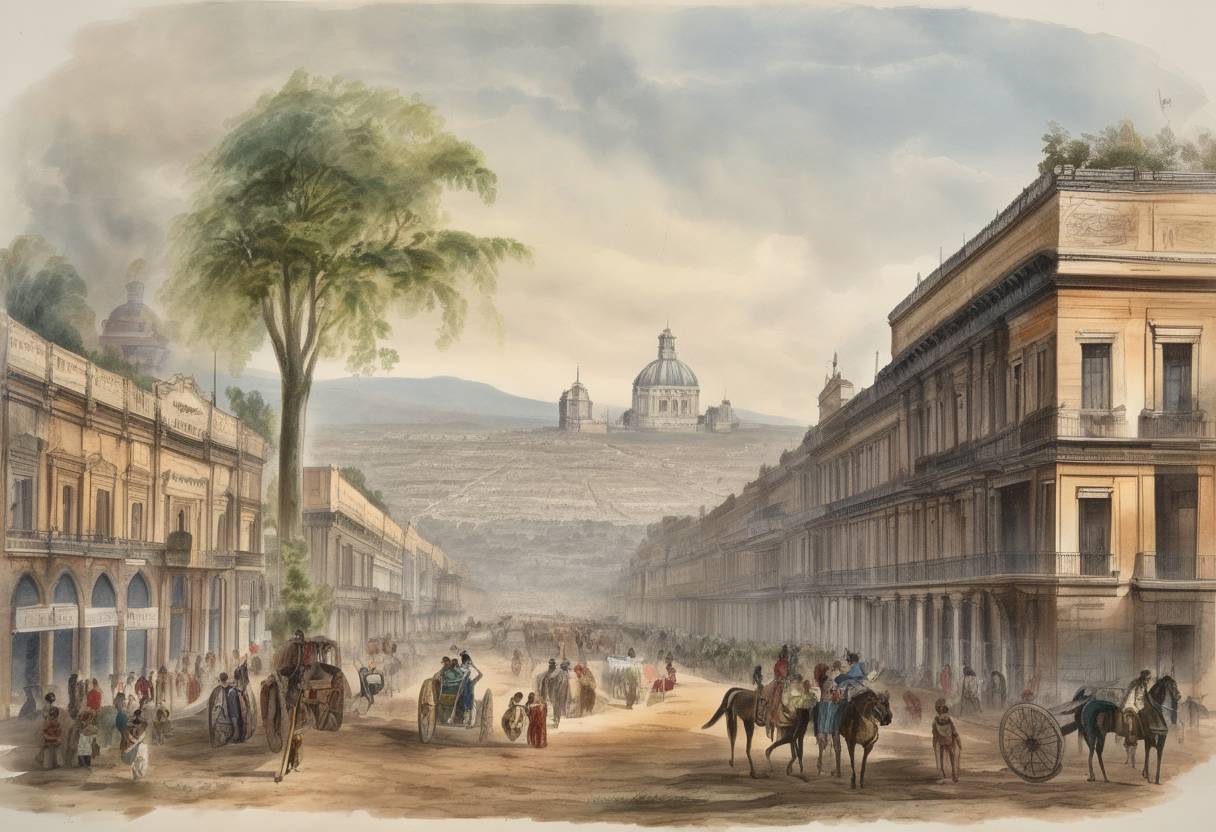
On August 22, 1846, the Second Federal Republic of Mexico was established, marking a significant shift in the nation’s political landscape. This transition followed the fall of the Centralist Republic of Mexico, which had replaced the First Mexican Republic. The re-establishment of federalism was a response to political instability and widespread dissatisfaction with centralist policies.
First Mexican Republic (1824-1835): The First Mexican Republic was a federal republic established after Mexico gained independence from Spain. However, it was plagued by internal conflicts and economic challenges.
Centralist Republic (1835-1846): In 1835, the Centralist Republic replaced the federal system with a more centralized government. This period was marked by authoritarian rule and the loss of Texas, which declared independence in 1836.
Political Instability: The centralist government faced numerous uprisings and opposition from federalists who favored a return to a decentralized system. The Santa Anna regime, in particular, was unpopular due to its dictatorial tendencies and military failures.
U.S.-Mexican War (1846-1848): The outbreak of war with the United States in April 1846 exacerbated Mexico’s internal divisions. The war highlighted the weaknesses of the centralist government and fueled calls for reform.
Federalist Revolts: Throughout the 1840s, various regions in Mexico experienced revolts against the centralist government, demanding a return to federalism.
Political Change: In August 1846, President José Mariano Salas, who had assumed power after a coup against the centralist regime, called for the re-establishment of the federal system. This decision was formalized on August 22, 1846.
Federal Constitution of 1824 Restored: The re-establishment of the federal republic involved the restoration of the 1824 Constitution, which had been suspended under centralist rule.
Continued Instability: Despite the change, Mexico continued to face political instability. The U.S.-Mexican War ended with the Treaty of Guadalupe Hidalgo in 1848, resulting in significant territorial losses for Mexico.
Legacy: The Second Federal Republic set the stage for future political developments in Mexico, including the Reform War (1857-1861) and the eventual establishment of the Mexican Republic under Benito Juárez.
The re-establishment of the Second Federal Republic was a pivotal moment in Mexican history, reflecting the ongoing struggle between centralist and federalist forces and the broader challenges of nation-building in the 19th century.
Source: en.wikipedia.org