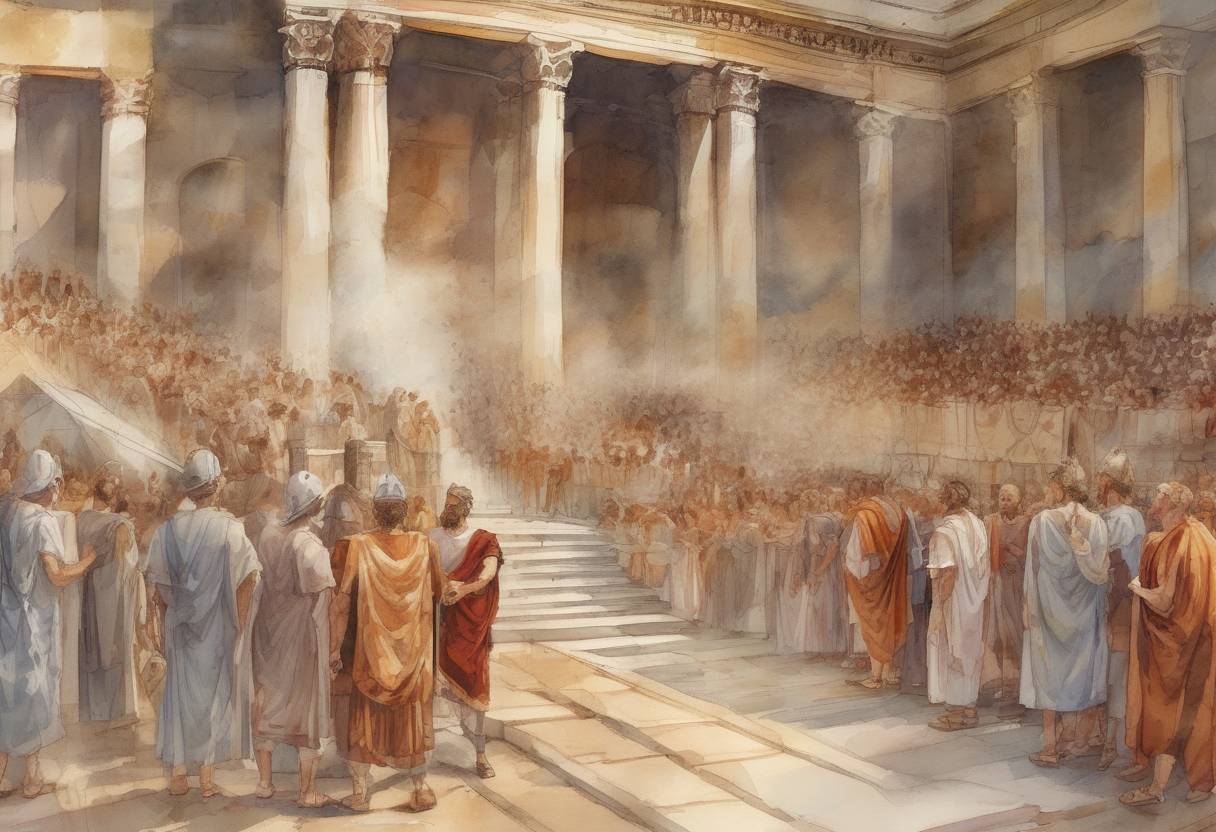
The First Edict of Persecution Against Christians by Emperor Diocletian
On February 24, 303 AD, Roman Emperor Diocletian issued the first edict of what would become known as the Great Persecution, marking a significant and severe crackdown on Christians within the Roman Empire. This event is a pivotal moment in early Christian history and the history of the Roman Empire, as it represents one of the most systematic attempts to eradicate Christianity.
Context and Background
Diocletian’s Reign: Diocletian became emperor in 284 AD and is known for his administrative reforms, which included dividing the empire into the Tetrarchy to ensure more efficient governance. His reign was marked by efforts to stabilize and strengthen the empire, which had been plagued by internal strife and external threats.
Religious Climate: Prior to the edict, Christians had faced varying degrees of persecution, often localized and sporadic. The Roman Empire was predominantly pagan, and traditional Roman religious practices were deeply intertwined with the state. Christians, who refused to worship Roman gods or the emperor, were often viewed with suspicion and hostility.
Motivations for Persecution: Diocletian, influenced by his co-emperor Galerius and traditional Roman religious leaders, saw the growing Christian community as a threat to the unity and stability of the empire. The refusal of Christians to participate in state-sponsored religious activities was perceived as undermining the social and political order.
The Edict of 303
Content of the Edict: The edict ordered the destruction of Christian scriptures and places of worship across the empire. It also prohibited Christians from assembling for worship and stripped them of legal rights. Christian clergy were specifically targeted for arrest.
Implementation: The edict was enforced with varying degrees of severity across the empire. In some regions, it led to widespread violence and martyrdom, while in others, enforcement was more lenient or inconsistent.
The Great Persecution
Escalation: The initial edict was followed by additional decrees, intensifying the persecution. Subsequent edicts demanded that all inhabitants of the empire perform sacrifices to the Roman gods, with severe penalties for non-compliance.
Impact on Christians: The Great Persecution lasted until 311 AD and resulted in the martyrdom of many Christians. It tested the resilience of the Christian community, which, despite the persecution, continued to grow and spread.
Aftermath and Historical Significance
End of Persecution: The persecution officially ended with the Edict of Milan in 313 AD, issued by Emperor Constantine and his co-emperor Licinius, granting religious tolerance to Christians and restoring their confiscated properties.
Legacy: The Great Persecution is often seen as a turning point in Christian history. It highlighted the determination and faith of early Christians and set the stage for Christianity’s eventual acceptance and dominance within the Roman Empire.
Broader Implications: The events of the Great Persecution underscored the challenges of religious diversity in the Roman Empire and foreshadowed the eventual transformation of the empire into a predominantly Christian state.
The issuance of the first edict by Diocletian on February 24, 303, thus stands as a significant moment in the history of religious persecution and the enduring struggle for religious freedom.