Iceland Legalizes Therapeutic Abortion on January 28, 1935
1935 · Reykjavik, Iceland
Iceland becomes the first Western country to legalize therapeutic abortion.
June 17, 1944
Iceland declares independence from Denmark and becomes a republic.
Reykjavik, Iceland | Icelandic Parliament
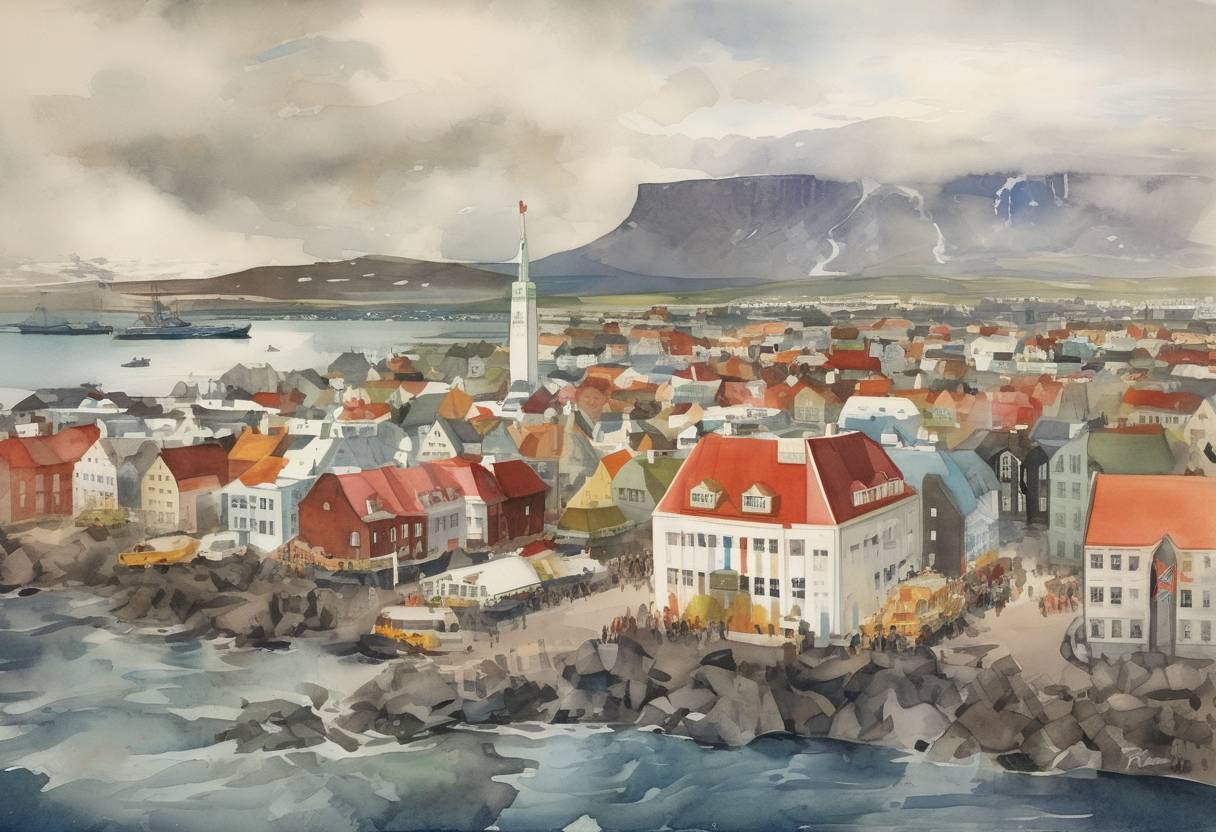
On June 17, 1944, Iceland formally declared its independence from Denmark and established itself as a republic. This significant event marked the culmination of a long-standing desire for self-governance and national sovereignty among Icelanders.
Iceland had been under Danish rule since the early 19th century, following the Treaty of Kiel in 1814, which transferred control from Norway to Denmark. Despite this, Iceland maintained a distinct cultural and national identity, and the push for independence grew stronger over the years.
Home Rule (1904): Iceland was granted home rule, allowing for greater autonomy in domestic affairs. This was a significant step towards self-governance, although foreign affairs and defense remained under Danish control.
Act of Union (1918): Iceland became a sovereign state in personal union with Denmark through the Act of Union. This agreement recognized Iceland as a separate kingdom under the Danish crown, with its own flag and control over domestic matters.
World War II Impact: The German occupation of Denmark in 1940 during World War II severed communications between Iceland and Denmark. This situation accelerated Iceland’s move towards full independence, as Iceland took over its foreign affairs and defense responsibilities.
Referendum (May 1944): A national referendum was held in May 1944, where an overwhelming majority of Icelanders voted in favor of terminating the union with Denmark and establishing a republic.
Proclamation of the Republic: On June 17, 1944, Iceland officially declared itself a republic. The date was chosen to honor Jón Sigurðsson, a leader of the 19th-century Icelandic independence movement, whose birthday is celebrated on this day.
Ceremony at Þingvellir: The declaration took place at Þingvellir, a site of historical and cultural significance, where the Althing, Iceland’s national parliament, was established in 930 AD. Sveinn Björnsson was elected as the first President of Iceland.
International Recognition: Following the declaration, Iceland quickly gained recognition from other countries, solidifying its status as an independent nation.
Post-War Relations with Denmark: After World War II, Iceland and Denmark maintained friendly relations, with Denmark recognizing Iceland’s independence.
Cultural and National Identity: The establishment of the republic was a pivotal moment in Icelandic history, reinforcing national pride and cultural identity.
The declaration of independence on June 17, 1944, remains a cornerstone of Icelandic history, celebrated annually as Iceland’s National Day. It symbolizes the country’s successful journey towards self-determination and its enduring commitment to democracy and independence.
Source: en.wikipedia.org