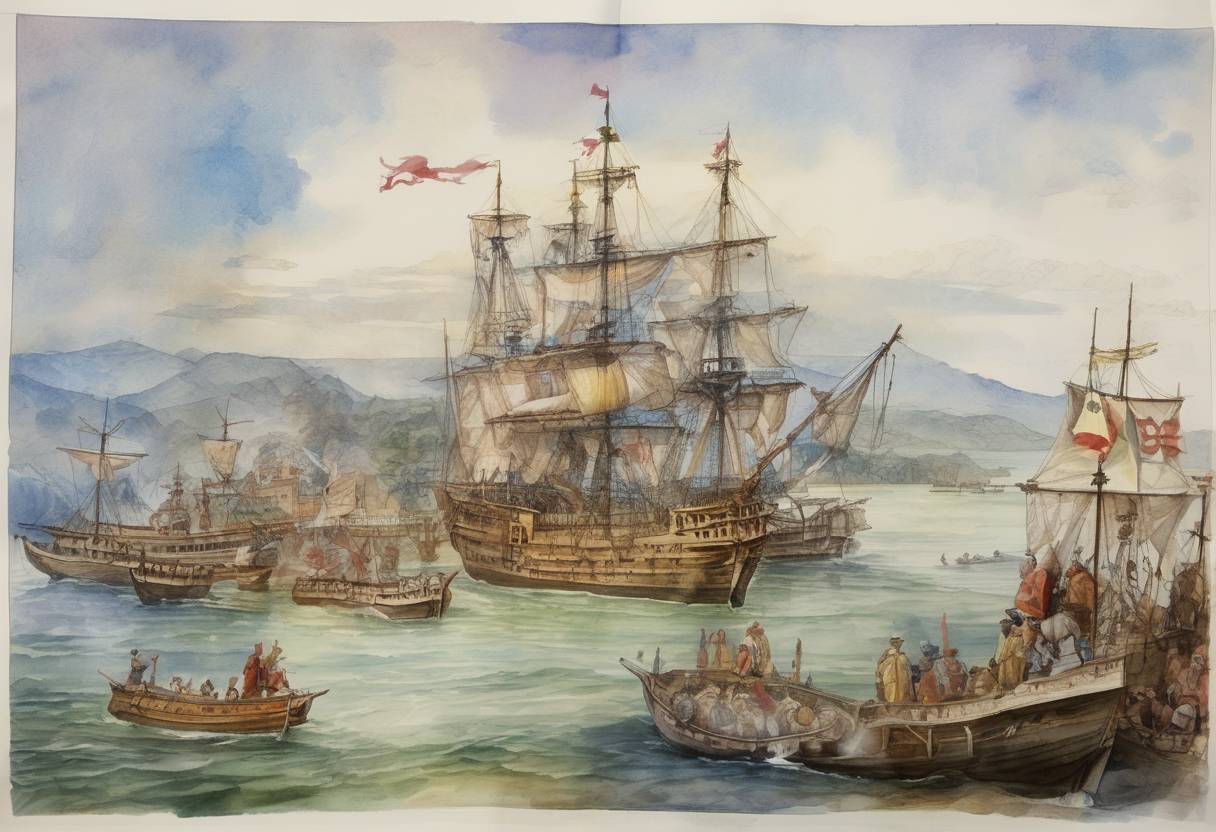
Vasco Núñez de Balboa and the Discovery of the Pacific Ocean
On September 25, 1513, Spanish explorer Vasco Núñez de Balboa became the first European to lay eyes on the Pacific Ocean from the New World. This monumental event marked a significant milestone in the Age of Exploration and had profound implications for European exploration and colonization.
Background
Vasco Núñez de Balboa was born in 1475 in Jerez de los Caballeros, Spain. He initially traveled to the New World in 1500, seeking fortune and adventure. After a series of ventures, including a failed attempt to establish a settlement in Hispaniola, Balboa found himself in debt and seeking new opportunities.
In 1510, Balboa joined an expedition to the mainland of Central America, where he played a crucial role in establishing the settlement of Santa María la Antigua del Darién, the first permanent European settlement on the mainland of the Americas. His leadership and diplomatic skills with indigenous peoples helped him rise to prominence in the region.
The Journey to the Pacific
Balboa’s journey to the Pacific Ocean began with reports from indigenous peoples about a vast sea to the south, rich in gold and other resources. Motivated by these tales and the prospect of wealth, Balboa organized an expedition to cross the Isthmus of Panama, a narrow strip of land connecting North and South America.
On September 1, 1513, Balboa set out from Santa María with a small force of Spanish soldiers and a larger contingent of indigenous guides and porters. The journey was arduous, involving treacherous terrain, dense jungles, and hostile encounters with local tribes.
Reaching the Pacific
After weeks of difficult travel, Balboa and his men reached the summit of a mountain on September 25, 1513. From this vantage point, Balboa became the first European to see the vast expanse of the Pacific Ocean, which he initially named the “South Sea” (Mar del Sur).
To formally claim the ocean and the surrounding lands for Spain, Balboa waded into the waters with a sword in one hand and a banner in the other, performing a symbolic act of possession.
Aftermath and Significance
Balboa’s discovery of the Pacific Ocean had far-reaching consequences. It opened new opportunities for Spanish exploration and conquest, ultimately leading to further expeditions, such as those by Ferdinand Magellan, who would later circumnavigate the globe.
Despite his achievements, Balboa’s fortunes declined due to political rivalries and accusations of treason. He was arrested and executed in 1519, a tragic end for a man whose explorations had significantly expanded European understanding of the world.
Balboa’s sighting of the Pacific Ocean remains a landmark event in the history of exploration, symbolizing the relentless quest for knowledge and the expansion of European influence across the globe.