Theresa May Announces Resignation - May 24, 2019
2019 · London, United Kingdom
British Prime Minister Theresa May announces her resignation as leader of the Conservative Party, effective June 7, amid Brexit negotiations.
November 28, 1990
Margaret Thatcher resigns as Prime Minister of the United Kingdom, succeeded by John Major.
London, United Kingdom | Conservative Party
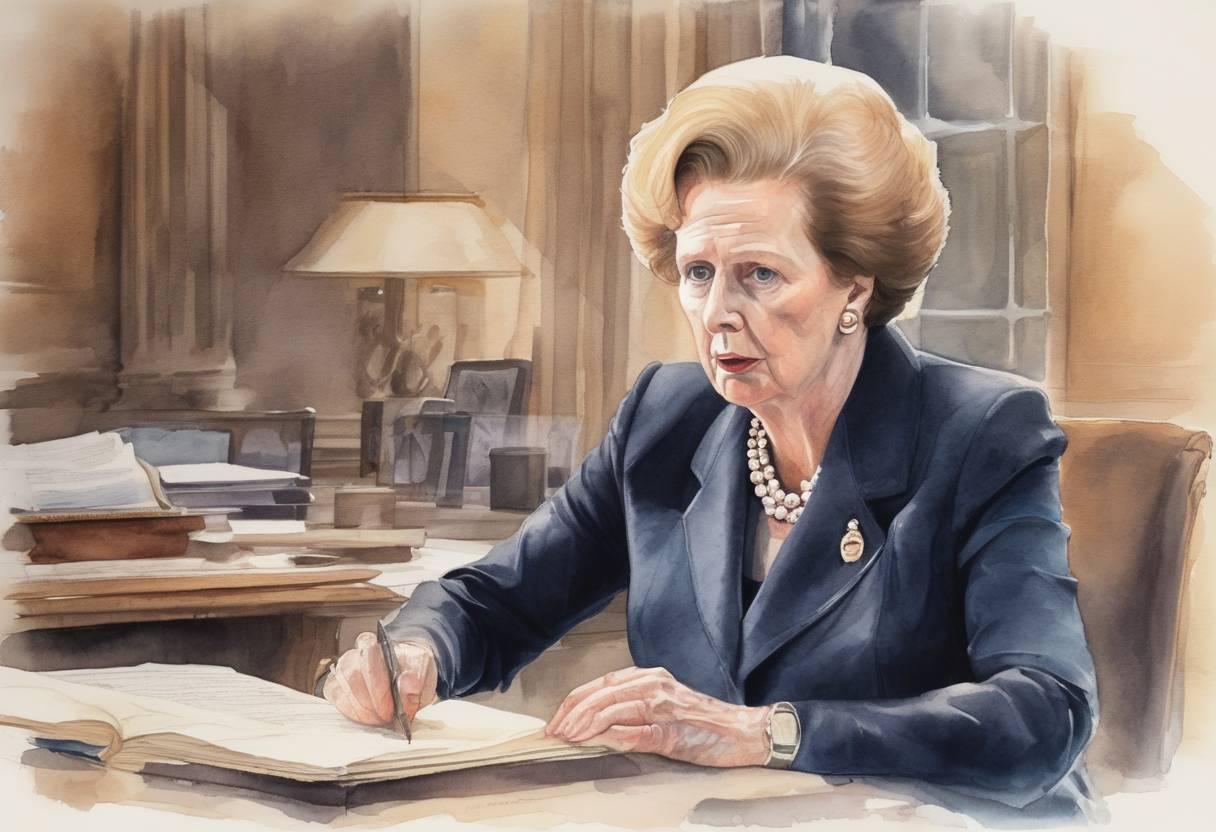
Margaret Thatcher, the first female Prime Minister of the United Kingdom, served from May 4, 1979, to November 28, 1990. Her tenure was marked by significant economic and social changes, including the implementation of free-market policies, privatization of state-owned industries, and a strong stance against trade unions. Known as the “Iron Lady,” Thatcher’s leadership style and policies were both lauded and criticized, leading to a deeply polarized political landscape.
Thatcher’s resignation was precipitated by several factors:
Poll Tax Controversy: The introduction of the Community Charge, commonly known as the “poll tax,” was highly unpopular and led to widespread protests and civil unrest.
Economic Challenges: Despite initial economic growth, the late 1980s saw a recession, rising unemployment, and inflation, which eroded public support.
Party Dissent: Thatcher’s leadership style and policies led to growing dissent within the Conservative Party. Her rigid stance on European integration, particularly her opposition to a single European currency, alienated many pro-European Conservatives.
Leadership Challenge: In November 1990, Michael Heseltine, a prominent Conservative MP, challenged Thatcher for the leadership of the party. Although she won the first ballot, she did not secure a sufficient majority to avoid a second round.
On November 22, 1990, after consulting with her Cabinet and realizing she lacked the full support of her party, Thatcher announced her intention to resign. Her formal resignation took place on November 28, 1990, marking the end of her 11-year premiership.
John Major, who served as Chancellor of the Exchequer under Thatcher, emerged as the leading candidate to succeed her. He was elected leader of the Conservative Party and subsequently became Prime Minister on November 28, 1990. Major’s leadership marked a shift towards a more conciliatory approach within the party and towards Europe.
Thatcher’s Legacy: Margaret Thatcher’s resignation marked the end of an era in British politics. Her policies and leadership style left a lasting impact on the UK, shaping the Conservative Party and influencing global economic policies.
John Major’s Premiership: Major’s tenure focused on stabilizing the economy, addressing internal party divisions, and navigating the complexities of European integration. He led the country through the Maastricht Treaty negotiations and faced challenges such as the Gulf War and domestic economic issues.
Political Landscape: Thatcher’s resignation highlighted the deep divisions within the Conservative Party regarding Europe, a theme that continued to influence British politics in the following decades.
Margaret Thatcher’s resignation remains a pivotal moment in British history, symbolizing both the culmination of her transformative yet contentious leadership and the beginning of a new chapter under John Major.
Source: en.wikipedia.org