Joe Walker's Historic X-15 Flight on July 19, 1963
1963 · Edwards Air Force Base, United States
Joe Walker flew a North American X-15 to a record altitude of 106,010 meters (347,800 feet), becoming the first human to enter space twice.
November 16, 2004
NASA's X-43A scramjet sets a new speed record for aircraft at approximately Mach 9.6.
Edwards Air Force Base, United States | NASA
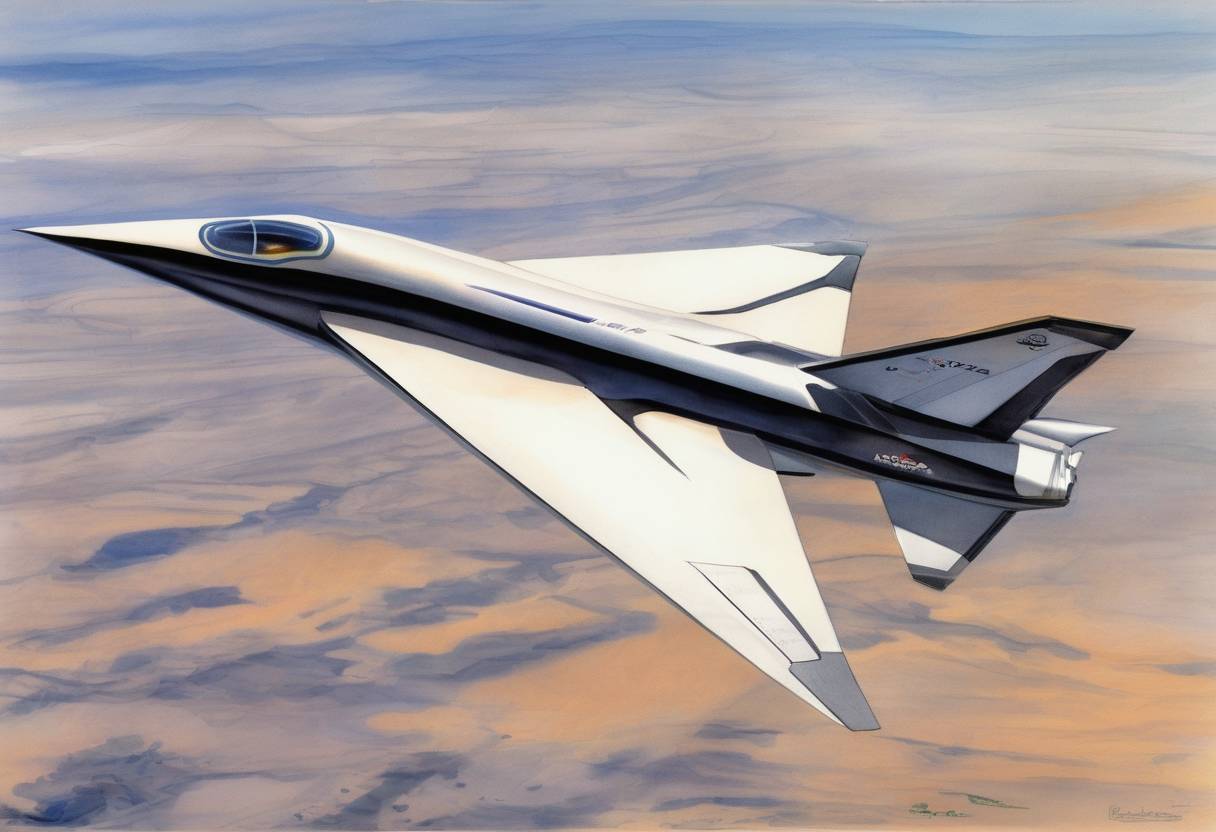
On November 16, 2004, NASA’s X-43A scramjet aircraft achieved a groundbreaking milestone in aviation history by setting a new speed record for aircraft, reaching approximately Mach 9.6. This remarkable achievement was part of NASA’s Hyper-X program, which aimed to demonstrate the feasibility of air-breathing scramjet (supersonic combustion ramjet) engines for high-speed flight.
The Hyper-X program was initiated to explore the potential of scramjet technology, which promises significant advancements in hypersonic flight. Unlike traditional jet engines, scramjets operate efficiently at extremely high speeds by compressing incoming air before combustion without the need for moving parts. This technology could revolutionize air travel and space access by providing faster and more efficient propulsion systems.
The X-43A was an unmanned experimental aircraft designed specifically for testing scramjet engines. It was a part of a series of test flights intended to push the boundaries of speed and altitude for air-breathing engines.
The record-setting flight took place over the Pacific Ocean, launched from NASA’s Dryden Flight Research Center in California. The X-43A was carried aloft by a modified Pegasus rocket, which was launched from a B-52 bomber. Once the X-43A reached the desired altitude and speed, it separated from the rocket and ignited its scramjet engine.
During the flight, the X-43A achieved a speed of Mach 9.6, approximately 7,000 miles per hour (11,265 kilometers per hour), at an altitude of around 110,000 feet (33,528 meters). This speed was nearly ten times the speed of sound and set a new world record for an air-breathing aircraft.
The successful demonstration of the X-43A’s scramjet engine marked a significant milestone in aerospace engineering. It provided valuable data and insights into the behavior of scramjets at hypersonic speeds, paving the way for future developments in high-speed flight technology.
The implications of this technology are vast, with potential applications in both military and civilian sectors. Hypersonic vehicles could drastically reduce travel times across the globe and offer more efficient methods for launching payloads into space.
Following the success of the X-43A, NASA continued to explore hypersonic technologies through various programs and collaborations. The data gathered from the Hyper-X program has contributed to ongoing research and development efforts aimed at realizing the potential of scramjet propulsion.
The X-43A’s record-breaking flight remains a testament to human ingenuity and the relentless pursuit of pushing the boundaries of what is possible in aerospace technology. It stands as a landmark achievement in the history of aviation and continues to inspire advancements in the field of hypersonic flight.
Source: www.nasa.gov