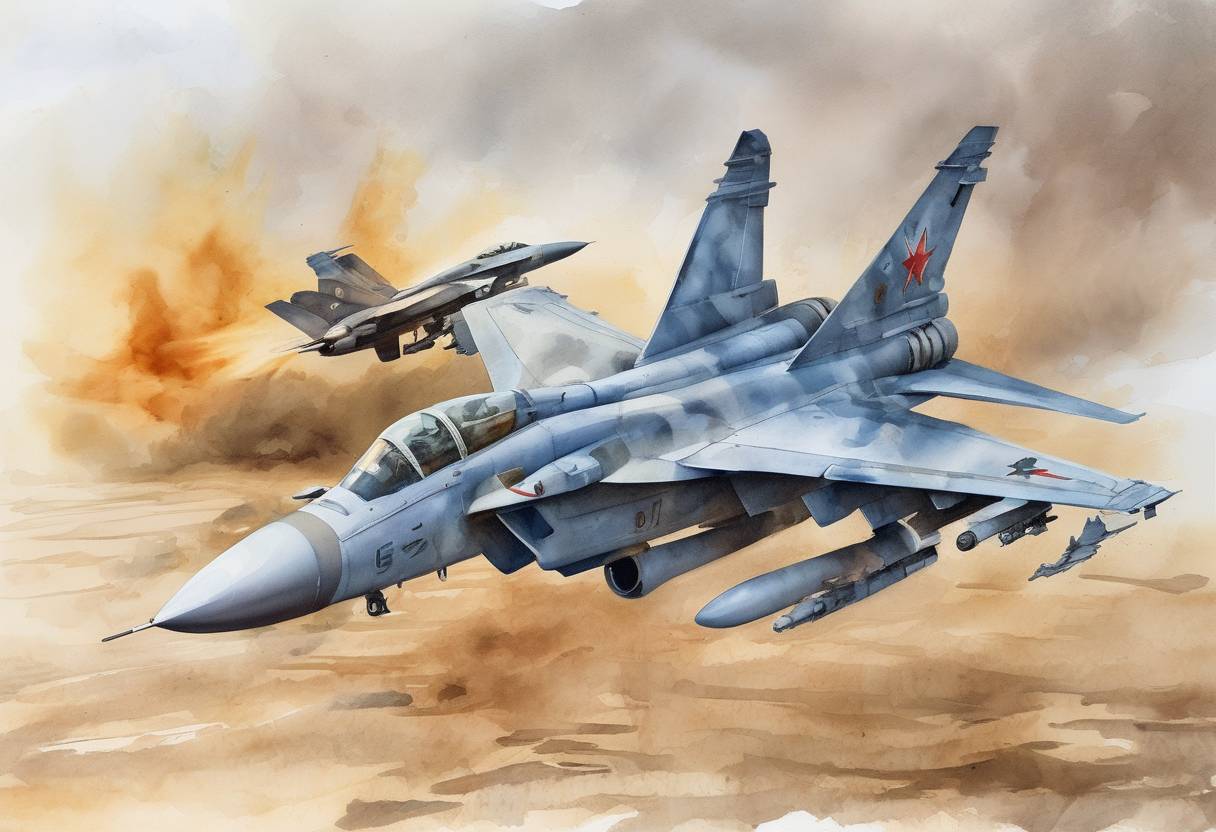
Incident Overview: November 23, 2015
On November 23, 2015, a significant military incident occurred that heightened tensions between Russia and Turkey. A Russian Sukhoi Su-24 fighter jet was shot down by a Turkish F-16 fighter jet near the Syria–Turkey border. This event marked a critical point in the complex geopolitical landscape of the Syrian Civil War and had far-reaching diplomatic repercussions.
Context Leading Up to the Incident
- Syrian Civil War: By 2015, the Syrian Civil War had drawn in multiple international actors, including Russia, which supported the Syrian government, and Turkey, which had interests in opposing the Assad regime and managing its border security.
- Russian Military Involvement: Russia had been conducting airstrikes in Syria since September 2015, targeting various groups opposed to the Syrian government. This included areas near the Turkish border, which was a point of contention for Turkey.
- Turkish Concerns: Turkey had repeatedly expressed concerns about violations of its airspace by Russian aircraft, given the proximity of Russian operations to its border.
The Incident
- Airspace Violation: On the morning of November 23, 2015, Turkey claimed that the Russian Su-24 had violated its airspace despite multiple warnings. The Turkish military stated that the aircraft was warned ten times over a span of five minutes before being engaged.
- Engagement: A Turkish F-16 fighter jet subsequently fired an air-to-air missile, resulting in the downing of the Russian aircraft. The Su-24 crashed in the mountainous region of northern Syria.
- Pilot Fate: One of the Russian pilots was killed by ground fire after ejecting, while the other was rescued in a joint operation by Russian and Syrian forces.
- Diplomatic Tensions: The incident led to a severe diplomatic rift between Russia and Turkey. Russia described the downing as a “stab in the back” by “accomplices of terrorists” and imposed economic sanctions on Turkey.
- Military and Economic Repercussions: Russia deployed advanced S-400 air defense systems to its base in Syria and suspended military cooperation with Turkey. Economic sanctions affected Turkish exports to Russia and tourism.
Broader Historical Significance
- NATO Involvement: As a NATO member, Turkey’s actions were closely scrutinized by the alliance, which called for de-escalation and dialogue between the two countries.
- Regional Stability: The incident underscored the volatile nature of the Syrian conflict and the risks of international military operations in the region.
- Reconciliation Efforts: Over time, diplomatic efforts were made to mend relations, with Turkish President Recep Tayyip Erdoğan expressing regret over the incident in 2016, leading to a gradual normalization of ties.
This incident remains a notable example of the complexities and dangers of international military engagements in conflict zones, highlighting the delicate balance of power and diplomacy in global politics.