The Act of Union 1707: Ratification by the Parliament of Scotland
1707 · Edinburgh, Scotland
The Act of Union was ratified by the Parliament of Scotland, leading to the creation of the Kingdom of Great Britain.
February 28, 1638
The Scottish National Covenant was signed in Edinburgh, a pivotal event in the history of Scotland, asserting Scottish Presbyterianism and resisting the imposition of Anglican practices.
Edinburgh, Scotland | Scottish Covenanters
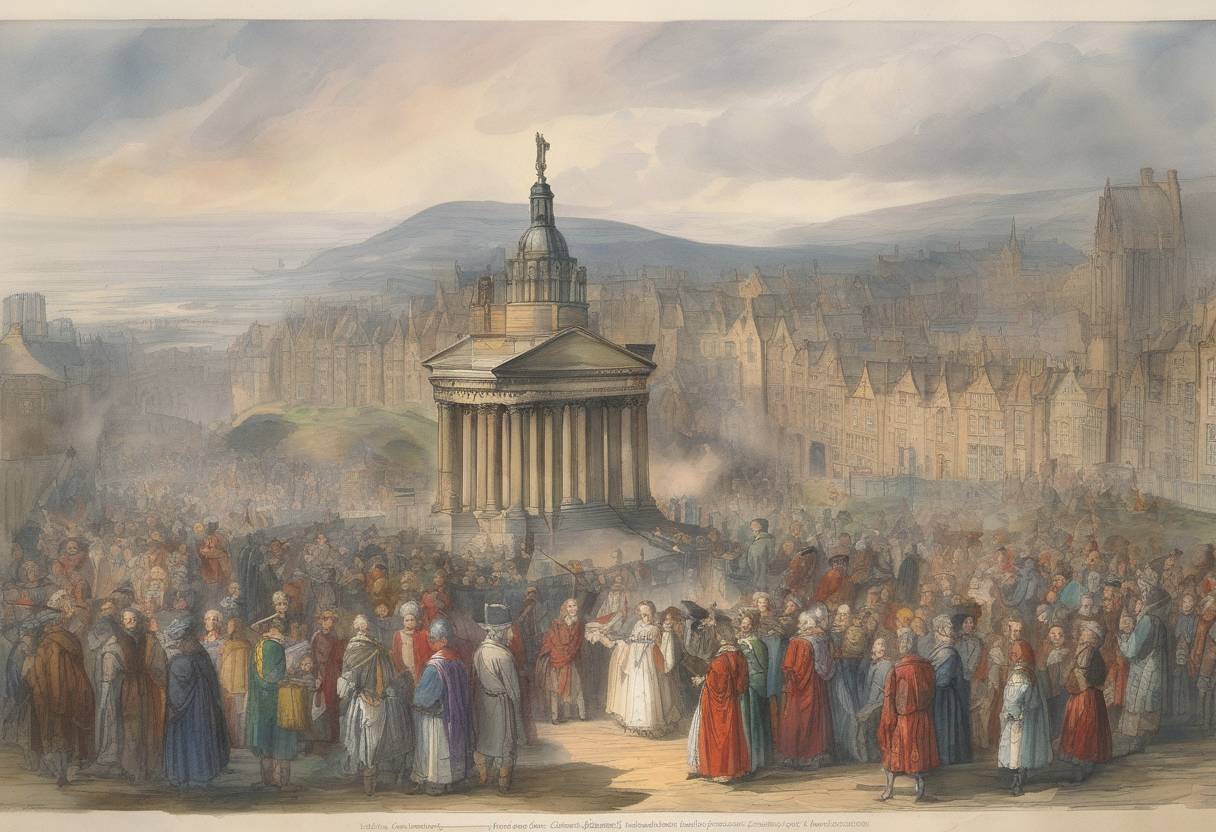
On February 28, 1638, a significant event in Scottish history unfolded with the signing of the Scottish National Covenant in Edinburgh. This document was a critical assertion of Scottish Presbyterianism and a bold resistance against the imposition of Anglican practices by King Charles I.
In the early 17th century, King Charles I sought to unify religious practices across his kingdoms, including England and Scotland. His attempts to impose the Anglican Book of Common Prayer on the Scottish Church met with widespread resistance. The Scots, who had embraced Presbyterianism—a form of Protestantism that emphasized a church governed by elders rather than bishops—viewed this as an infringement on their religious and national identity.
The National Covenant was drafted by Presbyterian leaders, including Archibald Johnston of Wariston and Alexander Henderson. It was a response to the King’s religious policies and was intended to affirm the Scots’ commitment to their religious traditions. The document combined a declaration of loyalty to the King with a firm rejection of any religious innovations that contradicted Presbyterian beliefs.
The signing of the Covenant marked the beginning of a period of conflict known as the Bishops’ Wars (1639-1640), as tensions between the Covenanters and the King escalated. These conflicts were part of the larger series of events that led to the Wars of the Three Kingdoms, which included the English Civil War.
The signing of the Scottish National Covenant was a pivotal moment in the history of Scotland, reflecting the deep-seated commitment of the Scots to their religious and national identity and setting the stage for future conflicts and transformations in the British Isles.
Source: en.wikipedia.org