1858 · Fort Myers, United States
Halleck Tustenuggee, a leading Seminole warrior, agreed to emigrate to the Indian Territory west of the Mississippi River after being persuaded by General William S. Harney during the Third Seminole War.
December 29, 1890
The Wounded Knee Massacre occurred on the Pine Ridge Indian Reservation in South Dakota, where U.S. Army troops killed approximately 150-300 Lakota Sioux, including women and children. This event marked the end of the Indian Wars in the United States.
Wounded Knee, United States | U.S. Army
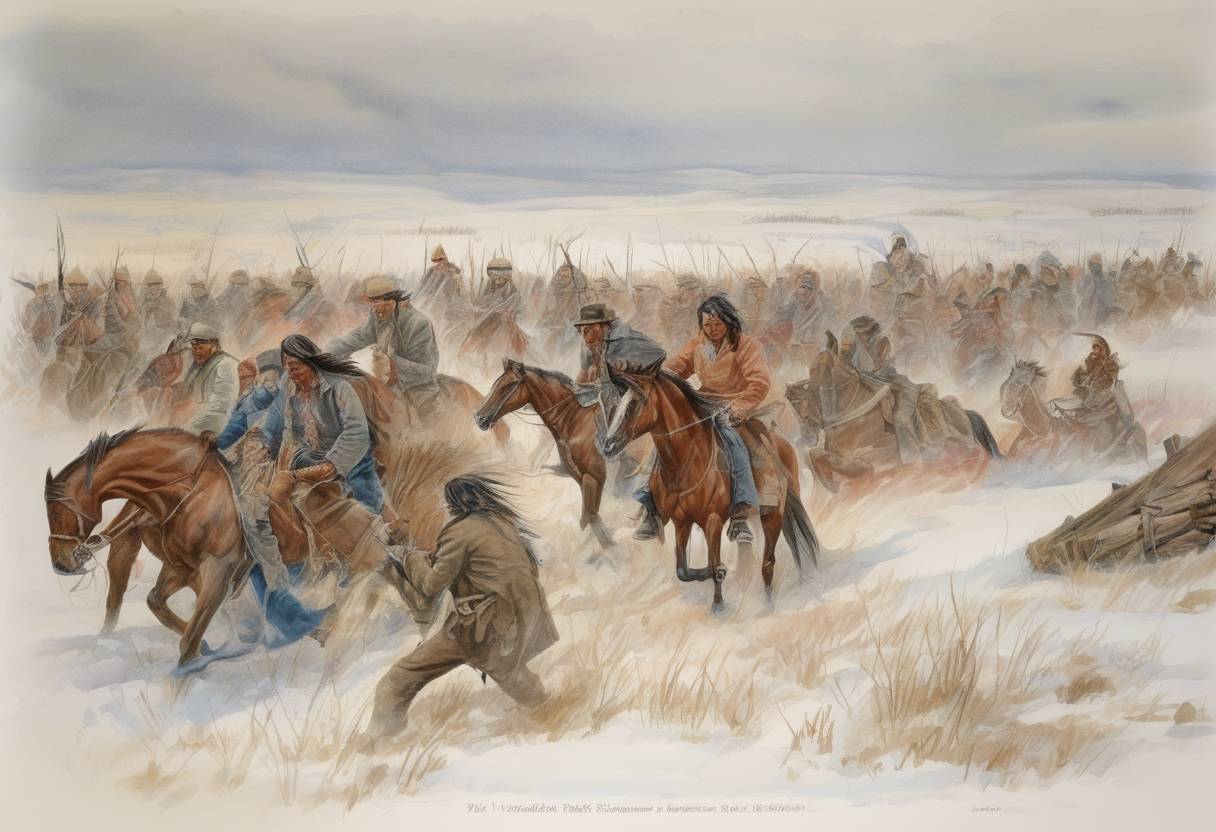
The Wounded Knee Massacre, which took place on December 29, 1890, on the Pine Ridge Indian Reservation in South Dakota, is a pivotal and tragic event in American history. It marked the end of the Indian Wars, a series of conflicts between the United States government and various Native American tribes.
The massacre occurred during a period of significant tension between the U.S. government and Native American tribes. The U.S. government had been enforcing policies of assimilation and relocation, which often resulted in the loss of Native lands and traditional ways of life. The Ghost Dance movement, a spiritual revival among Native Americans, had been gaining momentum. It promised the restoration of their lands and way of life, which alarmed U.S. authorities who feared it might incite rebellion.
The Ghost Dance Movement: Originating among the Paiute in Nevada, the Ghost Dance spread across various tribes, including the Lakota Sioux. The movement’s growth was seen as a threat by the U.S. government, leading to increased military presence on reservations.
Sitting Bull’s Death: On December 15, 1890, Sitting Bull, a prominent Lakota leader, was killed during an attempt to arrest him, further escalating tensions.
The Flight to Pine Ridge: Following Sitting Bull’s death, a band of Lakota, led by Chief Big Foot, sought refuge at the Pine Ridge Reservation. They were intercepted by the U.S. 7th Cavalry and escorted to a camp near Wounded Knee Creek.
On the morning of December 29, 1890, as the U.S. troops attempted to disarm the Lakota, a shot was fired—its origin remains unclear. This triggered a chaotic and brutal assault by the soldiers. Armed with rifles and Hotchkiss guns, the troops opened fire on the Lakota, killing approximately 150-300 men, women, and children. The massacre was indiscriminate and devastating.
End of the Indian Wars: The massacre at Wounded Knee is often cited as the last major conflict of the Indian Wars. It symbolized the end of armed Native American resistance in the United States.
Public Reaction and Legacy: The event was initially reported as a battle, but as details emerged, it became clear it was a massacre. It has since been recognized as a grave injustice and a symbol of the broader mistreatment of Native Americans by the U.S. government.
Cultural Impact: Wounded Knee has become a powerful symbol of Native American resistance and resilience. It has been the subject of numerous historical analyses, books, and films, serving as a reminder of the need for reconciliation and recognition of Native American rights.
The Wounded Knee Massacre remains a somber chapter in American history, highlighting the profound consequences of cultural misunderstanding and conflict. It underscores the importance of acknowledging and learning from the past to foster a more inclusive and respectful future.
Source: en.wikipedia.org