Henry VIII's Ascension to the Throne
1509 · London, England
Henry VIII ascended to the throne of England following the death of his father, Henry VII.
January 18, 1486
King Henry VII of England married Elizabeth of York, uniting the warring houses of Lancaster and York and effectively ending the Wars of the Roses.
London, England | English Monarchy
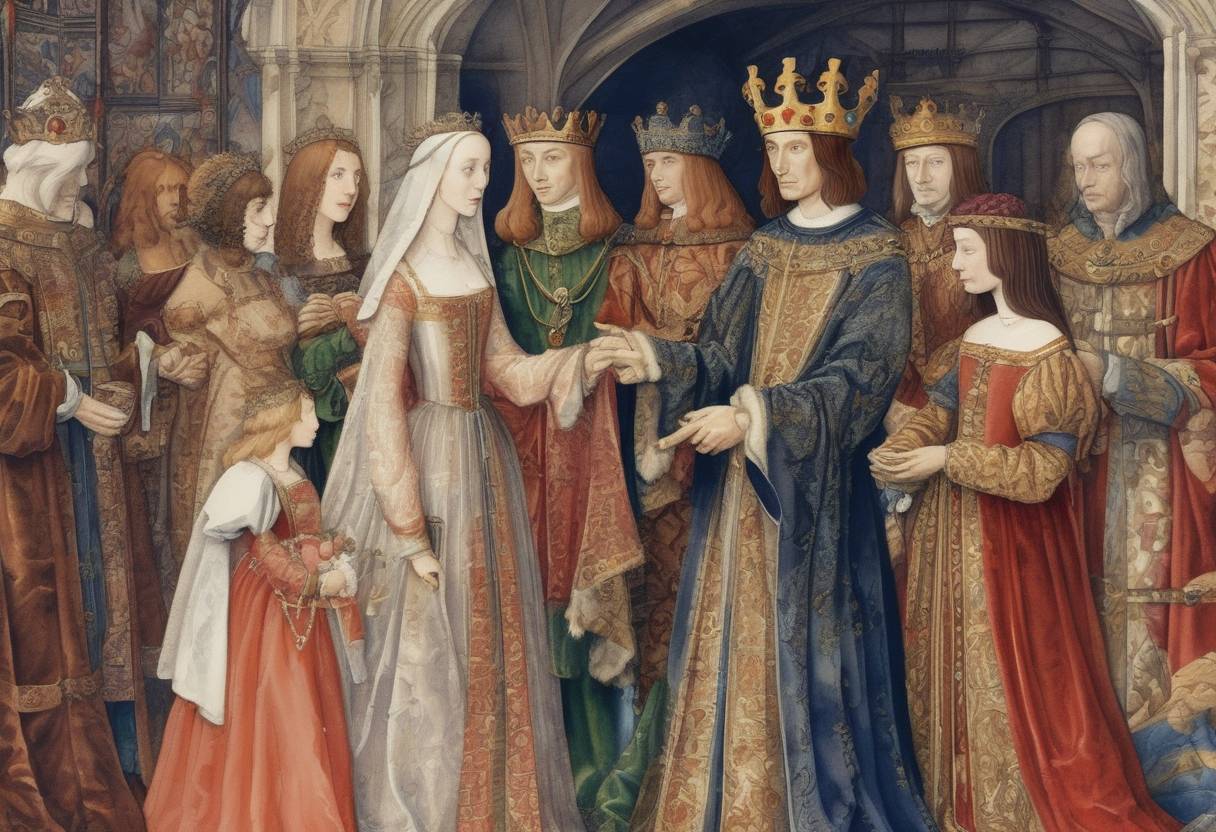
On January 18, 1486, a significant event in English history took place: the marriage of Henry VII and Elizabeth of York. This union effectively ended the Wars of the Roses, a series of dynastic conflicts that had plagued England for decades.
The Wars of the Roses were fought between two rival branches of the royal House of Plantagenet: the House of Lancaster, symbolized by a red rose, and the House of York, represented by a white rose. The conflict began in 1455 and was characterized by a series of battles, political maneuvers, and shifts in power.
Henry Tudor, a Lancastrian claimant, emerged victorious at the Battle of Bosworth Field in 1485, defeating King Richard III of York. This victory marked the end of Richard’s reign and the beginning of Henry’s as King Henry VII.
Henry VII’s marriage to Elizabeth of York was a strategic move designed to solidify his claim to the English throne and bring peace to a war-torn nation. Elizabeth was the daughter of King Edward IV of York, and her marriage to Henry symbolized the union of the two warring houses.
The wedding took place at Westminster Abbey, a location steeped in royal tradition. This marriage was not only a personal union but also a political one, as it aimed to legitimize Henry’s rule and prevent further disputes over the throne.
The marriage of Henry VII and Elizabeth of York had several important consequences:
End of the Wars of the Roses: The union effectively ended the dynastic conflicts, as it combined the claims of both houses. Their offspring would inherit the claims of both Lancaster and York, reducing the likelihood of future conflicts.
Foundation of the Tudor Dynasty: The marriage laid the foundation for the Tudor dynasty, which would rule England for over a century. Their son, Henry VIII, and granddaughter, Elizabeth I, became two of England’s most famous monarchs.
Symbol of Unity: The marriage was a powerful symbol of reconciliation and unity. It was celebrated as a new beginning for England, bringing stability and peace after years of turmoil.
Creation of the Tudor Rose: The emblem of the Tudor rose, combining the red rose of Lancaster and the white rose of York, became a symbol of the new dynasty and the unity it represented.
The marriage of Henry VII and Elizabeth of York was a turning point in English history. It not only ended a period of civil strife but also ushered in a new era of relative peace and prosperity. The Tudor dynasty would go on to oversee significant developments in English society, including the English Reformation and the expansion of overseas exploration.
In conclusion, the marriage of Henry VII and Elizabeth of York was a pivotal event that helped shape the course of English history, bringing an end to the Wars of the Roses and establishing a new royal lineage that would leave a lasting legacy.
Source: www.britannica.com