The Battle of Peonnum: July 14, 756
756 · Peonnum, England
The Battle of Peonnum took place, where King Cuthred of Wessex defeated the Mercians under King Æthelbald, asserting Wessex's independence from Mercian dominance.
August 5, 0910
The Battle of Tettenhall occurs, where an alliance of Mercian and West Saxon forces defeat a Viking army.
Tettenhall, England | Kingdom of Mercia and Wessex
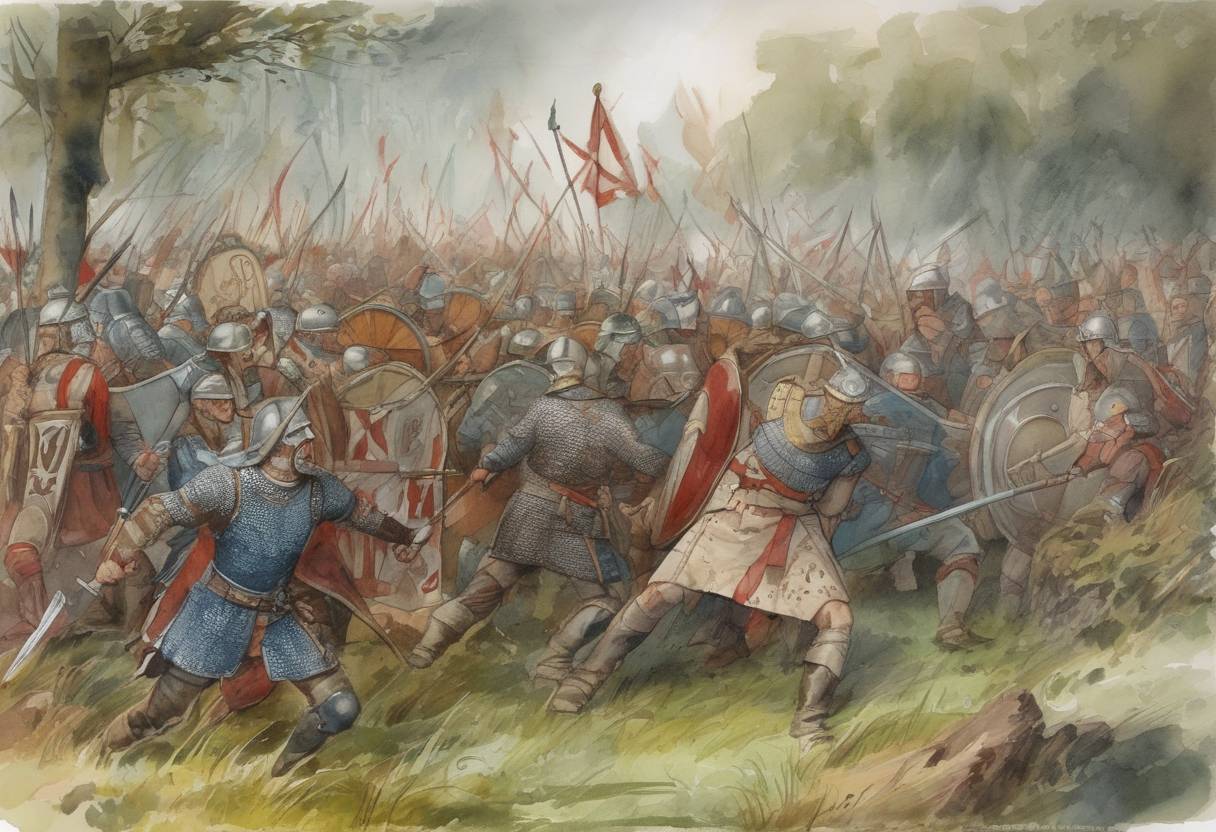
The Battle of Tettenhall, fought on August 5, 910, was a significant conflict during the Viking Age in England. This battle saw an alliance of Mercian and West Saxon forces successfully defeat a Viking army, marking a pivotal moment in the struggle between the Anglo-Saxons and the Norse invaders.
During the late 9th and early 10th centuries, England was frequently subjected to Viking raids and invasions. The Vikings, primarily from Denmark, had established several settlements and controlled large portions of the country, known as the Danelaw. The Anglo-Saxon kingdoms, particularly Wessex and Mercia, were engaged in a protracted struggle to reclaim these territories.
King Edward the Elder of Wessex and his sister Æthelflæd, the Lady of the Mercians, were key figures in the resistance against the Vikings. Their leadership and strategic alliances were crucial in organizing defenses and launching counter-offensives against the Norsemen.
The Battle of Tettenhall occurred when a large Viking army, possibly from Northumbria, launched a raid into Mercian territory. The Vikings had been emboldened by previous successes and sought to extend their influence further into Anglo-Saxon lands.
In response, Edward the Elder and Æthelflæd coordinated a joint military effort, combining forces from Wessex and Mercia. The exact location of Tettenhall is debated, but it is generally believed to be near modern-day Wolverhampton in the West Midlands.
The battle was fiercely contested, with the Anglo-Saxon forces ultimately gaining the upper hand. The Vikings suffered a significant defeat, with many of their leaders killed in the fighting. This victory was instrumental in halting the Viking advance and securing the safety of Mercia and Wessex.
The victory at Tettenhall had several important consequences:
Strategic Advantage: The defeat weakened the Viking presence in the region, allowing the Anglo-Saxons to consolidate their power and continue their efforts to reclaim the Danelaw.
Anglo-Saxon Unity: The successful collaboration between Mercia and Wessex demonstrated the potential of unified Anglo-Saxon resistance against the Vikings, setting a precedent for future cooperation.
Legacy of Leadership: The leadership of Edward the Elder and Æthelflæd was further solidified, enhancing their reputations and influence in the ongoing struggle against Viking incursions.
The Battle of Tettenhall is remembered as a crucial turning point in the Anglo-Saxon efforts to resist Viking domination and played a significant role in the eventual unification of England under a single monarchy.
Source: en.wikipedia.org