Fall of Baghdad: April 8, 2003
2003 · Baghdad, Iraq
Baghdad fell to American forces during the Iraq War, marking a significant moment in the conflict as the regime of Saddam Hussein began to collapse.
March 24, 2003
The United States launched Operation Iraqi Freedom, marking the beginning of the Iraq War, with a coalition of forces invading Iraq to overthrow Saddam Hussein's regime.
Baghdad, Iraq | United States Armed Forces
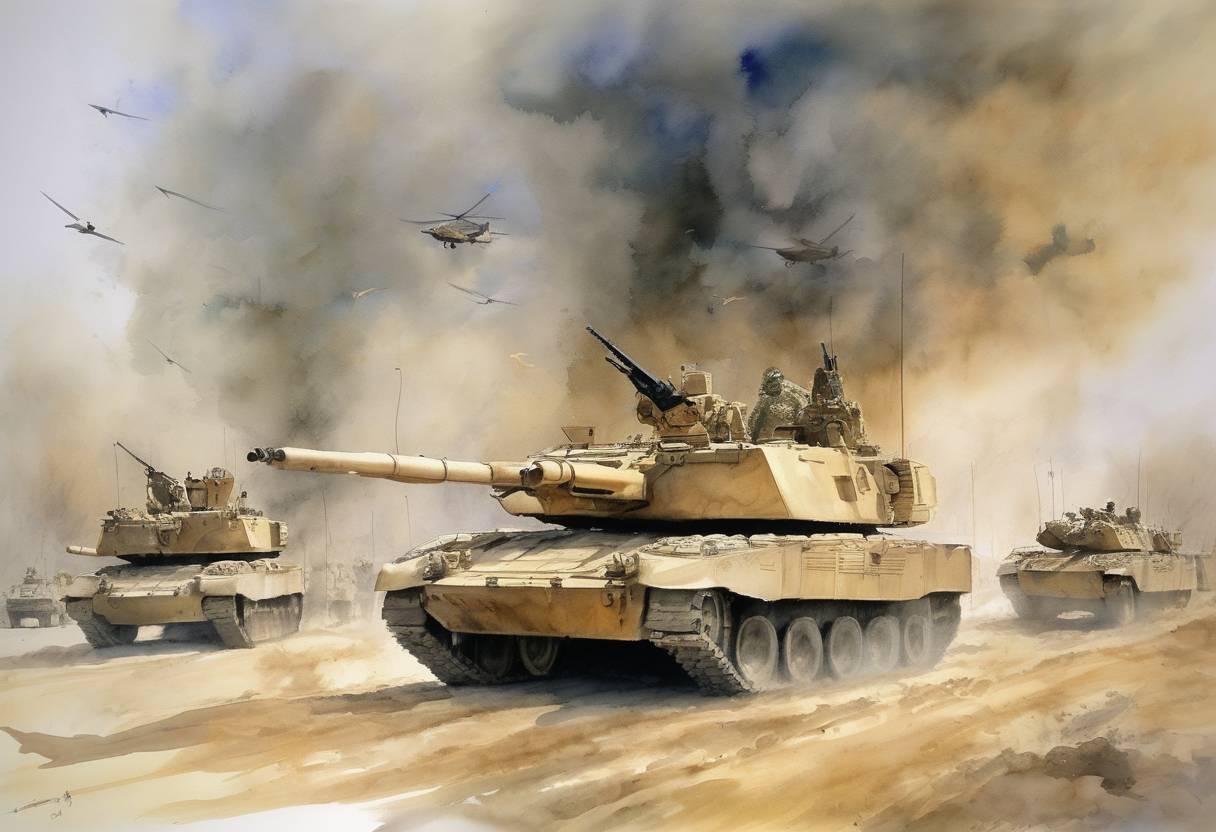
On March 20, 2003, the United States, along with a coalition of allied nations, initiated Operation Iraqi Freedom, marking the beginning of the Iraq War. This military campaign aimed to overthrow the regime of Iraqi President Saddam Hussein. Although you mentioned March 24, the operation officially began on March 20, 2003.
The roots of the Iraq War can be traced back to the Gulf War of 1990-1991 and the subsequent years of tension between Iraq and the international community. Following the Gulf War, Iraq was subject to United Nations sanctions and weapons inspections intended to dismantle its weapons of mass destruction (WMD) programs. However, by the early 2000s, the U.S. government, led by President George W. Bush, argued that Iraq was not complying with these inspections and posed a significant threat due to its alleged possession of WMDs.
The events of September 11, 2001, further intensified U.S. concerns about global terrorism and the potential for rogue states to supply weapons to terrorist groups. The Bush administration, supported by intelligence reports, claimed that Iraq had continued to develop WMDs and had links to terrorist organizations, although these claims were later disputed and largely discredited.
On March 20, 2003, the invasion of Iraq commenced with a series of airstrikes, famously termed “shock and awe,” designed to quickly incapacitate Iraqi military capabilities. This was followed by a ground invasion led by U.S. and British forces, with additional support from countries such as Australia and Poland. The coalition forces rapidly advanced towards Baghdad, encountering varying levels of resistance from Iraqi forces.
The initial phase of the invasion was swift, but the aftermath proved to be complex and challenging. The absence of a clear post-war plan led to widespread looting, civil unrest, and the emergence of an insurgency against coalition forces. The failure to find WMDs damaged the credibility of the U.S. and its allies, leading to significant political and public backlash.
The Iraq War had profound implications for the region and the world, including:
In conclusion, Operation Iraqi Freedom marked a pivotal moment in early 21st-century geopolitics, with lasting effects on Iraq, the Middle East, and international relations. The war remains a subject of extensive analysis and debate regarding its justification, execution, and consequences.
Source: www.britannica.com