William II Crowned King of England
1087 · Westminster, England
William II is crowned King of England, succeeding his father, William the Conqueror.
March 3, 1067
Edgar the Ætheling, a claimant to the English throne, along with other English nobles, submitted to King William the Conqueror, effectively marking the end of major English resistance following the Norman Conquest.
Berkhamsted, England | King William's Court
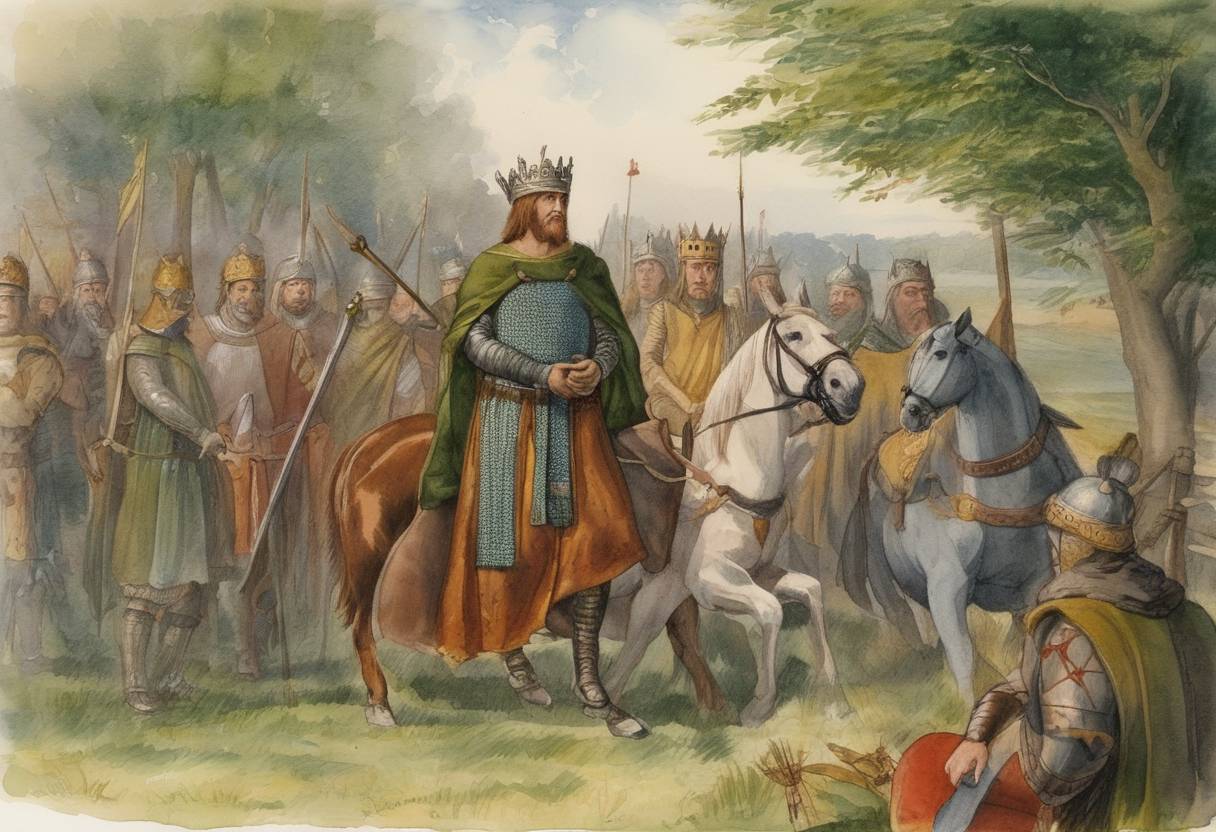
On March 3, 1067, Edgar the Ætheling, a notable claimant to the English throne, submitted to King William the Conqueror. This moment marked a significant turning point in the aftermath of the Norman Conquest of England in 1066. The event symbolized the end of major English resistance to Norman rule following William’s victory at the Battle of Hastings in October 1066.
Edgar the Ætheling was the last male member of the Anglo-Saxon royal house, and his claim to the throne emerged after the death of King Edward the Confessor in January 1066. Despite being proclaimed king by some nobles, he was never crowned. The political instability in England following Edward’s death and the defeat of King Harold II at Hastings left Edgar’s claim unfulfilled.
After the successful conquest, King William sought to solidify his rule over England by convincing or compelling remaining English leaders to submit to his authority. Edgar’s submission, alongside other English nobles, occurred at Berkhamsted—a strategic diplomatic gesture to prevent further uprisings and solidify Norman control.
Edgar, a figurehead for potential resistance, was a significant capture for William, who had to secure the loyalty of the English nobility to stabilize his regime. The collective submission signaled that the English might recognize Norman legitimacy to rule, at least for the time being, despite ongoing underlying tensions.
The submission did not entirely end English resistance; smaller rebellions continued, particularly in the north. However, it marked a decisive acknowledgement of Norman dominance. William’s subsequent actions would involve securing his rule, redistributing land to Norman barons, and building castles across the country to fortify his control.
Edgar the Ætheling would continue to be involved in various plots and uprisings against Norman rule over the ensuing years but never achieved lasting success.
This event was a pivotal moment in English history, marking the shift from Anglo-Saxon to Norman rule and dramatically transforming the social, political, and cultural landscape of England. The integration of Norman customs and governance set the foundations for significant changes in English law, language, and aristocratic lineages.
Source: en.wikipedia.org