Disbanding of the Army of the Potomac
1865 · Washington, D.C., United States
The Army of the Potomac, under the command of Major General George G. Meade, is disbanded following the conclusion of the American Civil War.
December 16, 1864
The Battle of Nashville in the American Civil War ends as the Union defeat the Confederate Army under Lieutenant General John Bell Hood.
Nashville, United States | Union Army
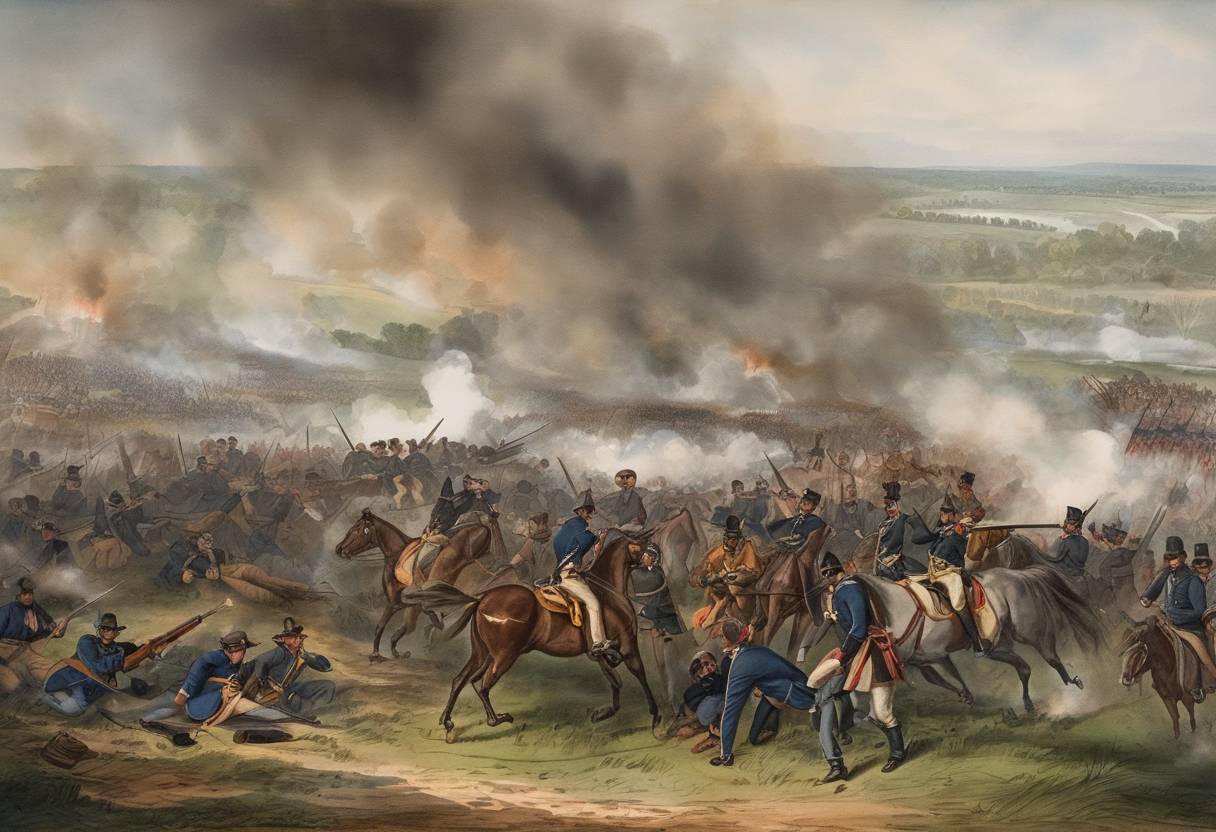
The Battle of Nashville culminated on December 16, 1864, with a decisive victory for the Union Army over the Confederate forces led by Lieutenant General John Bell Hood. This battle was one of the last major engagements in the Western Theater of the American Civil War, significantly crippling Confederate military capabilities in the region.
Following the fall of Atlanta in September 1864, Hood aimed to draw Union forces away from the deep South by advancing into Tennessee, with hopes of diverting Major General William Tecumseh Sherman’s Union troops. Hood’s strategy intended to disrupt Union supply lines and reclaim territory, potentially threatening Union-held Nashville.
Throughout November and early December, Hood maneuvered his Confederate Army of Tennessee northward. After a costly engagement at the Battle of Franklin on November 30, where Hood suffered severe losses, the Confederates approached Nashville, which was defended by a strong Union army under Major General George H. Thomas.
The fighting at Nashville commenced on December 15, 1864. Major General Thomas orchestrated a well-planned attack against the Confederate positions. The Union forces executed a series of assaults, progressively dismantling the Confederate defensive line.
On December 16, the second day of battle, Thomas launched a coordinated assault on Hood’s left and center flanks. This strategy overwhelmed the Confederate defenses, resulting in a significant breakthrough. Hood’s demoralized troops retreated in disarray, marking an unequivocal Union victory.
The defeat at Nashville effectively annihilated the Confederate Army of Tennessee as a fighting force:
Hood resigned his command in January 1865, acknowledging the strategic and operational failures that led to the disastrous loss at Nashville. The Union victory reinforced Federal control over Tennessee and diminished Confederate military prospects in the region, paving the way for the eventual Union successes in the spring of 1865.
Source: en.wikipedia.org