The Battle of Manila: The Philippine-American War Begins
1899 · Manila, Philippines
The Philippine-American War begins with the Battle of Manila as hostilities break out between Filipino and American forces.
August 13, 1898
The Spanish-American War effectively ends with the fall of Manila to American forces, although the formal peace treaty is signed later.
Manila, Philippines | United States military
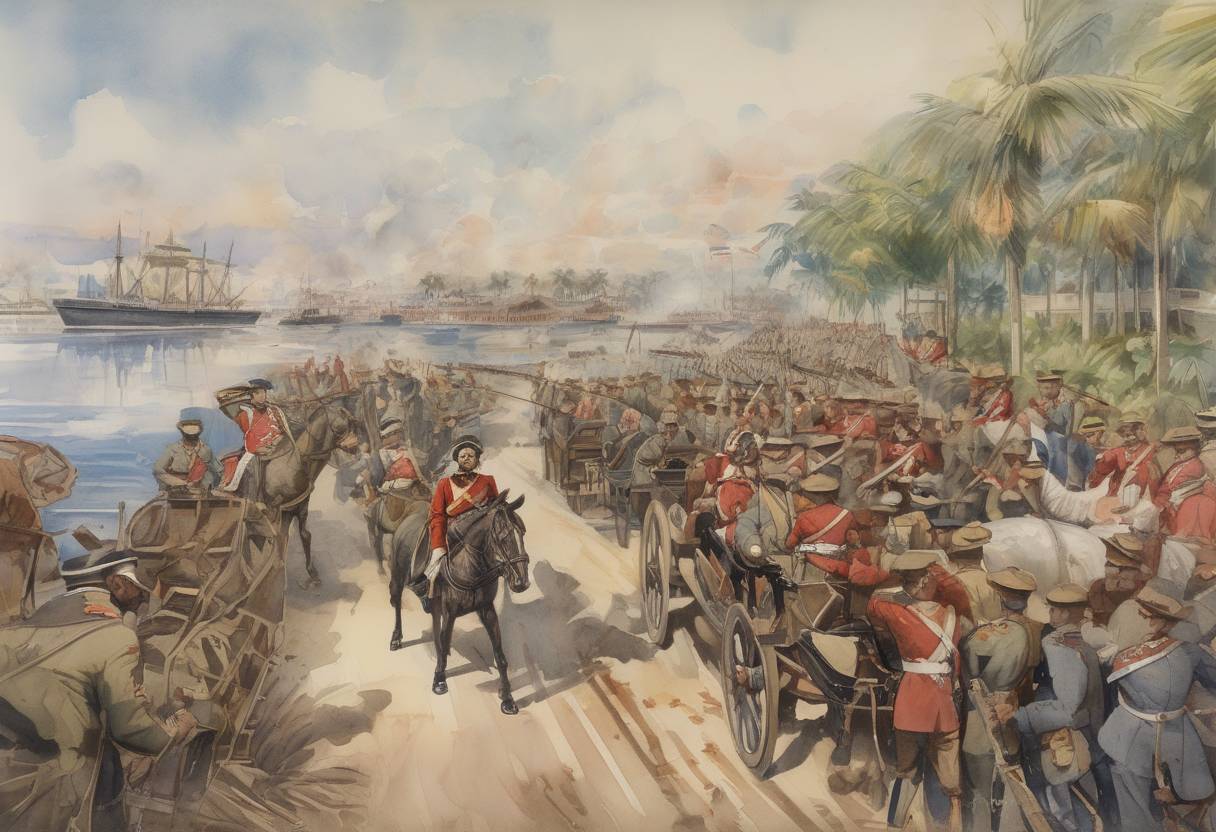
The fall of Manila on August 13, 1898, marked a pivotal moment in the Spanish-American War, effectively signaling the end of hostilities between the United States and Spain, although the formal peace treaty would be signed later. This event was a culmination of several months of conflict and strategic maneuvers in the Pacific and Caribbean.
The Spanish-American War began in April 1898, primarily due to the United States’ intervention in the Cuban War of Independence and the explosion of the USS Maine in Havana Harbor. The conflict quickly expanded beyond the Caribbean, with the U.S. targeting Spanish holdings in the Pacific, particularly the Philippines.
Battle of Manila Bay (May 1, 1898): The U.S. Asiatic Squadron, led by Commodore George Dewey, defeated the Spanish Pacific Squadron in a decisive naval battle. This victory gave the U.S. control of Manila Bay and set the stage for further operations in the Philippines.
Blockade and Siege: Following the naval victory, American forces, with the assistance of Filipino revolutionaries led by Emilio Aguinaldo, laid siege to the city of Manila. The Spanish forces, under Governor-General Basilio Augustín, were effectively isolated.
Arrival of Reinforcements: In June and July, American reinforcements arrived, including the VIII Corps under Major General Wesley Merritt, further strengthening the U.S. position.
On August 13, 1898, American forces launched an assault on Manila. The attack was coordinated with a pre-arranged plan between the U.S. and Spanish commanders to minimize casualties and destruction. The Spanish, aware of their untenable position and the futility of further resistance, agreed to a mock battle, allowing the Americans to capture the city with minimal bloodshed.
The fall of Manila was a significant turning point in the Spanish-American War, showcasing the United States’ emerging status as a global power and setting the stage for its increased involvement in international affairs.
Source: www.britannica.com