Iran Breaches Uranium Stockpile Limit - July 3, 2019
2019 · Tehran, Iran
Iran announced it had breached the limit on its stockpile of low-enriched uranium set under the 2015 nuclear deal.
July 14, 2015
Iran and the P5+1 countries (China, France, Russia, the United Kingdom, the United States, plus Germany) reached a historic agreement on Iran's nuclear program, known as the Joint Comprehensive Plan of Action (JCPOA).
Vienna, Austria | United Nations
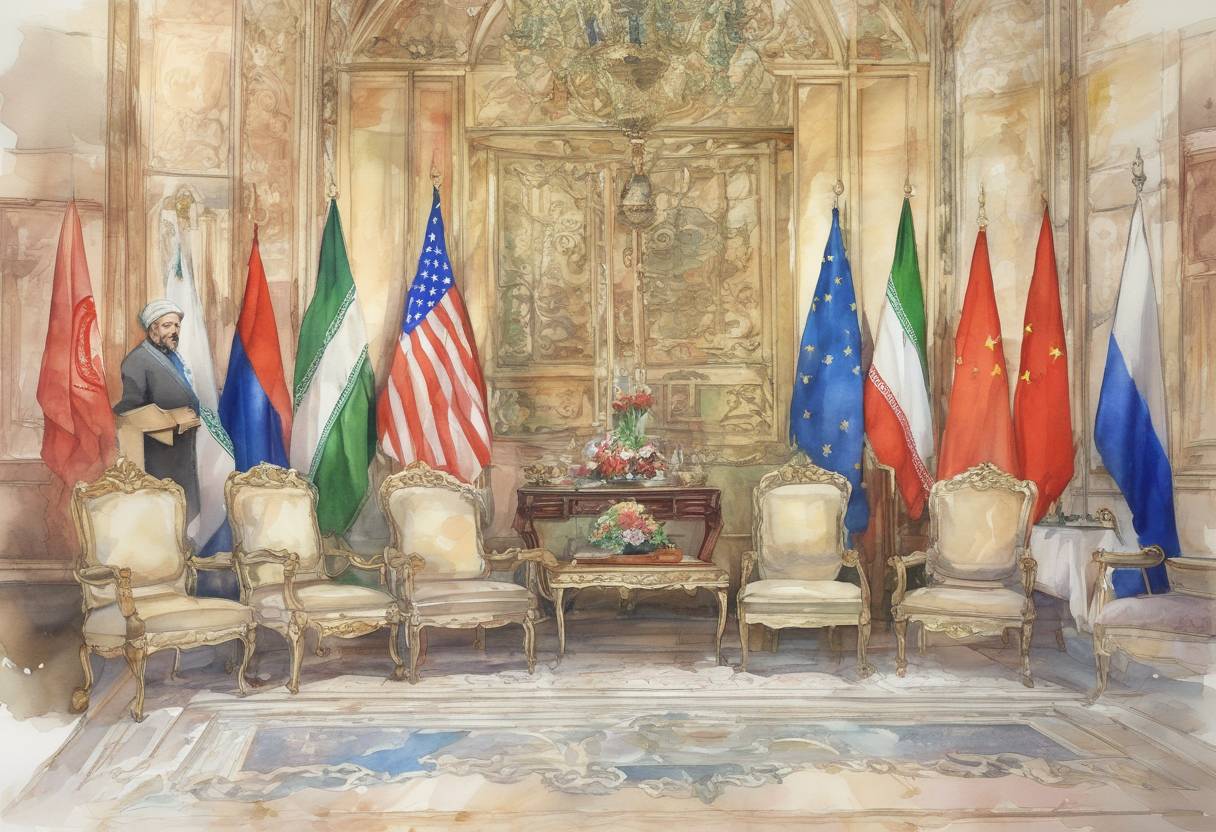
On July 14, 2015, a landmark agreement known as the Joint Comprehensive Plan of Action (JCPOA) was reached between Iran and the P5+1 countries, which include China, France, Russia, the United Kingdom, the United States, plus Germany. This agreement marked a significant diplomatic achievement aimed at ensuring the peaceful nature of Iran’s nuclear program.
The JCPOA was the culmination of years of complex negotiations. Concerns over Iran’s nuclear ambitions had been a point of international tension, with fears that Iran was seeking to develop nuclear weapons under the guise of a civilian nuclear program. In response, the international community, led by the P5+1, sought to negotiate a framework that would prevent Iran from acquiring nuclear weapons while allowing it to pursue a peaceful nuclear energy program.
Uranium Enrichment: Iran agreed to limit its uranium enrichment activities. The agreement stipulated that Iran would reduce its stockpile of enriched uranium by 98% and limit uranium enrichment to 3.67%, well below the level needed for weapons-grade material.
Centrifuge Reduction: Iran committed to reducing its number of centrifuges by two-thirds. The remaining centrifuges were to be used for peaceful purposes only.
Inspections and Monitoring: The International Atomic Energy Agency (IAEA) was granted extensive access to Iran’s nuclear facilities to monitor compliance. This included continuous surveillance of key sites and the ability to inspect any suspicious locations.
Sanctions Relief: In exchange for Iran’s compliance, the P5+1 agreed to lift nuclear-related economic sanctions, providing Iran with significant economic relief. This included unfreezing billions of dollars in assets and allowing Iran to resume oil exports.
Sunset Clauses: The agreement included provisions that would expire after a certain period, such as restrictions on uranium enrichment and centrifuge use, which were set to gradually phase out over 10 to 15 years.
The JCPOA was hailed as a major diplomatic success, reducing the immediate threat of a nuclear-armed Iran and opening the door for improved relations between Iran and the international community. However, the agreement also faced criticism, particularly from those who believed it did not do enough to prevent Iran from eventually developing nuclear weapons.
In May 2018, the United States, under President Donald Trump, withdrew from the JCPOA, citing concerns over its effectiveness and Iran’s regional activities. This withdrawal led to the re-imposition of U.S. sanctions on Iran and increased tensions between the two countries.
Despite the U.S. withdrawal, the other signatories have attempted to keep the agreement alive, though challenges remain. The JCPOA continues to be a focal point of international diplomacy, with ongoing discussions about its future and potential renegotiation.
The JCPOA serves as a critical case study in international relations, illustrating both the potential and challenges of multilateral diplomacy in addressing complex global security issues.
Source: www.un.org