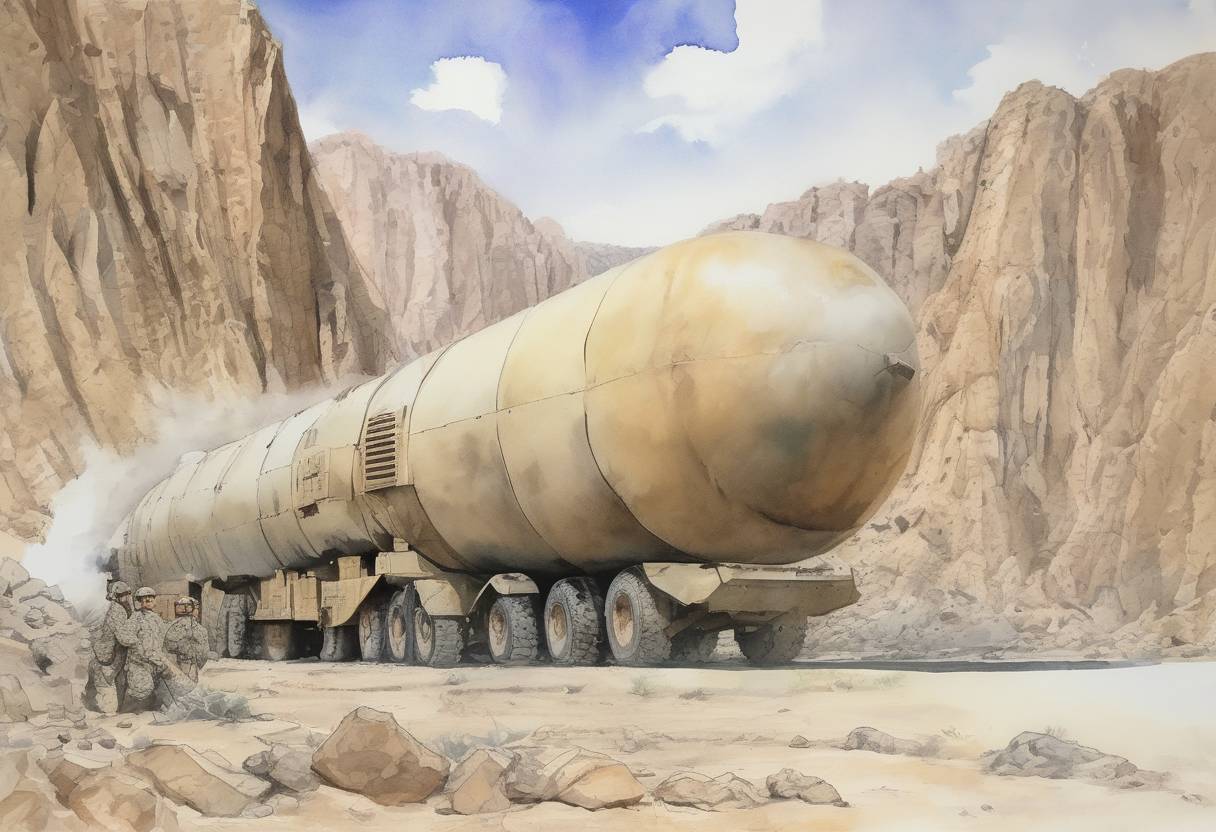
The Use of the GBU-43/B MOAB in Afghanistan on April 13, 2017
On April 13, 2017, the United States military deployed the GBU-43/B Massive Ordnance Air Blast (MOAB) bomb in combat for the first time. This event took place in Afghanistan’s Nangarhar Province, targeting an ISIS-Khorasan (ISIS-K) cave complex. The MOAB, colloquially known as the “Mother of All Bombs,” is one of the most powerful non-nuclear bombs in the U.S. arsenal.
Context and Background
Development of the MOAB: The GBU-43/B was developed by the U.S. Air Force Research Laboratory and first tested in 2003. It is designed to destroy surface and subsurface targets, using a massive blast to collapse structures and caves.
ISIS-K in Afghanistan: ISIS-K, an affiliate of the Islamic State, emerged in Afghanistan around 2015. It quickly became known for its brutal tactics and attacks against both Afghan and coalition forces, as well as civilians.
Strategic Importance: Nangarhar Province, located near the Pakistan border, has been a strategic area for militant groups due to its rugged terrain and network of caves, which provide natural fortifications.
The Event
Target: The MOAB was dropped on a tunnel complex used by ISIS-K militants. The site was believed to be a key operational base for the group, facilitating movement and planning of attacks.
Execution: The bomb was delivered by an MC-130 aircraft, operated by Air Force Special Operations Command. The decision to use the MOAB was made to maximize the impact on the entrenched ISIS-K positions.
Aftermath and Consequences
Immediate Impact: The strike reportedly killed 94 ISIS-K fighters, according to Afghan officials, and destroyed a significant portion of the tunnel complex. There were no reported civilian casualties.
Military and Political Reactions: The use of the MOAB was seen as a demonstration of U.S. military capability and resolve. It sparked discussions about the use of large-scale ordnance in combat and the broader U.S. strategy in Afghanistan.
Strategic Implications: While the strike dealt a blow to ISIS-K, it also highlighted the ongoing challenges in combating insurgent groups in Afghanistan. The event underscored the complexity of the conflict and the limitations of military solutions alone.
Broader Historical Significance
The deployment of the MOAB in Afghanistan marked a significant moment in modern military history, showcasing the use of advanced weaponry in counterterrorism operations. It also reflected the evolving nature of warfare, where precision and power are balanced to achieve strategic objectives. The event remains a point of reference in discussions about military tactics and the ethical considerations of using such powerful weapons in populated regions.