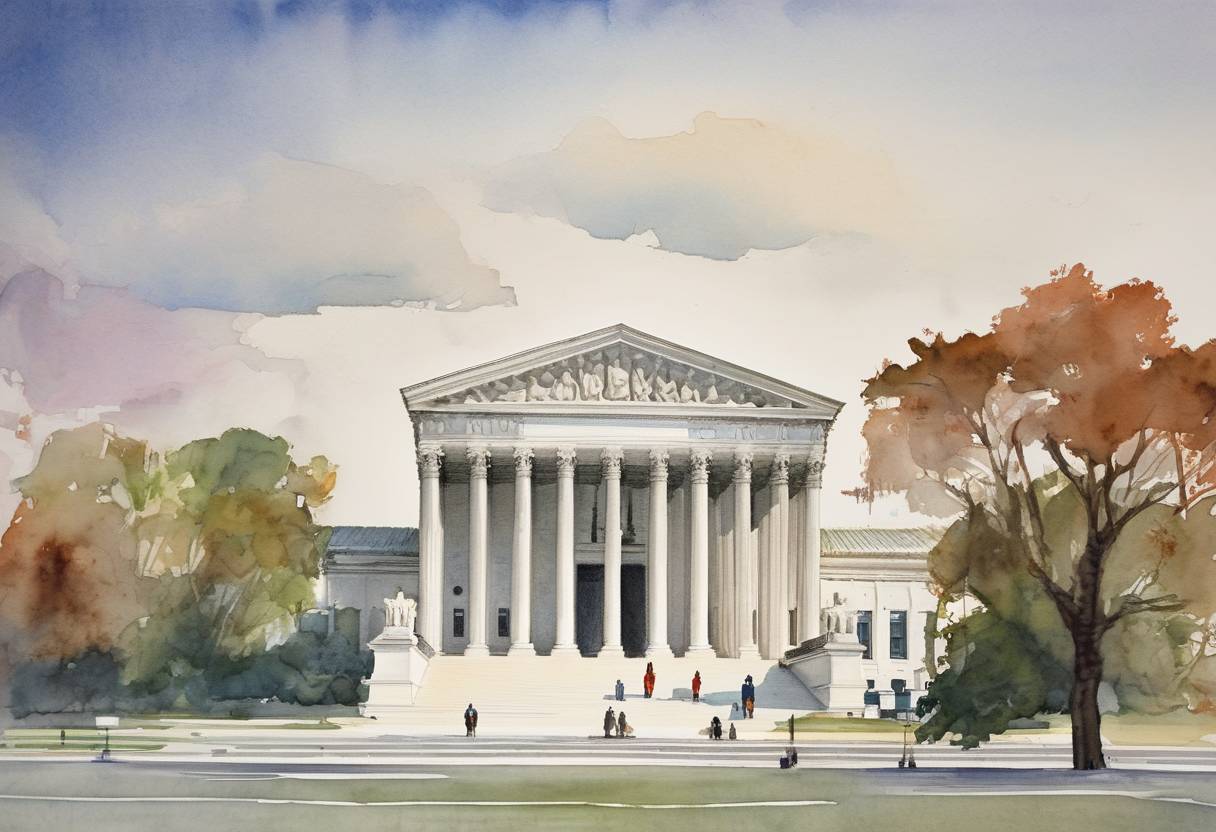
Roe v. Wade Decision - January 22, 1973
On January 22, 1973, the United States Supreme Court delivered its landmark decision in the case of Roe v. Wade, fundamentally transforming the legal landscape of reproductive rights in the United States. This decision effectively legalized abortion nationwide, establishing a woman’s legal right to choose to have an abortion under the constitutional right to privacy.
Background
The case originated in Texas, where a woman under the pseudonym “Jane Roe” (real name Norma McCorvey) challenged the state’s restrictive abortion laws. At the time, Texas law only permitted abortion to save a woman’s life. Roe argued that these laws were unconstitutional, infringing on her right to privacy as protected by the First, Fourth, Fifth, Ninth, and Fourteenth Amendments.
The Court’s Decision
The Supreme Court, in a 7-2 decision, ruled in favor of Roe. Justice Harry Blackmun authored the majority opinion, which held that the right to privacy, though not explicitly mentioned in the Constitution, was broad enough to encompass a woman’s decision whether or not to terminate her pregnancy.
Key Points of the Decision:
Trimester Framework: The Court established a trimester framework to balance the state’s interests with a woman’s right to privacy:
- First Trimester: The decision to terminate a pregnancy was left to the woman and her physician.
- Second Trimester: The state could regulate abortion procedures in ways reasonably related to maternal health.
- Third Trimester: Once the fetus reached viability, the state could regulate or even prohibit abortions, except when necessary to preserve the life or health of the mother.
State Interests: The Court acknowledged two legitimate state interests: protecting the health of the mother and protecting the potentiality of human life. However, these interests were not compelling enough to outweigh a woman’s right to privacy during the first trimester.
Aftermath and Significance
The Roe v. Wade decision was a pivotal moment in U.S. history, sparking ongoing debates and activism around reproductive rights. It galvanized both pro-choice and pro-life movements, leading to decades of political and legal battles.
Subsequent Developments:
Planned Parenthood v. Casey (1992): This case reaffirmed the core holding of Roe but replaced the trimester framework with the undue burden standard, allowing states to impose restrictions on abortion as long as they did not place an undue burden on a woman’s right to choose.
Dobbs v. Jackson Women’s Health Organization (2022): This case resulted in the overturning of Roe v. Wade, ending the federal constitutional right to an abortion and returning the authority to regulate abortion to individual states.
The decision in Roe v. Wade remains a significant and contentious chapter in American legal and social history, illustrating the complex interplay between individual rights and state interests.