1864 · Atlanta, United States
The Battle of Ezra Church took place during the American Civil War, resulting in a Union victory under Major General William T. Sherman.
May 6, 1862
During the Battle of Williamsburg, part of the Peninsula Campaign in the American Civil War, Confederate forces attacked Union positions in Virginia.
Williamsburg, United States | Union Army
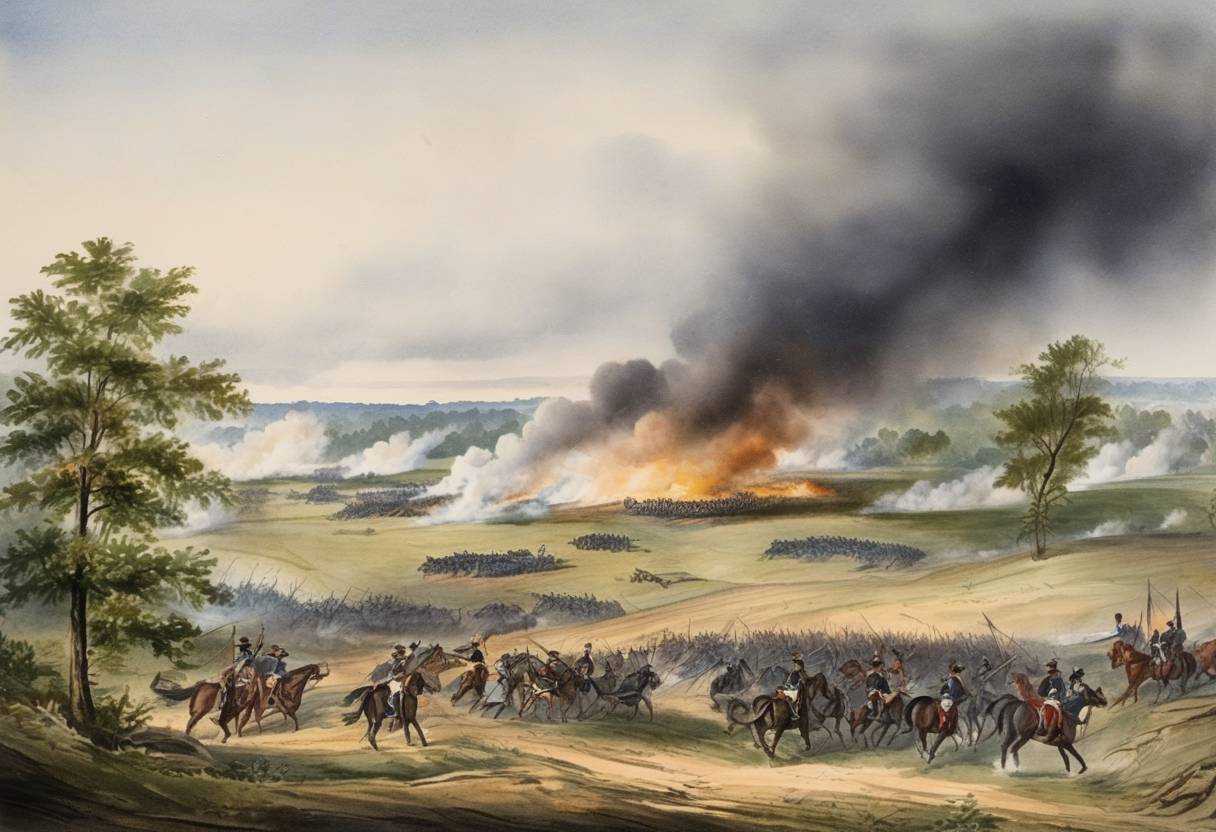
The Battle of Williamsburg was a significant early engagement in the Peninsula Campaign during the American Civil War, taking place on May 5, 1862.
The Peninsula Campaign was a major Union operation launched in southeastern Virginia from March through July 1862. The campaign aimed to capture the Confederate capital of Richmond by moving the Army of the Potomac, commanded by Major General George B. McClellan, up the Virginia Peninsula. This strategic move followed the Hampton Roads landing and was intended to outflank Confederate defensive positions.
As part of this campaign, Confederate forces under General Joseph E. Johnston strategically retreated from their defensive positions at Yorktown, Virginia, beginning on May 3, 1862. This tactical withdrawal delayed the Union advance but also left the Confederate rear vulnerable along the Williamsburg line.
On the morning of May 5, fighting commenced as Hooker’s division clashed with Longstreet’s rearguard. Heavy rain and muddy conditions complicated movements for both sides. The battle saw intense combat, with the Union launching assaults on well-entrenched Confederate positions but facing stiff resistance.
In the afternoon, Union Brigadier General Winfield S. Hancock led a successful flanking maneuver on the Confederate left, capturing two redoubts and threatening the Confederate rear. Hancock’s actions garnered acclaim, earning him the nickname “Hancock the Superb.”
Although tactically inconclusive, the Battle of Williamsburg offered the Union army a temporary strategic advantage as Confederate forces continued their withdrawal towards Richmond. Both sides suffered significant casualties, with estimated totals around 3,800 combined.
The battle highlighted the challenges the Union faced against well-positioned Confederate troops and the difficulties operating in adverse conditions. It also emphasized the continual need for effective reconnaissance and the dynamic movements characteristic of the Peninsula Campaign.
Overall, the battle demonstrated the complexities of McClellan’s campaign, which ultimately failed to achieve its primary objective, as Confederate forces continued to defend Richmond successfully.
Source: en.wikipedia.org