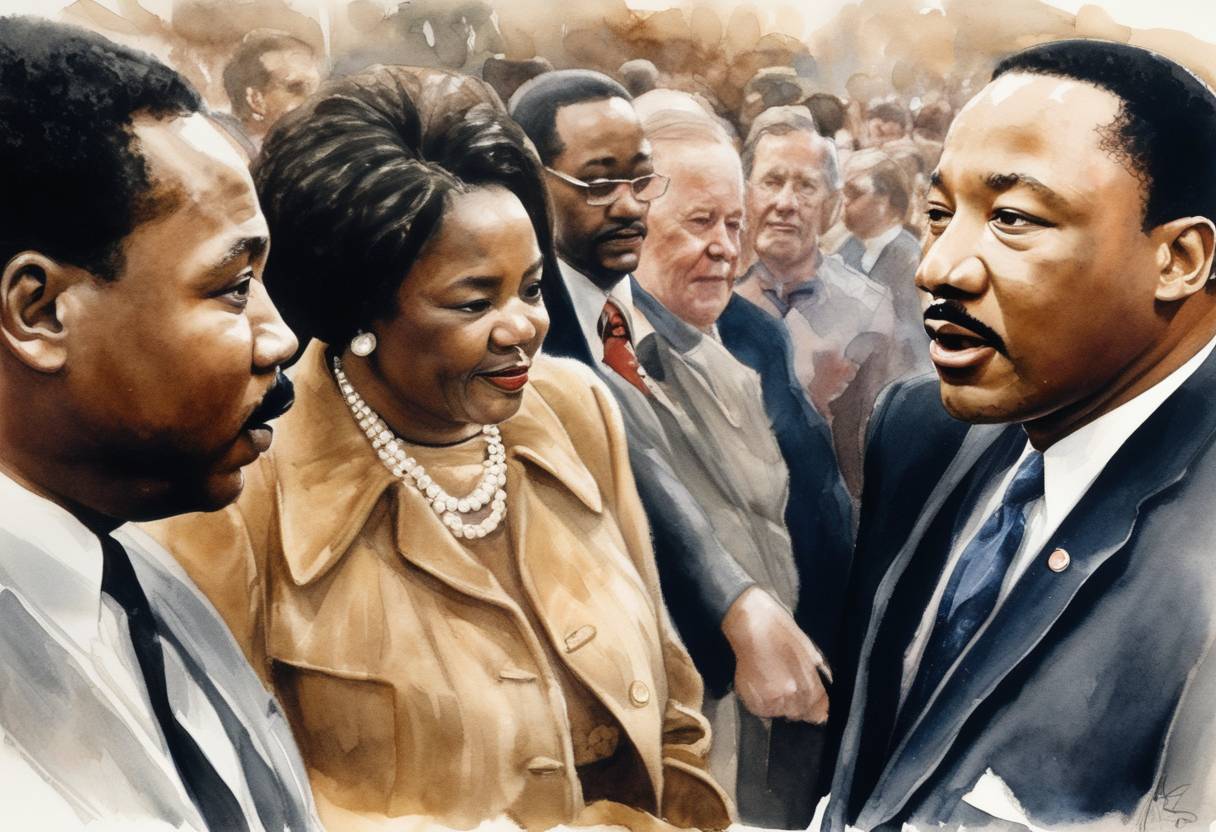
Martin Luther King Jr. Posthumously Awarded the Presidential Medal of Freedom
On July 11, 1977, Martin Luther King Jr. was posthumously awarded the Presidential Medal of Freedom by President Jimmy Carter. This honor is one of the highest civilian awards in the United States, recognizing individuals who have made significant contributions to the security or national interests of the country, world peace, cultural or other significant public or private endeavors.
Background
Martin Luther King Jr., a prominent leader in the American civil rights movement, became an international symbol of the struggle against racial injustice. He advocated for racial equality through nonviolent resistance and civil disobedience, inspired by Mahatma Gandhi’s principles. King’s influence was pivotal to ending legal segregation, bringing about landmark civil rights legislation, including the Civil Rights Act of 1964 and the Voting Rights Act of 1965.
Significance of the Award
The award presented to Martin Luther King Jr. by President Carter served as an official recognition of his tireless commitment to achieving social justice through peaceful means. By conferring this prestigious honor, the U.S. government acknowledged King’s profound impact on American society and the ongoing struggle for civil rights.
Ceremony & Legacy
During the ceremony, President Carter acknowledged King’s dedication to combating racial inequality. The recognition further cemented King’s legacy as a champion of nonviolence and equality, inspiring future generations to continue striving for social justice. The Presidential Medal of Freedom was notable because it highlighted King’s enduring influence on both national policies and global human rights movements.
The award posthumously celebrated King’s profound impact on American society and the world, underscoring his leadership in advancing civil rights and promoting peace through nonviolent action.