Jimi Hendrix Sets Fire to His Guitar: March 31, 1967
1967 · London, United Kingdom
Jimi Hendrix set fire to his guitar on stage for the first time at the Astoria Theatre in London, an iconic moment in rock music history.
April 2, 1877
The first Human Cannonball, Zazel (Rossa Matilda Richter), is launched at the Royal Aquarium in London, marking a significant event in the history of circus performances.
London, United Kingdom | Royal Aquarium
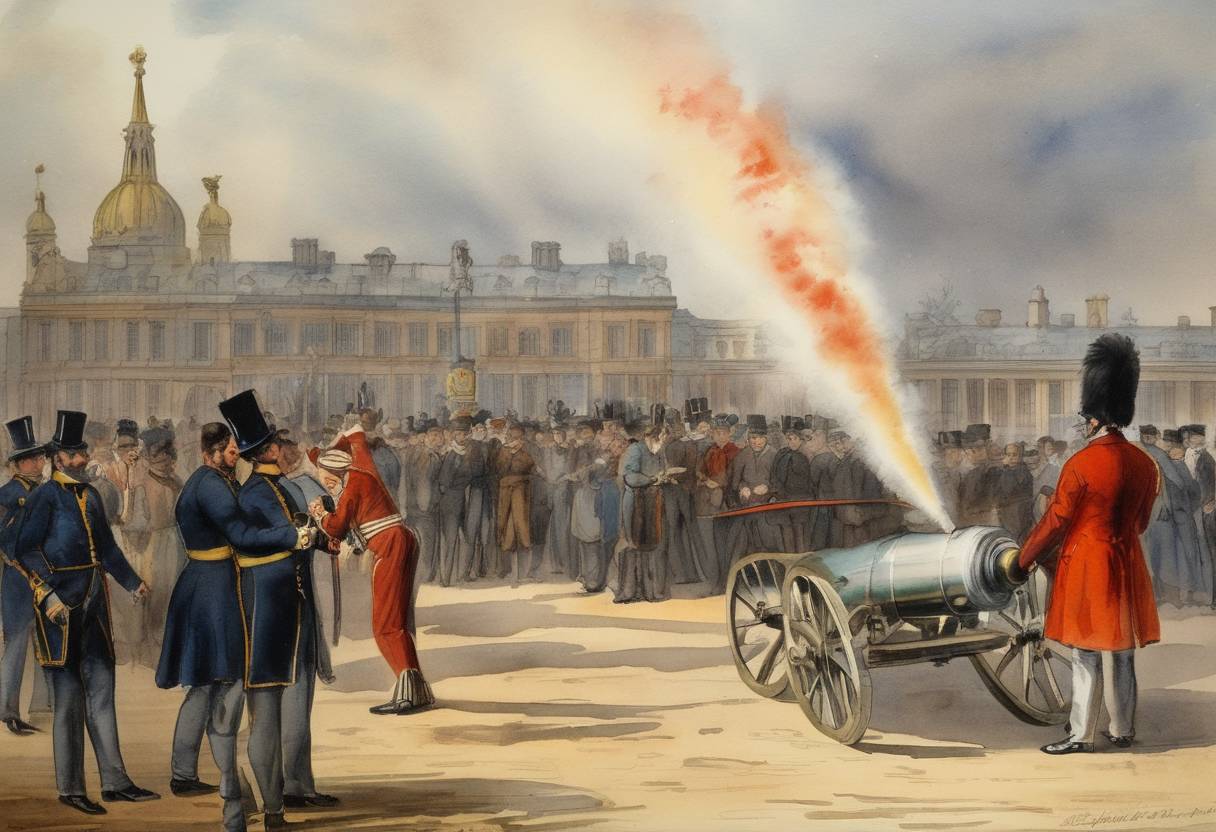
On April 2, 1877, a groundbreaking spectacle unfolded at the Royal Aquarium in Westminster, London, when Rossa Matilda Richter, known by her stage name Zazel, became the first recorded human cannonball. This event marked a significant moment in circus performance history, showcasing the blending of daring feats and entertainment.
In the late 19th century, the circus was evolving as a popular form of entertainment, continuously seeking new and thrilling acts to captivate audiences. The concept of the human cannonball emerged as both a daring stunt and a technical marvel, requiring precise calculations and engineering.
Zazel’s launch was orchestrated by William Leonard Hunt, better known as The Great Farini, a prominent figure in the circus world known for his daring feats and innovations.
Zazel was propelled from a specially designed spring-loaded cannon, rather than an explosive one for safety, marking her entry into the annals of entertainment history. The apparatus, designed by Farini, capitalized on the elasticity of springs to eject Zazel into the air, where she would fly over 20 feet before safely landing into a net.
Her performance captivated the audience with the blend of science and artistry, demonstrating the era’s fascination with technological progress and human bravery.
Zazel’s successful launch as a human cannonball created a sensation and set a precedent for similar acts. Her daring feat ushered in a new era of thrill in the circus industry, inspiring future performers and leading to various adaptations of the performance.
This event also underscored the evolution of circus acts from mere curiosities to sophisticated shows incorporating elements of science, showmanship, and risk, paving the way for modern circus spectacles.
In the years following her launch, Zazel continued to perform across Europe and the United States, further solidifying her legacy as a pioneer in the entertainment industry.
Source: www.smithsonianmag.com