Francisco Pizarro Arrives in Cajamarca, Peru - November 14, 1533
1533 · Cajamarca, Peru
Spanish conquistador Francisco Pizarro arrives in Cajamarca, Peru, marking the beginning of the Spanish conquest of the Inca Empire.
July 26, 1533
Atahualpa, the last Inca Emperor, was executed by Spanish conquistadors led by Francisco Pizarro. This marked a significant turning point in the Spanish conquest of the Inca Empire.
Cajamarca, Peru | Spanish Empire
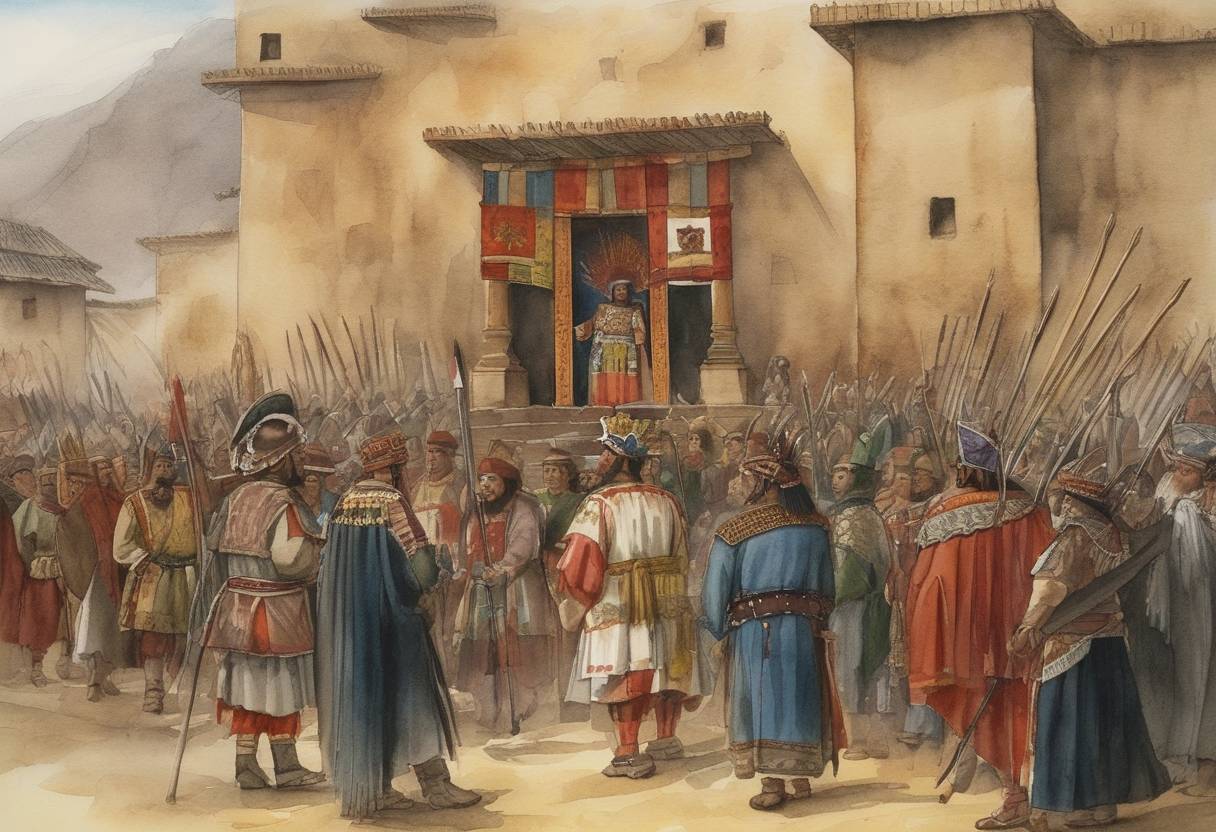
On July 26, 1533, Atahualpa, the last reigning emperor of the Inca Empire, was executed by Spanish conquistadors under the command of Francisco Pizarro in Cajamarca, located in present-day Peru. This event marked a pivotal moment in the Spanish conquest of the Inca Empire and the broader European colonial expansion in South America.
The Inca Empire was the largest empire in pre-Columbian America, known for its sophisticated administrative and military systems, monumental architecture, and vast network of roads. Atahualpa had recently emerged victorious in a civil war against his half-brother Huáscar, consolidating power in the empire. However, the empire was vulnerable due to internal strife and the recent epidemic diseases that had significantly reduced the population.
In 1532, Francisco Pizarro and his band of conquistadors arrived in the Inca heartland. Despite being vastly outnumbered, Pizarro and his men, equipped with firearms, steel weapons, and horses, sought to exploit the political instability within the Inca leadership.
Atahualpa was captured on November 16, 1532, in a planned ambush during the Battle of Cajamarca. Despite the Inca Emperor’s initial peaceful approach, Pizarro’s forces launched a surprise attack, resulting in significant Inca casualties and Atahualpa’s capture. Atahualpa, recognizing the Spaniards’ technological superiority, attempted to secure his release by offering a room filled with gold and silver – a ransom paid by many of the Inca nobles.
After months of negotiations and despite fulfilling the ransom demand, Pizarro and his men decided Atahualpa posed too great a risk to their control over the region. On July 26, 1533, they executed Atahualpa on charges of rebellion, idolatry, and the murder of his brother Huáscar. Atahualpa was baptized under the name Juan Santos Atahualpa and was given the choice of being burned at the stake or opting for a garroting if he accepted baptism; he chose the latter.
The execution of Atahualpa eliminated the last major obstacle to Spanish dominance over the Inca territories. It precipitated the dismantling of the Inca state apparatus and the spread of Spanish colonial rule throughout South America. Pizarro’s conquest led to the plundering of immense riches and laid the groundwork for Spain’s extensive colonial empire in the Americas.
The fall of the Inca Empire brought significant demographic, cultural, and societal changes, most notably the decline of indigenous populations due to warfare, diseases, and forced labor systems like the encomienda. Atahualpa’s execution symbolizes a critical moment in the collision between European and indigenous civilizations, fundamentally altering the history of the continent.
Source: en.wikipedia.org