The Great Lisbon Earthquake of 1755
1755 · Lisbon, Portugal
The Great Lisboa earthquake occurred, causing damage in Lisbon and triggering a tsunami.
January 30, 1531
The Lisbon earthquake strikes Portugal with a magnitude estimated to be around 6.8-7.5, causing significant destruction and fatalities in the city of Lisbon.
Lisbon, Portugal | None
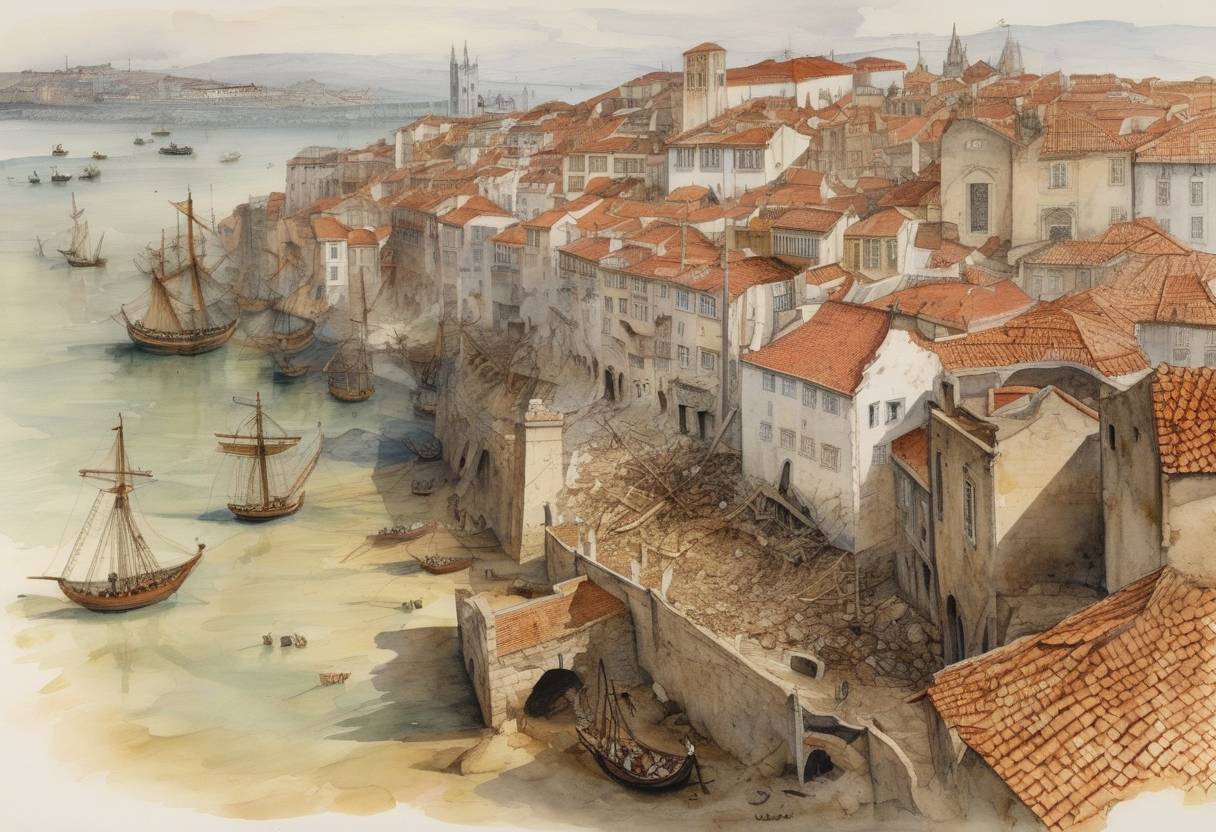
On January 30, 1531, Lisbon, Portugal, experienced a devastating earthquake with a magnitude estimated to be between 6.8 and 7.5. This significant seismic event caused extensive damage and numerous fatalities in the city and surrounding regions, marking it as one of the notable early natural disasters in European history.
Lisbon, during the early 16th century, was a thriving city and an important hub in the Age of Discoveries, a period marked by significant maritime exploration led by Portugal. The city’s strategic location and thriving port made it a center for trade and cultural exchange.
Destruction: The earthquake caused widespread destruction in Lisbon. Many of the city’s buildings, including essential infrastructure, were severely damaged or completely destroyed. The earthquake impacted not only Lisbon but also the nearby towns and rural areas.
Fatalities: Historical accounts estimate that the earthquake resulted in thousands of deaths. The precise number is difficult to ascertain, but the loss of life was a significant blow to the population of Lisbon at the time.
Rebuilding Efforts: Following the earthquake, efforts were made to rebuild the city, which included re-evaluating building techniques to better withstand future seismic events. The disaster highlighted the vulnerability of the city’s architecture to seismic forces.
Historical Significance: The 1531 earthquake is considered one of the early documented instances of seismic activity in the Iberian Peninsula. It provided early insights into the need for enhanced earthquake preparedness and influenced rebuilding strategies in Lisbon moving forward.
The 1531 Lisbon earthquake is remembered as a precursor to the even more catastrophic 1755 Lisbon earthquake, which prompted significant advancements in seismology and urban planning practices in Portugal and across Europe. The historical accounts of the 1531 event remain a testament to the recurring threat posed by natural disasters and the resilience of societies in their aftermath.
This event remains a significant part of Lisbon’s history, illustrating both the city’s vulnerabilities and its enduring spirit in the face of natural calamities.
Source: www.britannica.com