Apple Inc. Reaches $1 Trillion Market Capitalization
2018 · Cupertino, United States
Apple Inc. became the first publicly traded U.S. company to reach a $1 trillion market capitalization.
March 14, 1945
The Swallow Sidecar Company, later known as Jaguar Cars, officially became a public limited company.
Coventry, United Kingdom | Swallow Sidecar Company
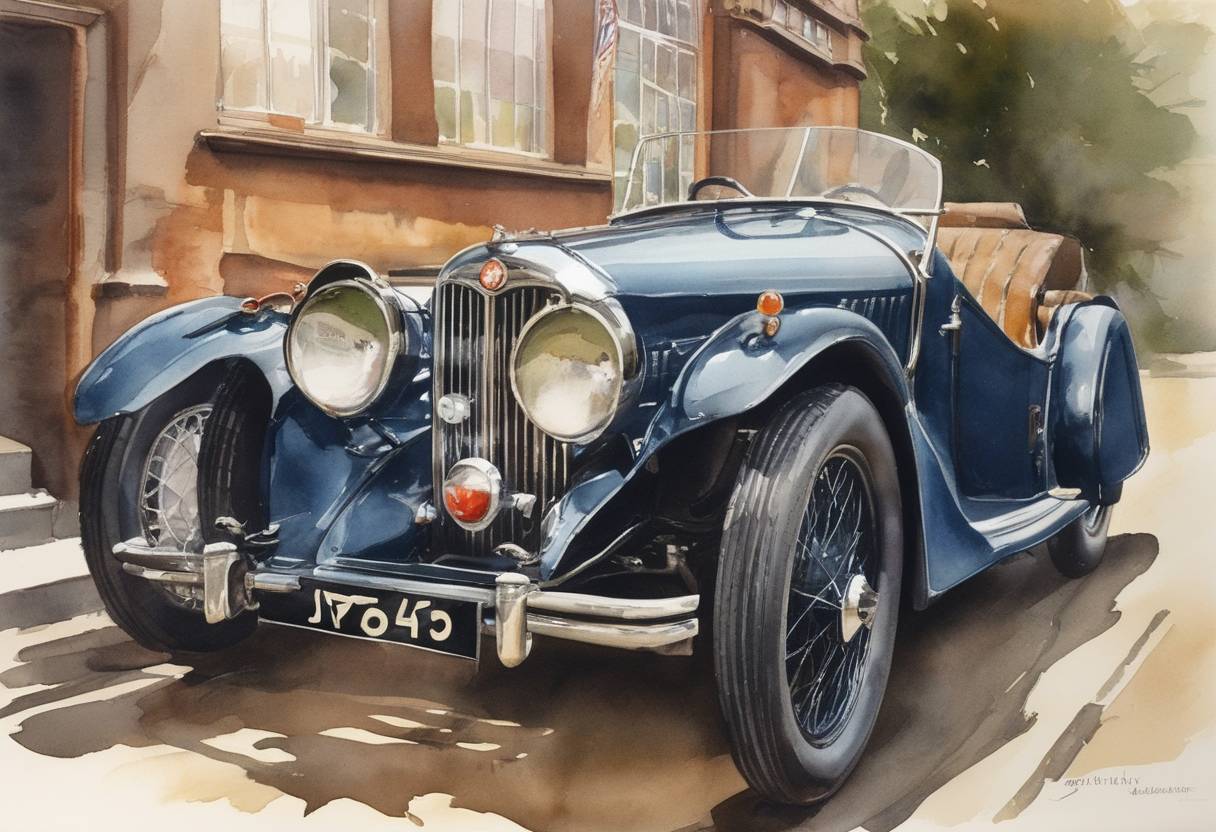
On March 14, 1945, The Swallow Sidecar Company, which later became known as Jaguar Cars, officially transitioned into a public limited company. This significant change marked an important phase in the company’s history, setting the stage for its subsequent growth and evolution into a renowned luxury car manufacturer.
The Swallow Sidecar Company was originally founded in 1922 by William Lyons and William Walmsley in Blackpool, England. The company initially focused on the production of motorcycle sidecars before expanding into coachbuilding. By the late 1930s, the company had moved into the automotive sector, producing a range of sleek, affordable cars under the name SS Cars.
Following the challenges and changes caused by World War II, the company sought a restructuring to enable expansion and to align with the post-war economic landscape. The conversion into a public limited company was part of a broader strategy to raise capital through public investment, enabling the company to fund research, development, and production of new automobile models.
The rebranding and restructuring were pivotal for the company’s future success. Crucially, this period saw the company begin shifting its focus towards the higher-end market, emphasizing performance and luxury. This strategic pivot would eventually lead to the introduction of the iconic Jaguar brand name in the early 1940s, which later became synonymous with premium and performance vehicles worldwide.
Becoming a public limited company allowed Jaguar to expand its operations and invest in new technologies and designs. Throughout the 1950s and beyond, Jaguar Cars would go on to produce some of the most celebrated vehicles in automotive history, including the Jaguar XK120 and the Jaguar E-Type, solidifying its reputation as a leader in the luxury and performance segments of the market.
This transformation underscores not only the company’s ambitious vision for innovation and growth but also its resilience and adaptability in a rapidly changing economic and industrial landscape.
Source: en.wikipedia.org