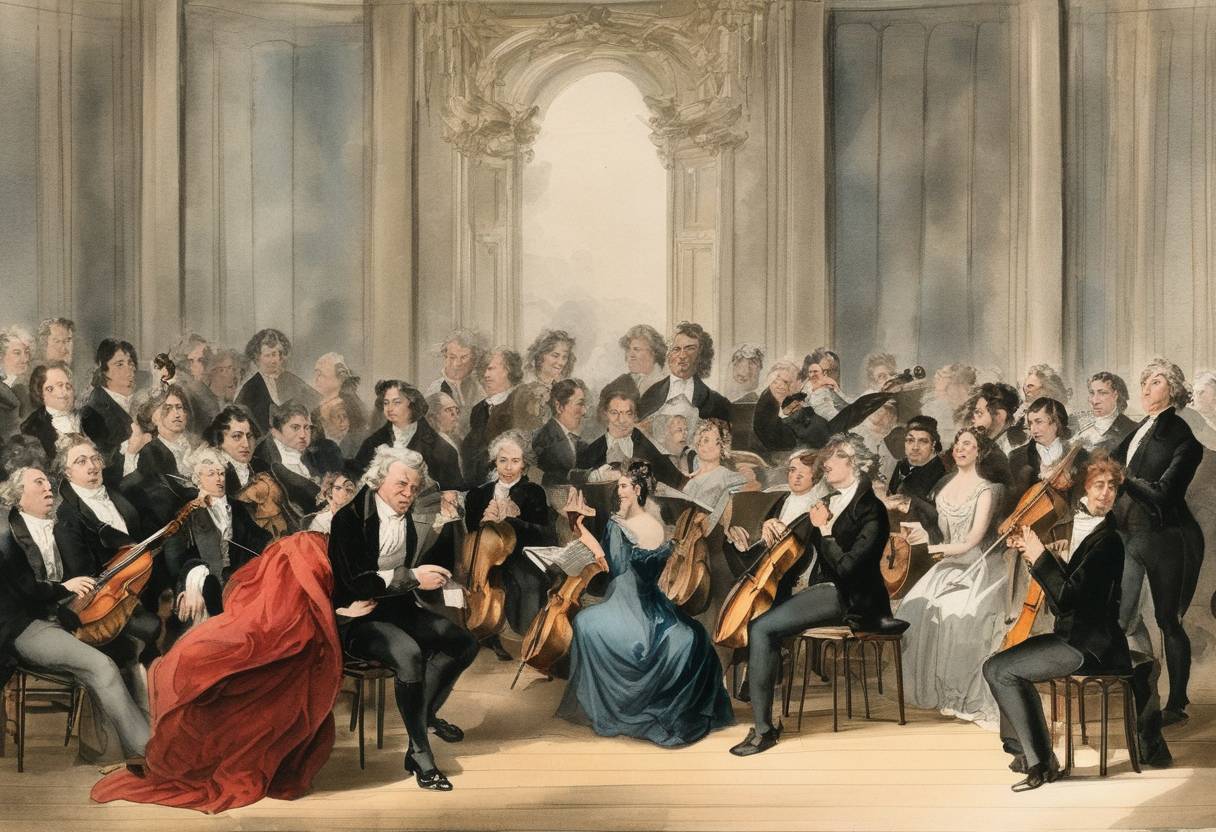
Beethoven’s Seventh Symphony Premiere
On December 8, 1813, Ludwig van Beethoven’s Seventh Symphony premiered in Vienna, led by the composer himself. The event took place at the University of Vienna’s grand hall and was staged as a charity concert for wounded soldiers from the Battle of Hanau, part of the Napoleonic Wars.
Context and Background
Beethoven composed the Seventh Symphony between 1811 and 1812, a period marked by both personal challenges and creative fervor. By this time, Beethoven had become profoundly deaf, an ordeal that amplified the intensity and emotional depth of his compositions. The symphony is often associated with themes of liberation and celebration, reflecting both Beethoven’s personal struggles and the broader socio-political atmosphere in Europe, which was marked by turmoil and a yearning for peace and freedom.
Premiere and Reception
The premiere of the Seventh Symphony was an architectural undertaking of sheer energy and rhythmic vitality that captivated its listeners. The concert included another of Beethoven’s works, the orchestral piece Wellingtons Sieg (Wellington’s Victory), which also celebrated a recent victory over Napoleon’s forces and added to the patriotic fervor of the evening.
The audience’s reaction was overwhelmingly positive. Musicians and critics praised Beethoven’s skillful orchestration and the symphony’s dynamic range. The second movement, Allegretto, achieved immediate popularity and was encored, a testament to its profound effect on the audience. The expressive depth of the Allegretto, with its compelling rhythmic motifs, stood out and has remained one of Beethoven’s most enduring and admired compositions.
Legacy and Significance
Beethoven’s Seventh Symphony is celebrated for its striking originality and rhythmic innovation. It represents a pinnacle of classical music, often described as a dance symphony due to its vitality and drive. The symphony’s influence extends beyond classical music into various cultural spheres, continuously inspiring generations of musicians and composers.
The 1813 premiere was a defining moment in Beethoven’s career, reinforcing his status as one of the foremost composers of his time. His ability to translate personal hardship into transcendent art made the symphony a groundbreaking work that continues to resonate with audiences worldwide.