1276 · Rome, Papal States
The Pope Innocent V was elected, becoming the 185th pope of the Roman Catholic Church. His pontificate was quite short, lasting only five months.
December 20, 1522
Adrian VI was elected as Pope, assuming office as the 218th pope of the Catholic Church. Known for his attempts to reform the church and his short papacy, he was the last non-Italian pope until the election of John Paul II in 1978.
Rome, Papal States | Roman Catholic Church
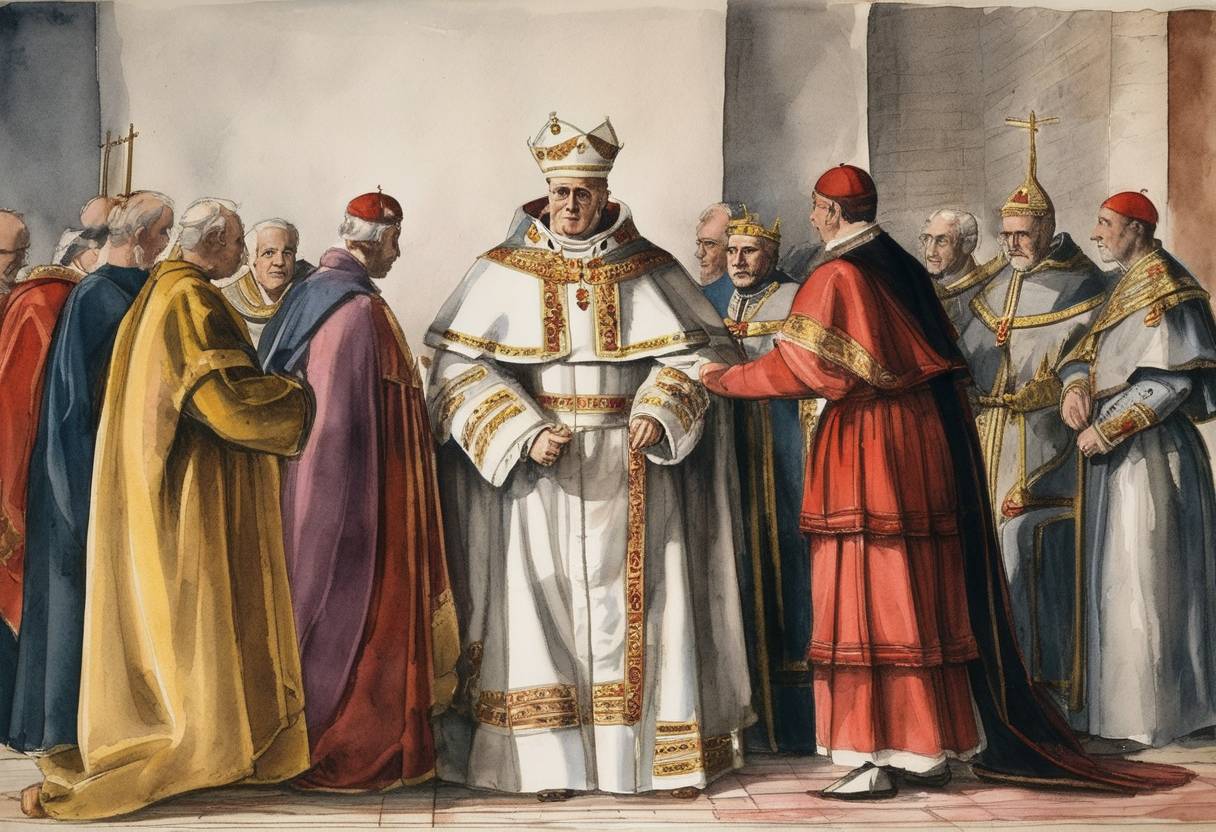
Adrian VI, born Adriaan Florenszoon Boeyens, assumed the papacy as the 218th pope of the Catholic Church upon his election on January 9, 1522. Contrary to the date mentioned, his papacy officially began on January 9, not on December 20, 1522. Adrian VI was noted for his exceptional background and the context in which he came to this role.
Adrian VI was born on March 2, 1459, in the city of Utrecht, which was then part of the Holy Roman Empire and is present-day Netherlands. He was a well-educated scholar, having studied at the University of Leuven where he eventually became a professor of theology. His deep involvement in academia and connections through his tutorship to Charles V of the Holy Roman Empire propelled him into significant ecclesiastical positions, culminating in his election as pope.
Adrian VI is chiefly remembered for his earnest attempts to reform the Catholic Church amid a time of major crisis, exacerbated by the Protestant Reformation led by Martin Luther. Upon assuming office, Adrian faced immense challenges, including widespread corruption and the onset of Protestantism gaining traction across Europe.
One of his notable actions was recognizing and accepting that the Church itself bore responsibility for some of the issues that had sparked the Reformation. His papal address to the Diet of Nuremberg in 1522-1523 reflected this acknowledgment and outlined intentions for reform, focusing on discipline among the clergy and addressing corruption.
Despite his intentions, Adrian VI’s papal tenure, which lasted until his death on September 14, 1523, was significantly hampered by political conflict and resistance within the church hierarchy. His efforts were ultimately seen as too little and too late to stem the tide of the Reformation during his short papacy.
Adrian VI’s election was historically significant as he was the last non-Italian pope until the election of John Paul II in 1978, which marked a shift in the traditionally Italian-dominated College of Cardinals. His reign, though brief, is often noted for its sincere attempts at reform and reflections on the Church’s need for change amidst growing calls for transformation.
Source: en.wikipedia.org