Fire at The Royal Opera House in Covent Garden, London (1809)
1809 · London, United Kingdom
The Royal Opera House in Covent Garden, London, is destroyed in a fire.
December 7, 1732
The Royal Opera House opens in Covent Garden, London.
London, United Kingdom | Royal Opera House
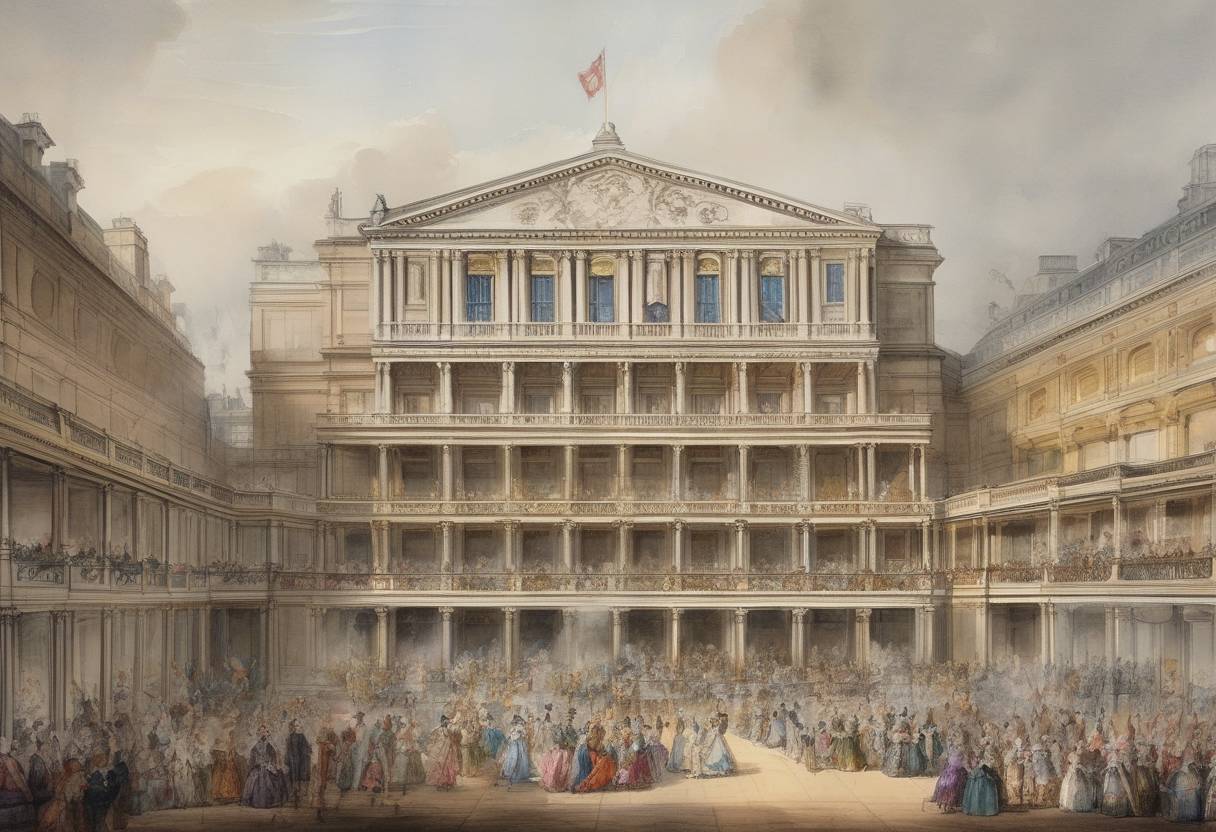
The Royal Opera House, located in Covent Garden, London, is one of the most prestigious opera houses in the world. Its opening on December 7, 1732, marked a significant moment in the cultural life of London and the broader history of performing arts in Europe. The establishment of this venue was part of a larger trend during the 18th century, where opera and theater became increasingly popular forms of entertainment among the European elite and burgeoning middle class.
Theatre Royal, Covent Garden: The original structure, known as the Theatre Royal, was commissioned by John Rich, an influential theater manager and actor. Rich was a pivotal figure in the London theater scene, known for his innovative productions and for introducing pantomime to the English stage.
Architectural Design: The theater was designed by Edward Shepherd, a prominent architect of the time. The design reflected the Georgian architectural style, which was characterized by its symmetry and classical proportions.
Cultural Demand: The early 18th century saw a growing demand for opera and theatrical performances in London. This demand was fueled by the city’s expanding population and the increasing wealth of its citizens, who sought sophisticated forms of entertainment.
Inaugural Performance: The opening night featured a performance of “The Way of the World,” a play by William Congreve. This choice highlighted the theater’s initial focus on dramatic works, although it would later become renowned for its operatic productions.
Audience and Reception: The opening was attended by a diverse audience, including members of the aristocracy and influential figures in London’s cultural scene. The reception was positive, setting the stage for the theater’s future success.
Cultural Impact: The Royal Opera House quickly became a central hub for opera and ballet in London. It played a crucial role in the development of these art forms in Britain, hosting performances by some of the most celebrated composers and performers of the time.
Reconstruction and Evolution: Over the centuries, the building underwent several reconstructions and renovations, particularly after fires in 1808 and 1856. Each reconstruction aimed to enhance the acoustics and audience experience, ensuring the venue remained at the forefront of performance arts.
Legacy: Today, the Royal Opera House is home to The Royal Opera, The Royal Ballet, and the Orchestra of the Royal Opera House. It continues to be a leading venue for world-class performances, maintaining its reputation as a cultural landmark in London.
The opening of the Royal Opera House in 1732 is emblematic of the Enlightenment era’s emphasis on arts and culture. It reflects the period’s values of innovation, artistic expression, and public engagement with the arts. The theater’s enduring legacy underscores the importance of cultural institutions in shaping societal values and fostering artistic excellence.
Source: www.roh.org.uk