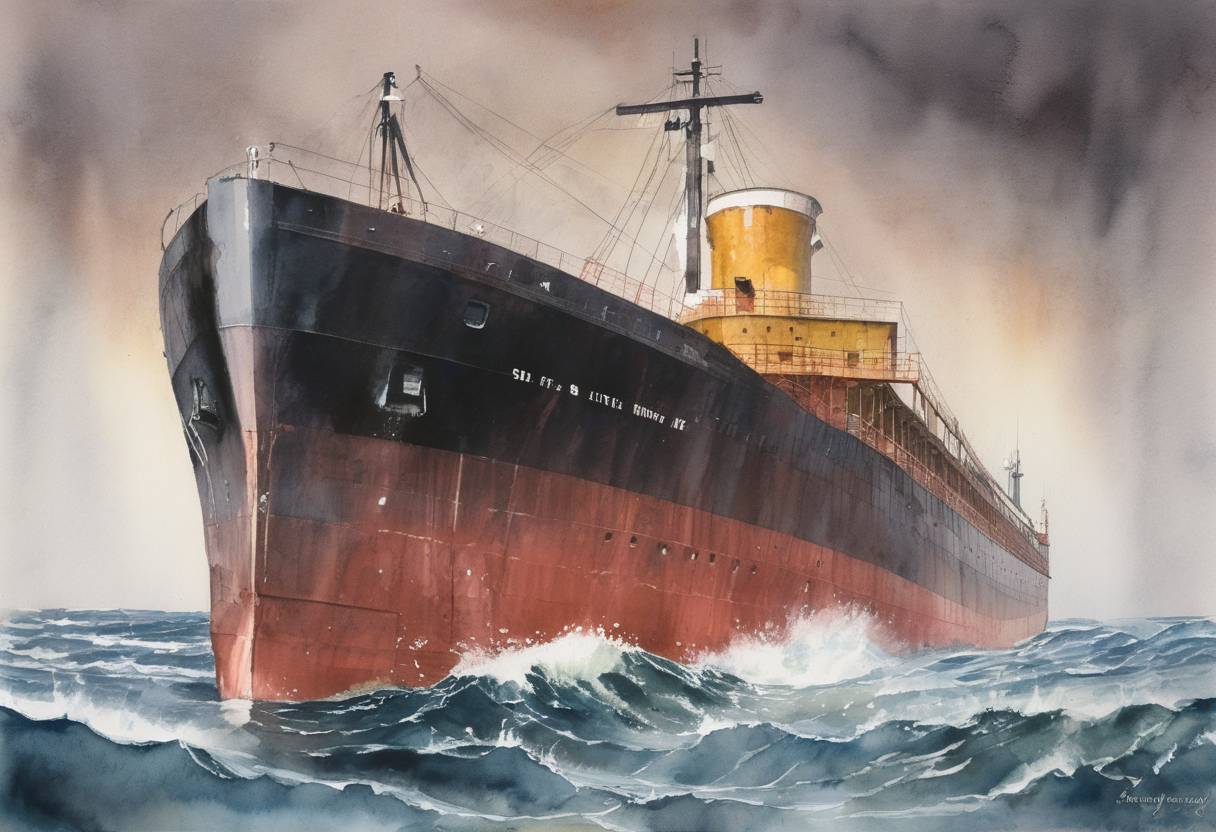
The Sinking of the SS Edmund Fitzgerald
On November 10, 1975, the SS Edmund Fitzgerald, an American Great Lakes freighter, tragically sank during a severe storm on Lake Superior, resulting in the loss of all 29 crew members on board. This event remains one of the most infamous maritime disasters in the history of the Great Lakes.
Background
- Construction and Launch: The Edmund Fitzgerald was launched on June 7, 1958, and was the largest freighter on the Great Lakes at the time. It was built by Great Lakes Engineering Works in River Rouge, Michigan, and was named after the president of the Northwestern Mutual Life Insurance Company, which owned the ship.
- Purpose: The freighter was primarily used to transport taconite iron ore from mines near Duluth, Minnesota, to iron works in Detroit, Toledo, and other Great Lakes ports.
The Final Voyage
- Departure: On November 9, 1975, the Edmund Fitzgerald departed from Superior, Wisconsin, loaded with 26,116 tons of taconite pellets, bound for a steel mill near Detroit, Michigan.
- Weather Conditions: The ship encountered a severe storm on Lake Superior, with winds reaching up to 60 mph and waves as high as 25 feet. The storm was one of the worst to hit the region in decades.
The Sinking
- Last Communication: The last communication from the Edmund Fitzgerald was at approximately 7:10 PM on November 10, when Captain Ernest M. McSorley reported, “We are holding our own.” Shortly after, the ship disappeared from radar screens of nearby vessels.
- Search Efforts: Despite extensive search efforts by the U.S. Coast Guard and other vessels, no survivors were found. The wreck was located four days later, 530 feet below the surface of Lake Superior, about 17 miles from Whitefish Bay, Michigan.
Aftermath and Legacy
- Investigation: The exact cause of the sinking remains unknown, though theories include structural failure, topside damage from the storm, or shoaling (running aground in shallow water).
- Cultural Impact: The tragedy was immortalized in Gordon Lightfoot’s 1976 hit song, “The Wreck of the Edmund Fitzgerald,” which brought widespread attention to the disaster.
- Memorials: The ship’s bell was recovered in 1995 and is now displayed at the Great Lakes Shipwreck Museum in Whitefish Point, Michigan, as a memorial to the lost crew.
The sinking of the Edmund Fitzgerald is a poignant reminder of the power of nature and the risks faced by those who work on the Great Lakes. It continues to be a subject of study and remembrance in maritime history.