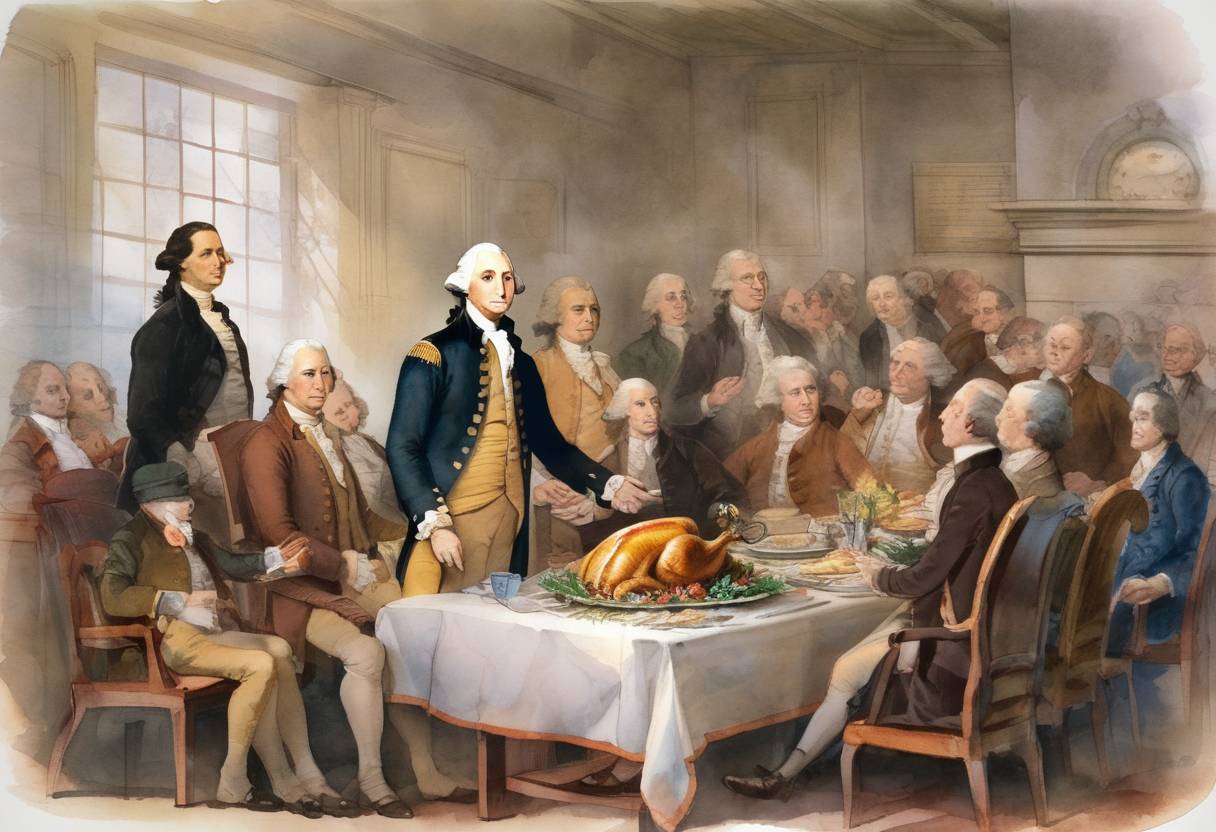
Proclamation of the First National Thanksgiving Day
On October 3, 1789, President George Washington issued a proclamation designating November 26, 1789, as a national day of Thanksgiving. This marked the first time that Thanksgiving was celebrated under the new Constitution of the United States, setting a precedent for future national observances.
Context and Background
Historical Setting: The United States had recently adopted the Constitution, and George Washington had been inaugurated as the first President in April 1789. The new government was in its formative stages, and there was a desire to unify the nation and express gratitude for the successful establishment of the constitutional government.
Influence of Congress: The idea for a national day of Thanksgiving was proposed by Congress. On September 25, 1789, Elias Boudinot, a member of the House of Representatives from New Jersey, put forth a resolution requesting that the President recommend a day of public thanksgiving and prayer.
The Proclamation
Purpose: Washington’s proclamation aimed to acknowledge the providence of Almighty God, express gratitude for the peaceful transition to a constitutional government, and seek divine guidance and protection for the future.
Content: In his proclamation, Washington called upon the people of the United States to devote the day to public thanksgiving and prayer, to be observed with sincere and humble thanks for the blessings of liberty, peace, and prosperity.
Date: The designated day was Thursday, November 26, 1789. This date was chosen to allow time for the proclamation to be disseminated across the states.
Significance
Unity and Reflection: The proclamation served as a means to foster national unity and reflection. It encouraged citizens to come together in gratitude and to recognize the importance of collective efforts in achieving national goals.
Precedent for Future Observances: While Thanksgiving had been celebrated in various forms by different communities, Washington’s proclamation was the first to establish a national observance. This set a precedent for future presidents to issue similar proclamations, eventually leading to the establishment of Thanksgiving as a federal holiday.
Cultural Impact: The proclamation contributed to the evolving tradition of Thanksgiving in the United States, blending religious and secular elements and emphasizing themes of gratitude and community.
Washington’s 1789 Thanksgiving proclamation is a significant moment in American history, reflecting the values and aspirations of the young nation and laying the groundwork for a cherished national tradition.