King Juan Carlos I Announces Abdication
2014 · Madrid, Spain
King Juan Carlos I of Spain announced his intention to abdicate the throne in favor of his son, Felipe VI.
November 22, 1975
Juan Carlos I was declared King of Spain following the death of dictator Francisco Franco, marking the beginning of Spain's transition to democracy.
Madrid, Spain | Spanish Monarchy
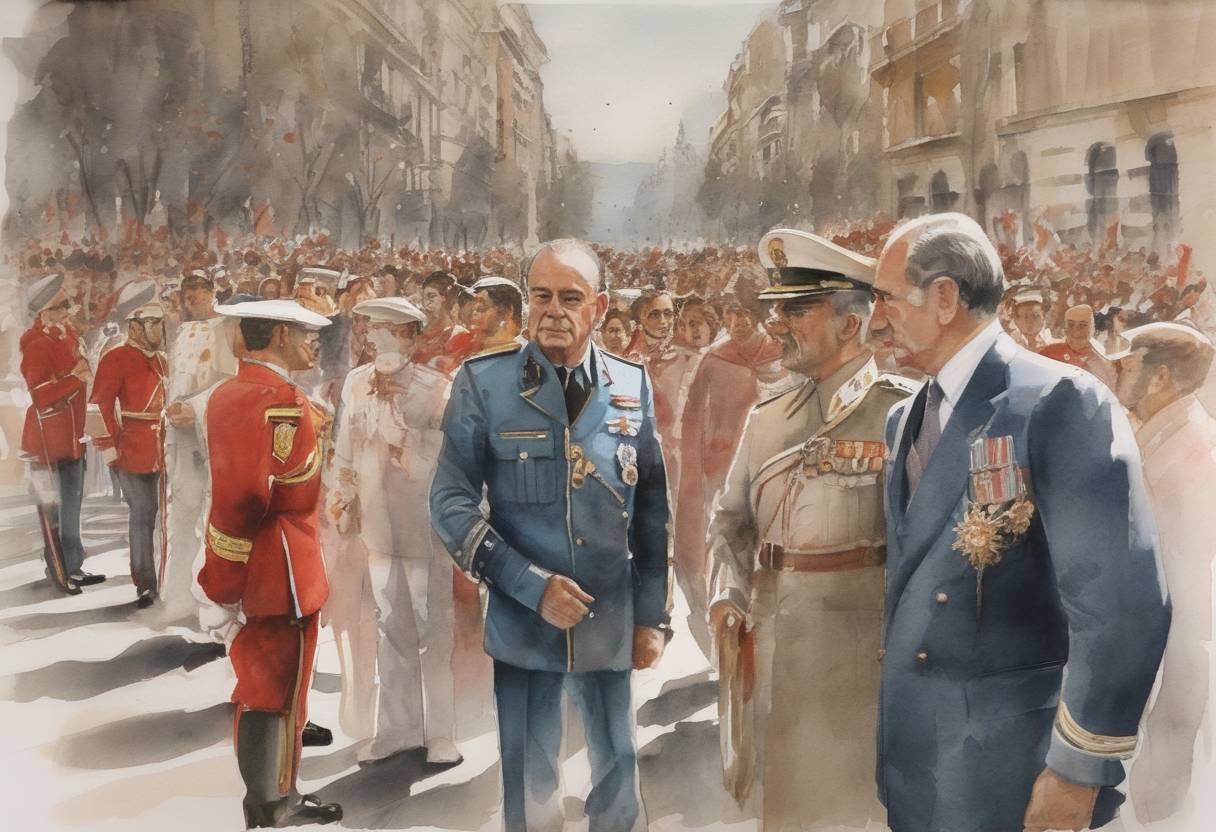
On November 22, 1975, Juan Carlos I was declared King of Spain, a pivotal moment that marked the beginning of Spain’s transition from dictatorship to democracy. This event followed the death of Francisco Franco, the authoritarian ruler who had governed Spain since the end of the Spanish Civil War in 1939.
Francisco Franco’s Regime: Franco’s rule was characterized by a centralized authoritarian government, suppression of political dissent, and a focus on traditionalist and nationalist values. His regime maintained a neutral stance during World War II and later aligned with anti-communist Western powers during the Cold War.
Succession Planning: In 1969, Franco designated Juan Carlos, the grandson of Spain’s last reigning king, Alfonso XIII, as his successor. This decision was part of Franco’s plan to restore the monarchy under a controlled framework that would preserve his regime’s legacy.
Proclamation as King: Two days after Franco’s death on November 20, 1975, Juan Carlos was formally proclaimed king in a ceremony held in the Spanish Parliament. His ascension was initially met with skepticism by both Francoist hardliners and democratic reformists.
Initial Challenges: As king, Juan Carlos faced the daunting task of navigating a deeply divided nation. The political landscape was fraught with tensions between those who wished to maintain Francoist policies and those advocating for democratic reforms.
Political Reforms: Contrary to expectations that he would continue Franco’s authoritarian policies, King Juan Carlos played a crucial role in facilitating Spain’s transition to democracy. He appointed Adolfo Suárez as Prime Minister in 1976, who spearheaded significant political reforms.
1978 Constitution: The transition culminated in the drafting of a new democratic constitution, which was approved by a national referendum in 1978. This constitution established Spain as a parliamentary monarchy with a multi-party system, guaranteeing civil liberties and regional autonomy.
Consolidation of Democracy: The successful transition to democracy under Juan Carlos’s reign is considered one of the most peaceful and effective in modern history. It set a precedent for democratic transitions in other countries.
Legacy: King Juan Carlos I remained a symbol of Spain’s democratic transformation until his abdication in 2014. His role in the transition is often credited with stabilizing Spain during a critical period and fostering a new era of political and social freedoms.
In summary, the proclamation of Juan Carlos I as King of Spain on November 22, 1975, was a turning point that initiated the country’s shift from dictatorship to democracy, reshaping Spain’s political landscape and influencing its future trajectory.
Source: en.wikipedia.org