November 27, 1895

Alfred Nobel signed his last will and testament, establishing the Nobel Prizes to be awarded for achievements in Physics, Chemistry, Medicine, Literature, and Peace.


Paris, France | Nobel Foundation
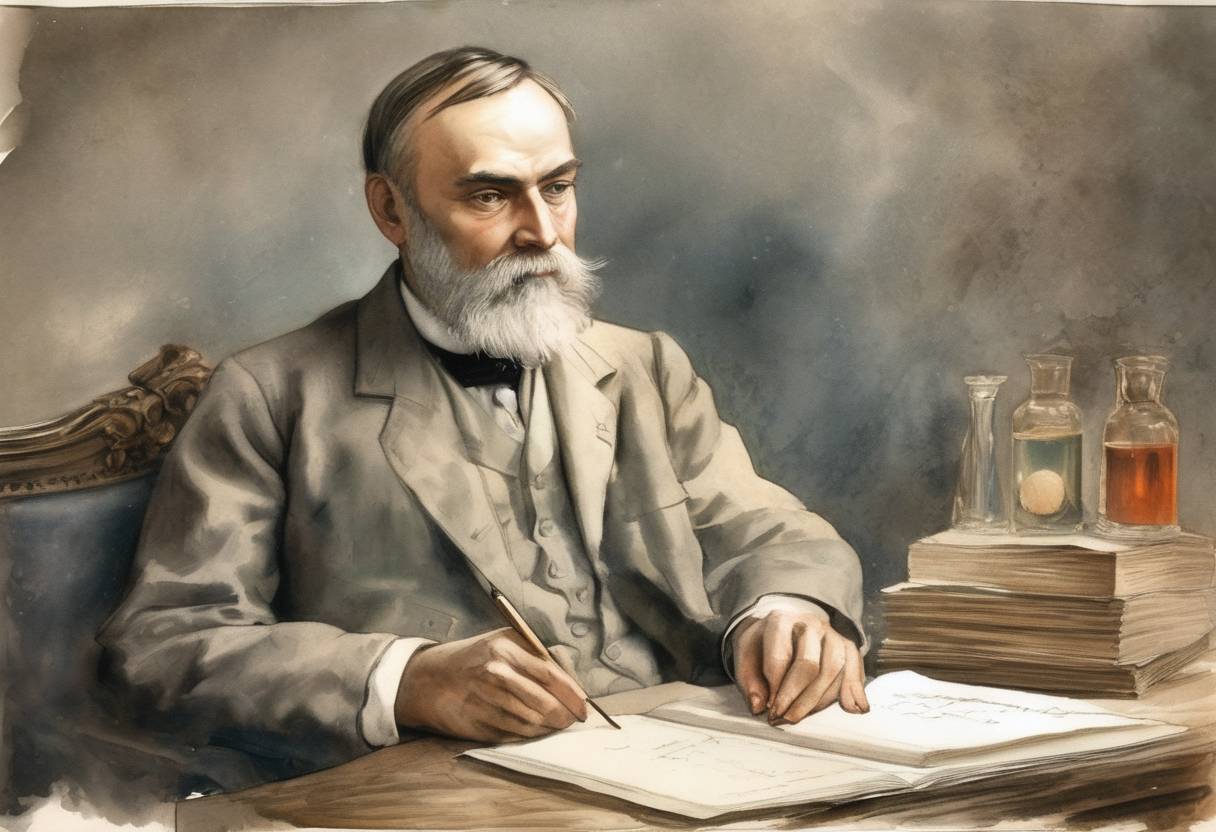
Watercolor painting based depiction of Alfred Nobel signed his last will and testament, establishing the Nobel Prizes to be awarded for achievements in Physics, Chemistry, Medicine, Literature, and Peace. (1895)

Alfred Nobel’s Last Will and Testament: Establishment of the Nobel Prizes

On November 27, 1895, Alfred Nobel, a Swedish chemist, engineer, and inventor, signed his last will and testament at the Swedish-Norwegian Club in Paris. This pivotal document laid the foundation for the Nobel Prizes, which are awarded annually for outstanding contributions in the fields of Physics, Chemistry, Medicine, Literature, and Peace.

Context and Background

Alfred Nobel was born on October 21, 1833, in Stockholm, Sweden. He was a prolific inventor, holding 355 patents, with dynamite being his most famous invention. Despite his success, Nobel was deeply concerned about how he would be remembered, particularly after a premature obituary labeled him the “merchant of death” due to his invention of explosives.

Key Provisions of the Will

Nobel’s will specified that the bulk of his fortune should be used to create the Nobel Prizes. The document outlined the following key points:

  • Purpose: The prizes were to be awarded to individuals who conferred the “greatest benefit to humankind” in the specified fields.
  • Fields of Recognition: Nobel identified five categories for the awards: Physics, Chemistry, Medicine, Literature, and Peace. The Peace Prize was to be awarded to the person or organization that had worked most effectively to promote fraternity between nations, the abolition or reduction of standing armies, and the establishment and promotion of peace congresses.
  • Administration: Nobel entrusted the administration of the prizes to various Swedish and Norwegian institutions. The Royal Swedish Academy of Sciences was tasked with awarding the prizes for Physics and Chemistry, the Karolinska Institute for Medicine, the Swedish Academy for Literature, and a committee of five persons elected by the Norwegian Parliament for the Peace Prize.

Aftermath and Significance

  • Implementation: Nobel’s will faced legal challenges from his relatives, but eventually, the Nobel Foundation was established in 1900 to manage the finances and administration of the prizes.
  • First Awards: The first Nobel Prizes were awarded on December 10, 1901, the fifth anniversary of Nobel’s death.
  • Legacy: The Nobel Prizes have become one of the most prestigious international awards, recognizing and encouraging advancements in science, literature, and peace efforts. They have played a significant role in highlighting and rewarding groundbreaking achievements and have inspired countless individuals and organizations worldwide.

Alfred Nobel’s decision to dedicate his fortune to these awards has left an enduring legacy, transforming his reputation and contributing significantly to the advancement of knowledge and peace.