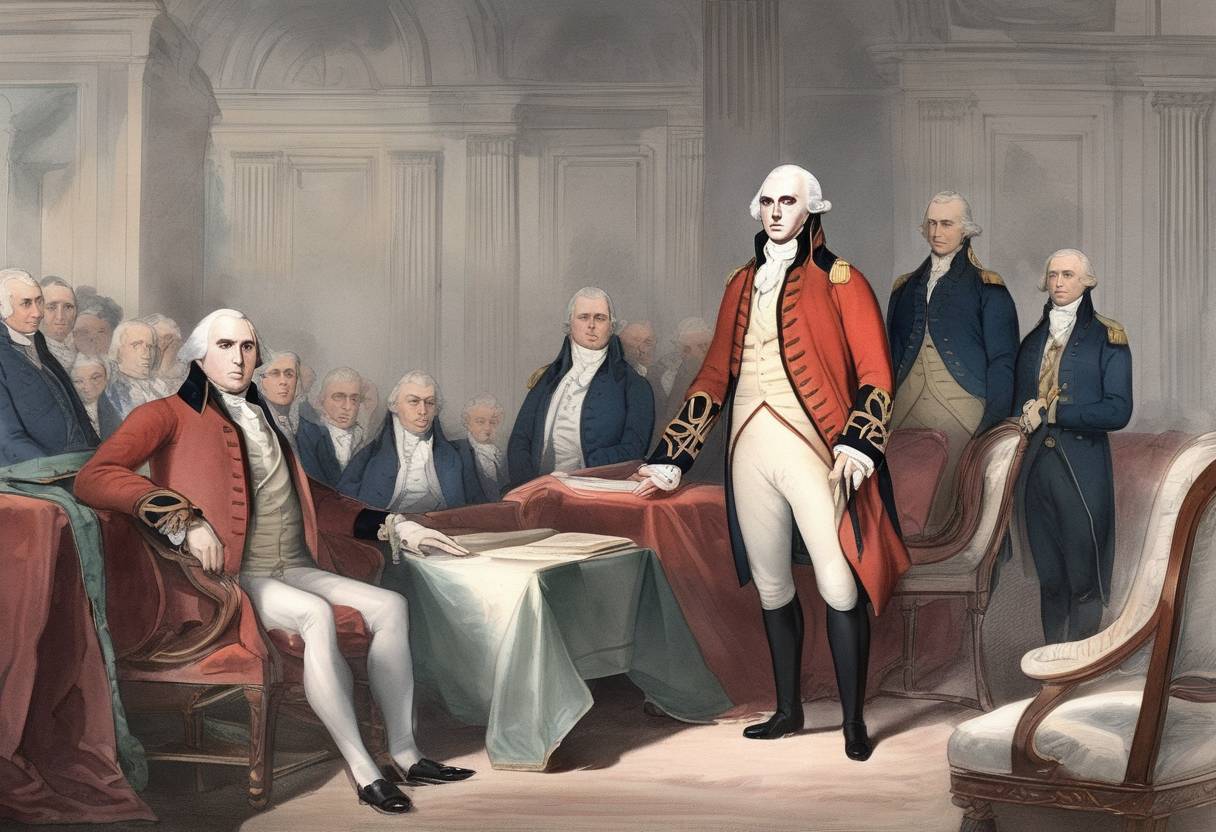
The War of 1812: James Madison’s Declaration of War Request
On June 1, 1812, U.S. President James Madison took a decisive step that would lead the United States into its first major conflict since the American Revolutionary War. He formally asked Congress to declare war on the United Kingdom, marking the beginning of what would become known as the War of 1812. This request was the culmination of escalating tensions between the two nations, driven by a series of grievances and geopolitical conflicts.
Context and Causes
The early 19th century was a period of intense international conflict, primarily due to the Napoleonic Wars in Europe. The United States, striving to maintain its neutrality, found itself caught between the warring powers of Britain and France. Several key issues led to Madison’s decision to seek a declaration of war:
Impressment of American Sailors: The British Royal Navy’s practice of impressment involved forcibly recruiting American sailors into their service. This was a significant affront to American sovereignty and a major source of tension.
Trade Restrictions: The British Orders in Council restricted American trade with France, severely impacting the U.S. economy. These restrictions were part of Britain’s broader strategy to weaken Napoleon’s France.
Support for Native American Resistance: The British were accused of supporting Native American tribes in their resistance against American expansion into the Northwest Territory. This support was seen as a direct threat to American territorial ambitions.
National Honor and Sovereignty: Many Americans felt that British actions were an affront to national honor and sovereignty, echoing sentiments from the Revolutionary War.
The Request for War
In his message to Congress, Madison outlined these grievances, emphasizing the need to defend American rights and honor. He argued that diplomatic efforts had failed and that war was the only remaining option to address the injustices faced by the United States.
Congressional Response
Madison’s request led to heated debates in Congress, reflecting the divided opinions among Americans. The Federalists, particularly in New England, opposed the war due to its potential impact on trade and their economic interests. However, the Democratic-Republicans, who were more dominant in the South and West, supported the war as a means to assert national rights and expand territory.
On June 18, 1812, Congress granted Madison’s request, and the United States formally declared war on the United Kingdom. This marked the beginning of a conflict that would last until 1815, involving significant battles on land and sea.
Aftermath and Significance
The War of 1812 had several important consequences:
- National Identity: The war fostered a sense of national identity and unity, particularly after the successful defense of Baltimore and the writing of “The Star-Spangled Banner.”
- Military and Economic Development: The conflict highlighted the need for a stronger military and spurred economic independence through increased manufacturing.
- Territorial Expansion: Although the war ended in a stalemate with the Treaty of Ghent, it paved the way for westward expansion and the eventual acquisition of new territories.
In summary, President James Madison’s request for a declaration of war on June 1, 1812, was a pivotal moment in American history, setting the stage for a conflict that would shape the young nation’s future.