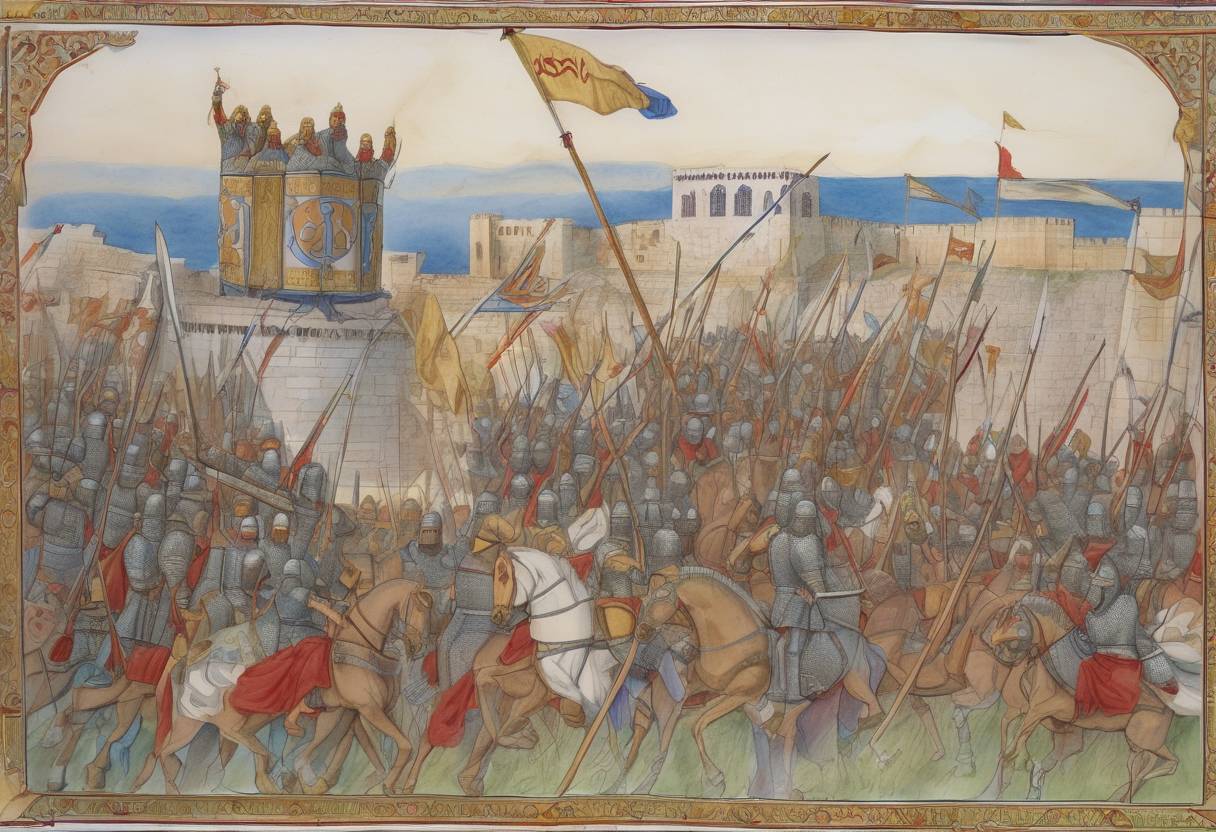
The Avar and Persian Siege of Constantinople: July 2, 626
On July 2, 626, the Avar and Persian siege of Constantinople began, marking a significant episode in the Byzantine-Sassanian War of 602–628. This conflict was characterized by the Byzantine Empire’s struggle against the Sassanian Empire of Persia, with the siege representing a critical moment in the war.
Context and Background
The Byzantine-Sassanian War of 602–628 was a protracted and exhausting conflict between two of the most powerful empires of the time. The war began when the Byzantine Emperor Maurice was overthrown and killed by the usurper Phocas, prompting the Sassanian King Khosrow II to declare war, ostensibly to avenge Maurice, who had been his ally.
By the early 7th century, the Sassanian Empire had made significant territorial gains, capturing key Byzantine territories in the Near East, including Jerusalem and Egypt. The Byzantine Empire, under the leadership of Emperor Heraclius, was under immense pressure and sought to defend its capital, Constantinople, from further incursions.
The Siege
The siege of Constantinople in 626 was a coordinated effort involving the Avars, a nomadic group from the Eurasian steppes, and their Slavic allies, along with the Sassanian Persians. The Avars and Slavs approached Constantinople from the west, while the Persians, led by General Shahrbaraz, attacked from the east, across the Bosporus.
Key Events
Avar and Slavic Assaults: The Avars and Slavs launched repeated assaults on the city’s formidable Theodosian Walls. Despite their efforts, the walls held firm, and the defenders, led by Patriarch Sergius and the city’s military commander, Bonus, successfully repelled the attacks.
Persian Naval Blockade: The Persians attempted to blockade the city by sea, but the Byzantine navy, utilizing the strategic advantage of the Golden Horn and the Bosporus, managed to prevent a complete encirclement.
Byzantine Defense and Morale: The defenders of Constantinople were bolstered by religious fervor, with Patriarch Sergius carrying the icon of the Virgin Mary along the city walls, inspiring the populace and soldiers. This spiritual leadership played a crucial role in maintaining morale.
Aftermath and Significance
The siege ended in failure for the Avars and Persians. The Byzantines, under Heraclius, managed to hold the city, and the siege was lifted by August 626. This victory was pivotal for several reasons:
Turning Point in the War: The failure of the siege marked a turning point in the Byzantine-Sassanian War. Heraclius capitalized on this momentum, launching a successful counter-offensive that eventually led to the decisive Byzantine victory at the Battle of Nineveh in 627.
Preservation of Constantinople: The successful defense of Constantinople preserved the Byzantine Empire’s capital, ensuring its survival as a major political and cultural center for centuries to come.
Diplomatic Repercussions: The failure of the siege weakened the Avar confederation and diminished their influence in the region, while the Sassanian Empire, already stretched thin, faced internal strife and external threats, leading to its eventual downfall.
The siege of Constantinople in 626 is remembered as a testament to the resilience of the Byzantine Empire and its ability to withstand formidable adversaries through strategic defense and strong leadership.