President Richard Nixon Rejects Appeals Court Demand
1973 · Washington, D.C., United States
President Richard Nixon rejected an Appeals Court demand to turn over the Watergate tapes.
May 17, 1973
The televised hearings of the United States Senate Watergate Committee began, investigating the Watergate scandal that eventually led to the resignation of President Richard Nixon.
Washington, D.C., United States | United States Senate
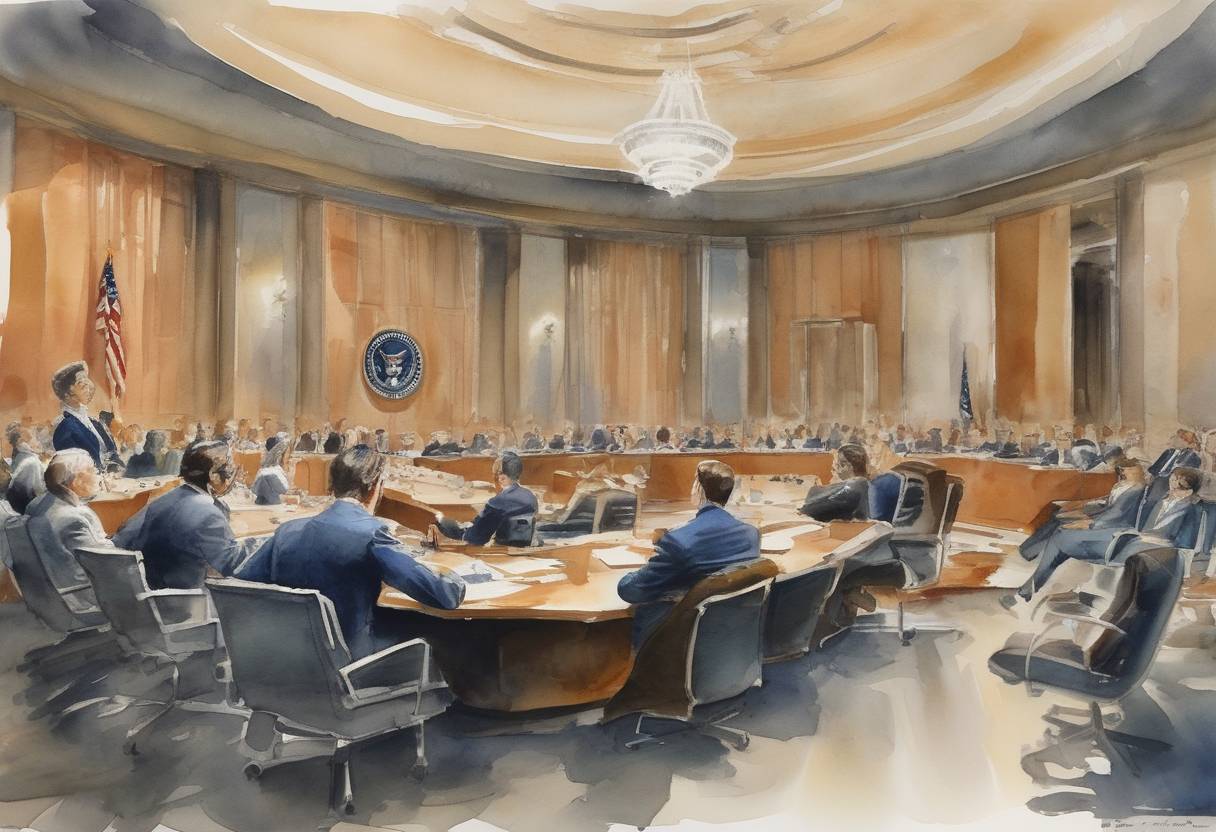
On May 17, 1973, the United States Senate Watergate Committee began its televised hearings, marking a pivotal moment in American political history. These hearings were a critical component of the investigation into the Watergate scandal, a complex web of political espionage and cover-ups that ultimately led to the resignation of President Richard Nixon.
The Watergate scandal originated with a break-in at the Democratic National Committee headquarters at the Watergate office complex in Washington, D.C., on June 17, 1972. The burglars were linked to Nixon’s re-election campaign, and subsequent investigations revealed efforts to cover up the administration’s involvement.
The Senate Watergate Committee, officially known as the Select Committee on Presidential Campaign Activities, was established by the U.S. Senate in February 1973. It was chaired by Senator Sam Ervin, a Democrat from North Carolina, and included members from both major political parties, ensuring a bipartisan approach to the investigation.
The televised hearings began on May 17, 1973, and were broadcast live on national television, capturing the attention of millions of Americans. The hearings provided a platform for witnesses to testify about the break-in and the subsequent cover-up. Key figures who testified included:
The televised hearings played a significant role in shaping public opinion about the Watergate scandal. The revelations of misconduct and abuse of power led to a loss of trust in the Nixon administration. The hearings also set the stage for further investigations, including the appointment of a special prosecutor, Archibald Cox, and the eventual release of the White House tapes.
The scandal culminated in President Nixon’s resignation on August 8, 1974, making him the first U.S. president to resign from office. The Watergate scandal had lasting effects on American politics, leading to reforms aimed at increasing transparency and accountability in government.
The Watergate hearings underscored the importance of checks and balances in the U.S. political system and highlighted the role of the media and public opinion in holding government officials accountable. The scandal and its aftermath also contributed to a more skeptical and investigative approach to journalism, influencing how political scandals are covered to this day.
In summary, the televised hearings of the Senate Watergate Committee were a turning point in American history, demonstrating the power of democratic institutions to address and rectify abuses of power at the highest levels of government.
Source: en.wikipedia.org