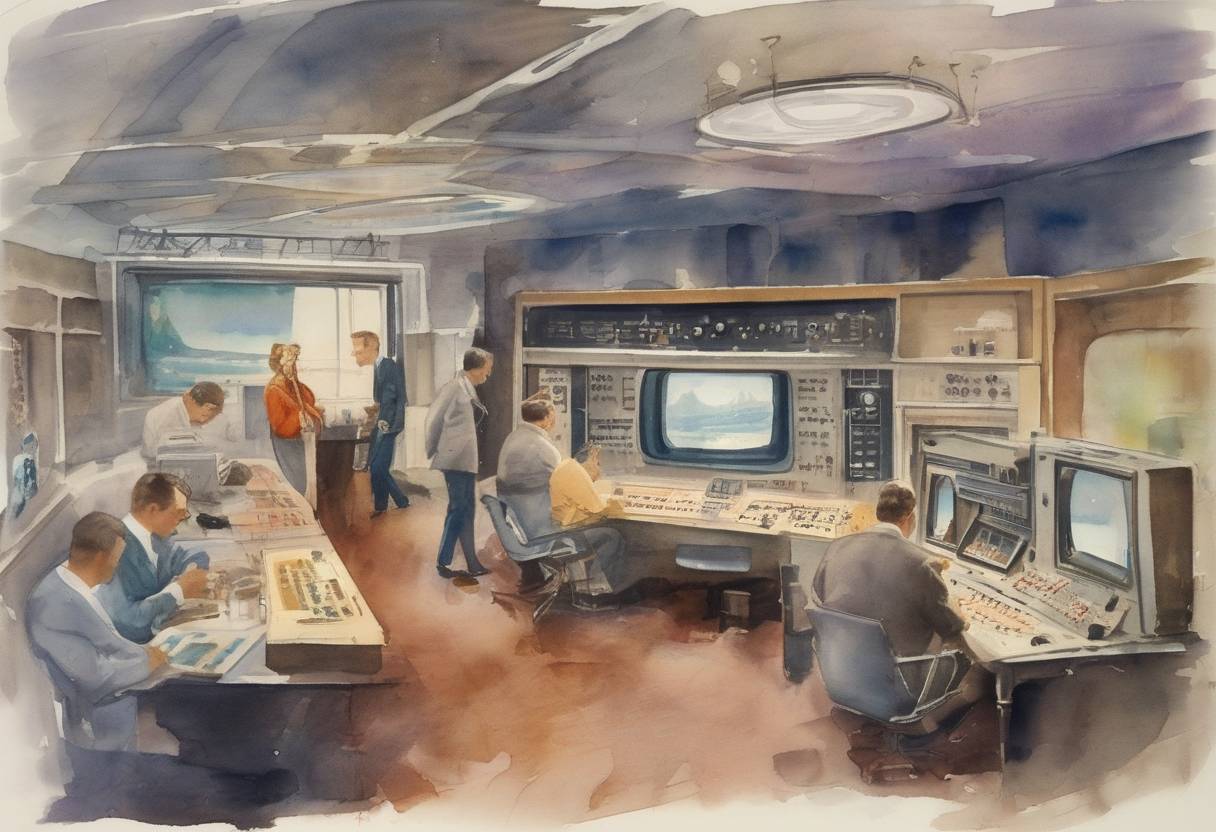
Telstar Relays the First Live Trans-Atlantic Television Program
On July 23, 1962, a significant milestone in the history of telecommunications was achieved when the Telstar satellite relayed the first publicly transmitted, live trans-Atlantic television program. This event marked a new era in global communications, demonstrating the potential of satellite technology to bridge vast distances instantaneously.
Background
Telstar 1 was launched by NASA on July 10, 1962, as part of a collaborative project between the United States and several European countries. The satellite was a product of the Cold War era’s technological race, designed and built by Bell Telephone Laboratories for AT&T. It was part of an experimental program to test the feasibility of using satellites for telecommunications.
The Event
On July 23, 1962, Telstar successfully transmitted live television signals between the United States and Europe. The broadcast included images of the Statue of Liberty, the Eiffel Tower, and a baseball game, among other scenes. This transmission was a collaborative effort involving multiple organizations, including NASA, AT&T, and the European Broadcasting Union.
Key Features of the Broadcast
- Technical Specifications: Telstar 1 was equipped with a transponder capable of relaying television signals, telephone calls, and data. It orbited the Earth in a low elliptical orbit, which allowed for brief periods of transmission as it passed over the Atlantic Ocean.
- Broadcast Content: The program included a mix of cultural and news content, showcasing the technological prowess of the era. It was broadcast to millions of viewers in the United States and Europe, demonstrating the potential for real-time global communication.
Significance
The successful transmission by Telstar had profound implications for the future of global communications:
- Technological Advancement: It proved the viability of using satellites for live television broadcasts, paving the way for the development of more advanced communication satellites.
- Global Connectivity: The event symbolized the shrinking of the world, as it allowed for instantaneous communication across continents, fostering a sense of global interconnectedness.
- Cultural Impact: The broadcast was a cultural milestone, as it allowed people on different continents to share experiences in real-time, influencing the way media and information were consumed.
Aftermath
Following the success of Telstar 1, the development of communication satellites accelerated. Subsequent satellites were launched with improved capabilities, leading to the establishment of a global satellite communication network. This laid the groundwork for modern telecommunications, including satellite television, internet, and mobile communications.
In conclusion, the live trans-Atlantic television broadcast relayed by Telstar on July 23, 1962, was a landmark event that demonstrated the transformative power of satellite technology, setting the stage for the interconnected world we live in today.