The Battle of Naseby - June 14, 1645
1645 · Naseby, England
In the Battle of Naseby, a key engagement during the English Civil War, the Royalist forces suffered a significant defeat by the Parliamentarian army.
July 13, 1643
The English Civil War saw the Battle of Roundway Down, where Royalist forces defeated the Parliamentarians.
Roundway Down, England | Royalists
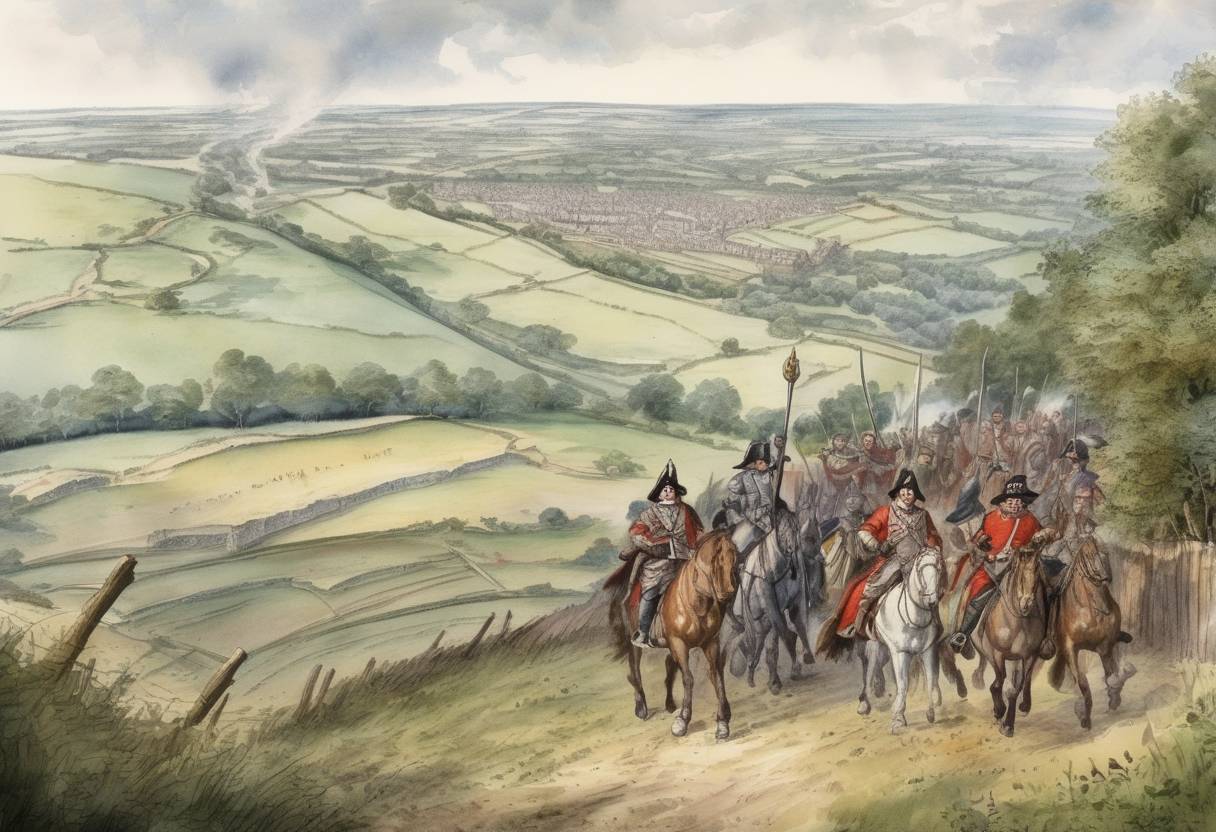
The Battle of Roundway Down was a significant engagement during the English Civil War, taking place on July 13, 1643. This battle marked a decisive victory for the Royalist forces over the Parliamentarians and had substantial implications for the control of the West Country.
The English Civil War (1642–1651) was a series of armed conflicts and political machinations between Parliamentarians (“Roundheads”) and Royalists (“Cavaliers”). The war stemmed from tensions between King Charles I and Parliament over issues such as governance, religion, and finances.
In the summer of 1643, the Royalists aimed to consolidate their hold over the West Country, a region crucial for its resources and strategic position. Sir Ralph Hopton, a prominent Royalist commander, was tasked with securing this area. Meanwhile, the Parliamentarians, led by Sir William Waller, sought to counter Royalist advances and maintain their influence.
The battle unfolded after the Parliamentarian forces attempted to besiege Devizes, where Hopton’s troops were stationed. In response, Royalist cavalry under Lord Wilmot marched to relieve the siege. The two forces met at Roundway Down.
The victory at Roundway Down was a significant boost for the Royalists. It effectively ended Parliamentarian resistance in the West Country for a time, allowing the Royalists to consolidate their control over the region. The defeat also weakened Parliamentarian morale and resources.
The battle demonstrated the effectiveness of Royalist cavalry tactics and highlighted the challenges faced by Parliamentarian forces in maintaining cohesion under pressure. It was a pivotal moment in the early stages of the English Civil War, influencing subsequent military and political strategies on both sides.
The Battle of Roundway Down exemplifies the fluctuating fortunes of the English Civil War, where control of regions could shift dramatically with the outcome of a single battle. It underscored the importance of cavalry in 17th-century warfare and set the stage for further Royalist advances in the south and west of England.
The Royalist victory at Roundway Down was part of a broader campaign that saw them achieve several successes in 1643, although these gains would eventually be reversed as the war continued to evolve in the following years.
Source: en.wikipedia.org