The New York City Blackout of July 13, 1977
1977 · New York City, United States
A major blackout hit New York City, leading to widespread looting and arson during a period of economic and social turmoil.
June 15, 1904
The steamship General Slocum caught fire and sank in the East River of New York City, resulting in the deaths of over 1,000 people, mostly German-American immigrants.
New York City, United States | Knickerbocker Steamboat Company
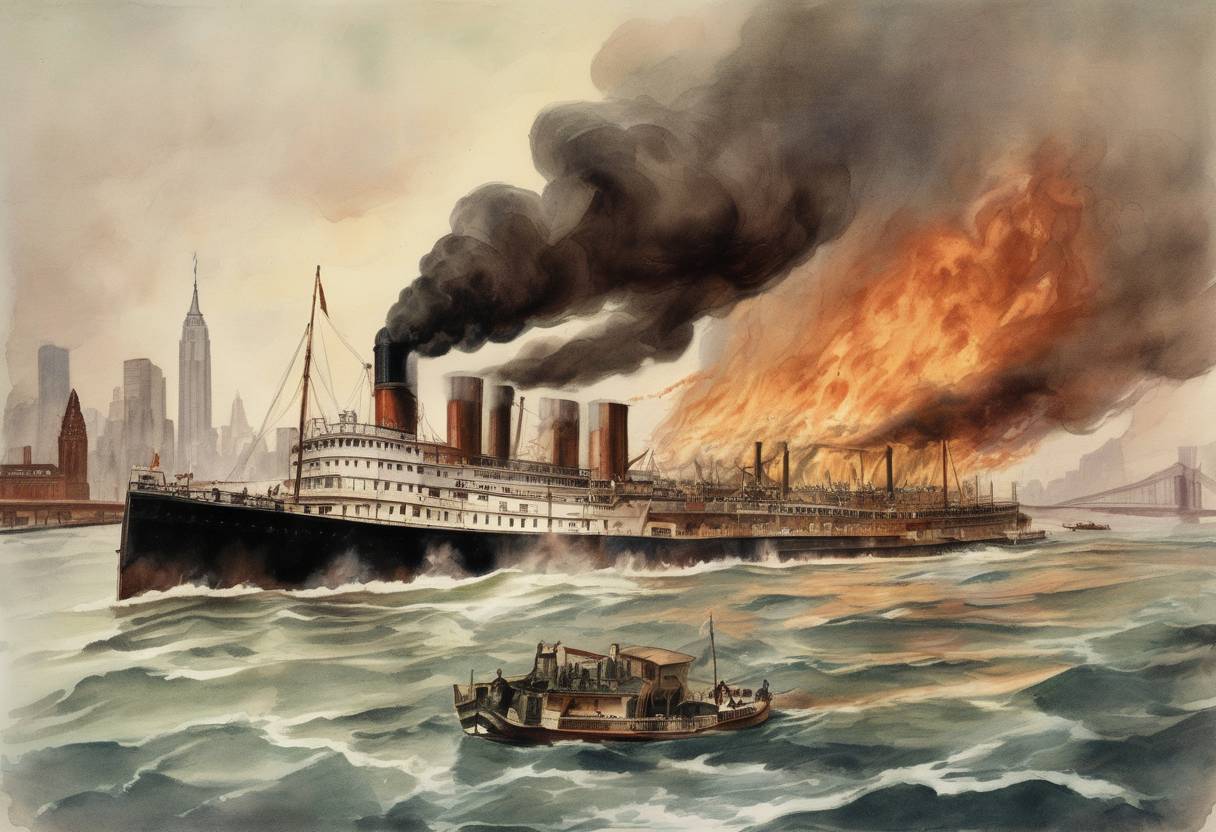
On June 15, 1904, the steamship General Slocum caught fire and sank in the East River of New York City, marking one of the deadliest maritime disasters in United States history. This tragic event resulted in the deaths of over 1,000 people, predominantly German-American immigrants from the Lower East Side of Manhattan.
The General Slocum was a sidewheel passenger steamboat built in 1891. It was primarily used for excursions around New York City, offering leisure trips to various destinations. On the morning of June 15, 1904, the ship was chartered by St. Mark’s Evangelical Lutheran Church for its annual picnic. The congregation, largely composed of German-American immigrants, was headed to Locust Grove on Long Island for a day of recreation.
Ignition of Fire: Shortly after departing from the Third Street pier in Manhattan, a fire broke out in a storage room in the forward section of the ship. The blaze was likely caused by a discarded cigarette or match igniting straw and oily rags.
Rapid Spread: The fire spread quickly due to the ship’s wooden structure and the presence of flammable materials. The crew’s attempts to extinguish the fire were hampered by inadequate and poorly maintained firefighting equipment.
Panic and Chaos: As the fire engulfed the vessel, panic ensued among the passengers. Many life preservers were found to be rotten and ineffective, and lifeboats were inaccessible or unusable.
Sinking: The captain attempted to beach the ship on North Brother Island, but the General Slocum sank before reaching the shore. The majority of the passengers, many of whom could not swim, were trapped or drowned in the river.
Casualties: Of the approximately 1,342 people on board, over 1,000 perished, including many women and children. The disaster devastated the German-American community in New York City.
Public Outcry and Reforms: The tragedy led to widespread public outrage and highlighted the need for stricter safety regulations. Subsequent investigations revealed negligence in safety measures and maintenance. This prompted significant reforms in maritime safety standards, including stricter inspections and improved life-saving equipment requirements.
Cultural Impact: The disaster had a profound impact on the German-American community, contributing to its decline in the Lower East Side as many families moved away, unable to bear the memories of the tragedy.
The General Slocum disaster remains a poignant reminder of the importance of safety regulations and the potential consequences of negligence. It stands as a significant event in New York City’s history, reflecting both the vulnerabilities of early 20th-century maritime travel and the resilience of immigrant communities in the face of tragedy.
Source: en.wikipedia.org